Order Procellariiformes, Family Procellariidae
Northern Fulmar
Fulmarus glacialis
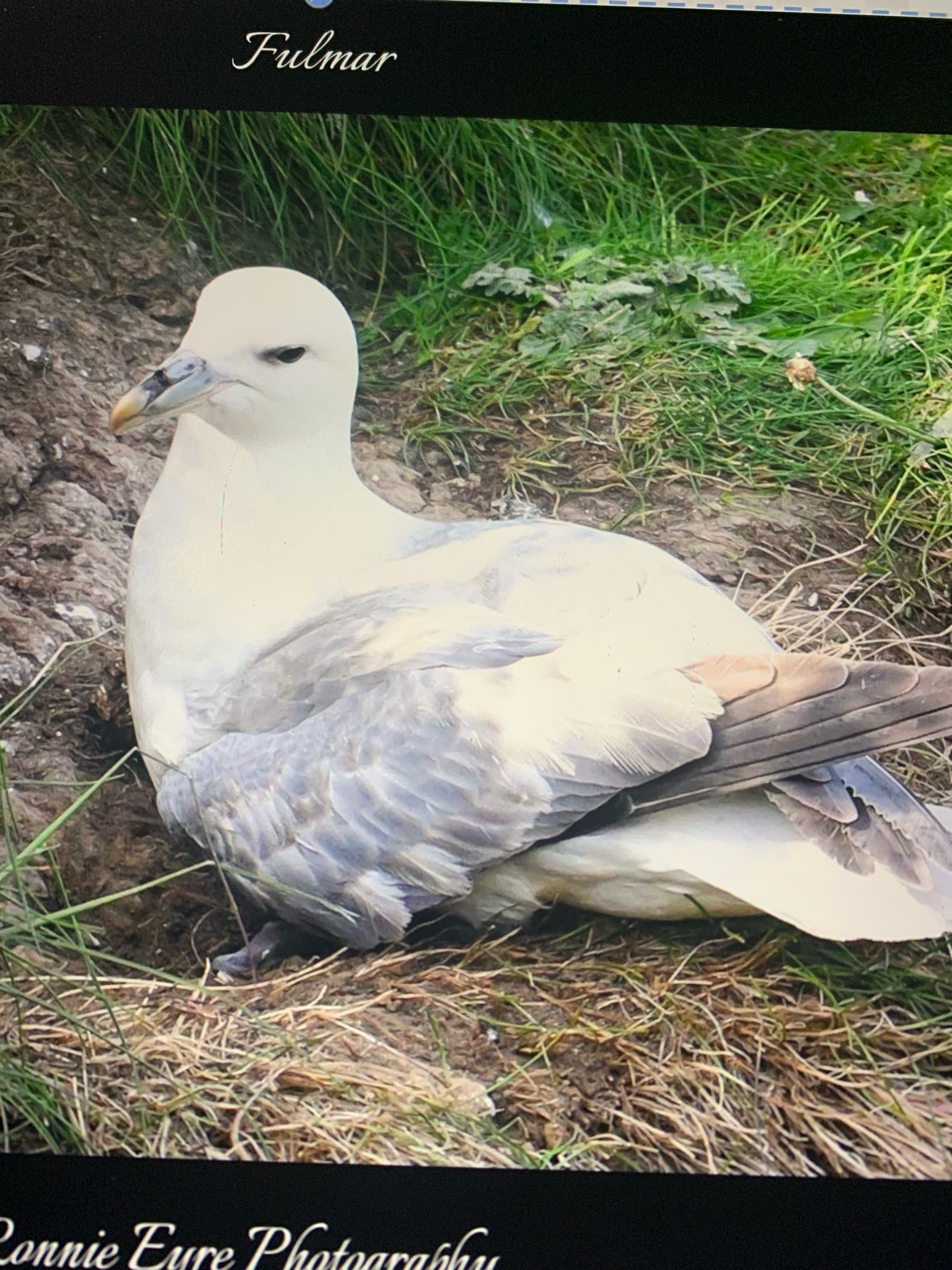
A stout, gull-like tubenose with a thick, yellowish bill featuring prominent tubular nostrils. It has a stiff-winged, gliding flight and a somewhat aggressive demeanor when defending its nest.
Explore Northern Fulmar in the encyclopedia →Identify your own birds.
Get a report just like this from any photo or call, free.
Plumage & appearance
Occurs in two main color morphs: a light morph with a white head and underparts, gray mantle and upperwings, and a dark morph that is uniform grayish-brown. Sexes are similar in plumage.
Key field marks
Stout yellowish bill with prominent tube-nose, short squared tail, bluish-gray upperwings, and stiff, unbending wingbeats during flight.
Size & weight
Length: 45-50 cm, Wingspan: 102-112 cm, Weight: 450-1000 g
Voice — call & song
Various harsh cackling, barking, and groaning sounds given at the breeding colonies, particularly during territorial disputes.
Diet & foraging
Fish, squid, crustaceans, jellyfish, and offal discarded by fishing vessels. Forages by surface seizing and shallow plunging.
Habitat
Pelagic open ocean outside of the breeding season; breeds colonially on steep coastal cliffs, ledges, and grassy slopes.
Migration & movement
Pelagic wanderer; northern populations migrate south in winter to avoid sea ice, while temperate populations are largely resident near breeding areas.
Nesting & breeding
Nests on bare cliff ledges or shallow scrapes lined with plant material. Lays a single egg; both parents share incubation and chick-rearing duties.
Similar species
Herring Gull and other large gulls, but distinguished by the tubular nostrils, stiffer flight style, thicker neck, and different bill structure.
Ecological significance
Acts as a top marine predator and scavenger, helping maintain marine ecosystem health, though it is also a key indicator species for plastic marine pollution.
Conservation status
IUCN Least Concern, with generally stable or increasing populations globally.
Observation tips
Look for them from coastal headlands, clifftops in northern regions, or while on pelagic boat trips in cold northern waters.
Interesting facts
Northern fulmars can project a foul-smelling, oily stomach liquid at predators as a defense mechanism, which can ruin the waterproof plumage of attacking birds of prey.
More like this