
Yellowhammer Identification Guide
A bright yellow-headed bunting of European farmland hedgerows, known for its rusty-streaked back and its distinctive "little bit of bread and no cheese" song.
Read the full Yellowhammer encyclopedia entry →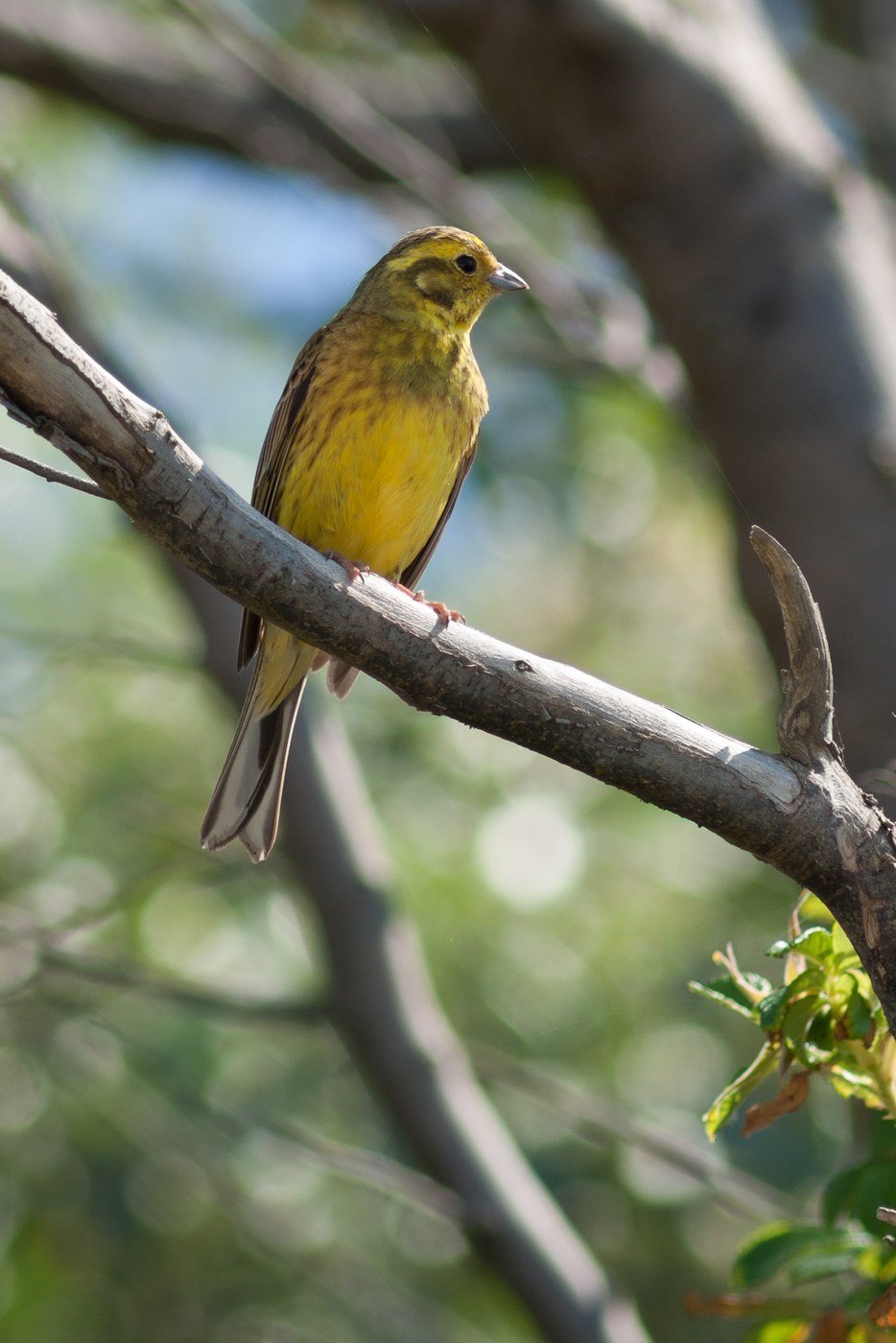
Key Field Marks
- Size & shape: A sparrow-sized bunting, about 6.5 inches long, with a fairly long, notched tail often flicked in flight and a stout, conical seed-eating bill.
- Plumage: Males show a bright yellow head and underparts, variably streaked with darker olive on the crown and cheeks; the back is warm chestnut-brown with dark streaking, and the rump is distinctively rufous/chestnut, visible in flight.
- Female/immature: Duller and more streaked overall, with less extensive yellow and a browner head, but still showing the chestnut rump that separates it from similar buntings.
- Tail: Dark tail with white outer tail feathers, flashing conspicuously when the bird flies up from the ground or a hedge.
- Behavior: Often seen perched prominently on hedgerows, fence wires, or the tops of bushes, singing persistently, especially in spring and summer; forages on the ground and in stubble fields for seeds and grain, often in small flocks outside the breeding season.
Separating It From Similar Species
- Cirl Bunting: Male Cirl Buntings have a black throat and olive breast band, quite different from the Yellowhammer's cleaner yellow underparts; females are trickier but Cirl lacks the rich chestnut rump of Yellowhammer.
- Corn Bunting: Larger, bulkier, and lacks yellow entirely — streaky brown overall with a heavier bill and no chestnut rump.
- Reed Bunting: Male Reed Buntings have a black head and white collar in breeding plumage, unlike the yellow head of the Yellowhammer; female Reed Buntings are grayer-brown without yellow tones.
- Key giveaway: The combination of yellow head/underparts with a chestnut, unstreaked rump is diagnostic for Yellowhammer among European buntings.
Where & When to See It
- Habitat: Open farmland with hedgerows, field margins, scrubby grassland, and arable land with scattered bushes and trees for song perches; avoids dense woodland and treeless open country.
- Range: Widespread and largely resident across the United Kingdom, Ireland, and much of continental Europe into western Asia; also introduced and established in New Zealand.
- Season: Present year-round in most of its range, though northern and eastern populations may move south in winter; most easily observed and heard singing from spring through summer (April–August).
Voice & Song Cues
- Song is a distinctive, jangling series of repeated notes ending in a longer drawn-out note, classically rendered in English folk mnemonic as "a little bit of bread and no cheese."
- Call is a sharp, metallic "twick" or "tzit," often given in flight or when flushed.
- Sings persistently from an exposed perch through much of the day in the breeding season, making the song one of the most reliable ways to locate the species.
Frequently asked questions
How do you identify a Yellowhammer?
Look for a bunting with a yellow head and underparts, a streaked chestnut-brown back, and a distinctive plain chestnut rump visible in flight, often perched on a hedgerow or wire.
What is the Yellowhammer's famous song phrase?
Its jangling song is traditionally rendered as "a little bit of bread and no cheese," with a series of similar notes ending in one longer drawn-out note.
How do I tell a Yellowhammer from a Cirl Bunting?
Male Cirl Buntings have a black throat and an olive breast band, while male Yellowhammers have a cleaner yellow face and underparts without a black throat patch.
Where do Yellowhammers live?
They inhabit farmland with hedgerows and scrubby field margins across the UK, Ireland, and much of Europe and western Asia, and are also established in New Zealand.
Are Yellowhammers present year-round?
Yes, in most of their range they are resident year-round, though some northern and eastern populations move south in winter; they are most conspicuous and vocal in spring and summer.