
Yellow Warbler Identification Guide
A small, all-yellow songbird with beady black eyes and, in males, fine reddish breast streaking, common in willows and shrubby wetlands across North America.
Read the full Yellow Warbler encyclopedia entry →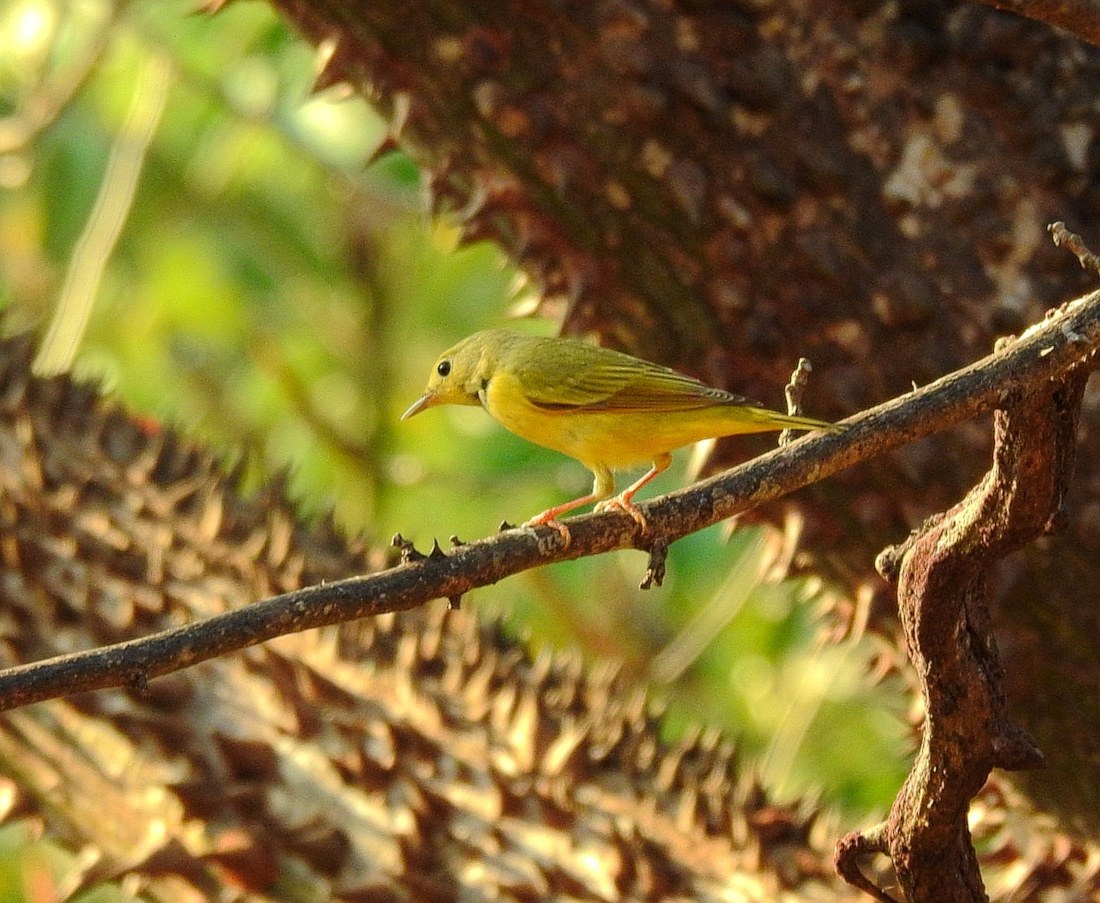
Key Field Marks
- Size & shape: A small, round-headed warbler about 5 inches long with a fairly plain, unpatterned face and a proportionally large black eye that stands out against the yellow plumage.
- Plumage: Overall bright golden-yellow body, including the face, throat, and underparts, with a yellow-green back and yellowish (not white) edges on the wing feathers — no white wingbars, which is a key difference from many other warblers.
- Male vs. female: Breeding males show fine chestnut-red streaking on the breast and flanks; females and immatures are plainer yellow overall, sometimes washed with olive, and lack or show only faint streaking.
- Bill & legs: Thin, pointed black or dark bill typical of warblers; pale pinkish legs.
- Behavior: Active and often sings from open perches in shrubs; frequently found low to mid-height in willows, shrubs, and thickets, gleaning insects and sometimes hover-gleaning at leaf tips.
Separating It From Similar Species
- Wilson's Warbler: Also yellow, but has a black cap (in males) and lacks the reddish breast streaking; Wilson's has a more olive back and plain wings similar to Yellow Warbler but the black cap is diagnostic on males.
- Common Yellowthroat (female): Female yellowthroats are duller, more olive-brown above with a less uniformly yellow body, and lack breast streaking; males have a black mask, unlike Yellow Warbler.
- American Goldfinch (nonbreeding/female): Goldfinches have a conical seed-eating bill and black wings with white wingbars, very different from the Yellow Warbler's thin bill and yellow-edged wings.
- Orange-crowned Warbler: Duller and more olive-yellow overall, with faint breast streaking (if any) and a less vividly yellow face; lacks the bright, clean yellow of a Yellow Warbler.
Where & When to See It
- Habitat: Strongly associated with willows, streamside thickets, shrubby wetlands, and second-growth edges; also found in gardens, orchards, and scrubby habitat away from water during migration.
- Range: One of the most widespread warblers in North America, breeding from Alaska and Canada south through most of the continental U.S.; winters in Mexico, Central America, and South America.
- Season: Spring through summer on breeding grounds (roughly April–August); passes through in good numbers during spring and fall migration across nearly the entire continent.
Voice & Song Cues
- Song is a bright, cheerful, fast series of clear whistled notes often rendered as "sweet-sweet-sweet, I'm-so-sweet" — upbeat and jaunty compared to many warblers.
- Call note is a soft, sweet "chip" or "tik."
- Also known for a distinctive high, thin "seet" flight call given during migration.
Frequently asked questions
How do I identify a Yellow Warbler?
Look for an all-yellow bird with a plain face, big dark eye, no white wingbars, and — on breeding males — fine reddish streaking on the breast.
How can I tell a male from a female Yellow Warbler?
Breeding males show distinct chestnut-red streaks on the yellow breast and flanks, while females and immatures are plainer yellow, often with an olive wash and little or no streaking.
What's the difference between a Yellow Warbler and Wilson's Warbler?
Wilson's Warbler males have a solid black cap on top of the head, which Yellow Warblers never show; Yellow Warblers instead may have reddish breast streaks that Wilson's lacks.
Where do Yellow Warblers nest?
They favor willows, streamside thickets, and shrubby wet habitats, breeding across most of North America from Alaska and Canada south through the U.S.
What does a Yellow Warbler sound like?
A bright, fast, cheerful whistled song often described as sounding like "sweet-sweet-sweet, I'm-so-sweet."