
Yellow-faced Honeyeater Identification Guide
A small, active Australian honeyeater identified by a bold black facial mask crossed by a bright yellow stripe below the eye.
Read the full Yellow-faced Honeyeater encyclopedia entry →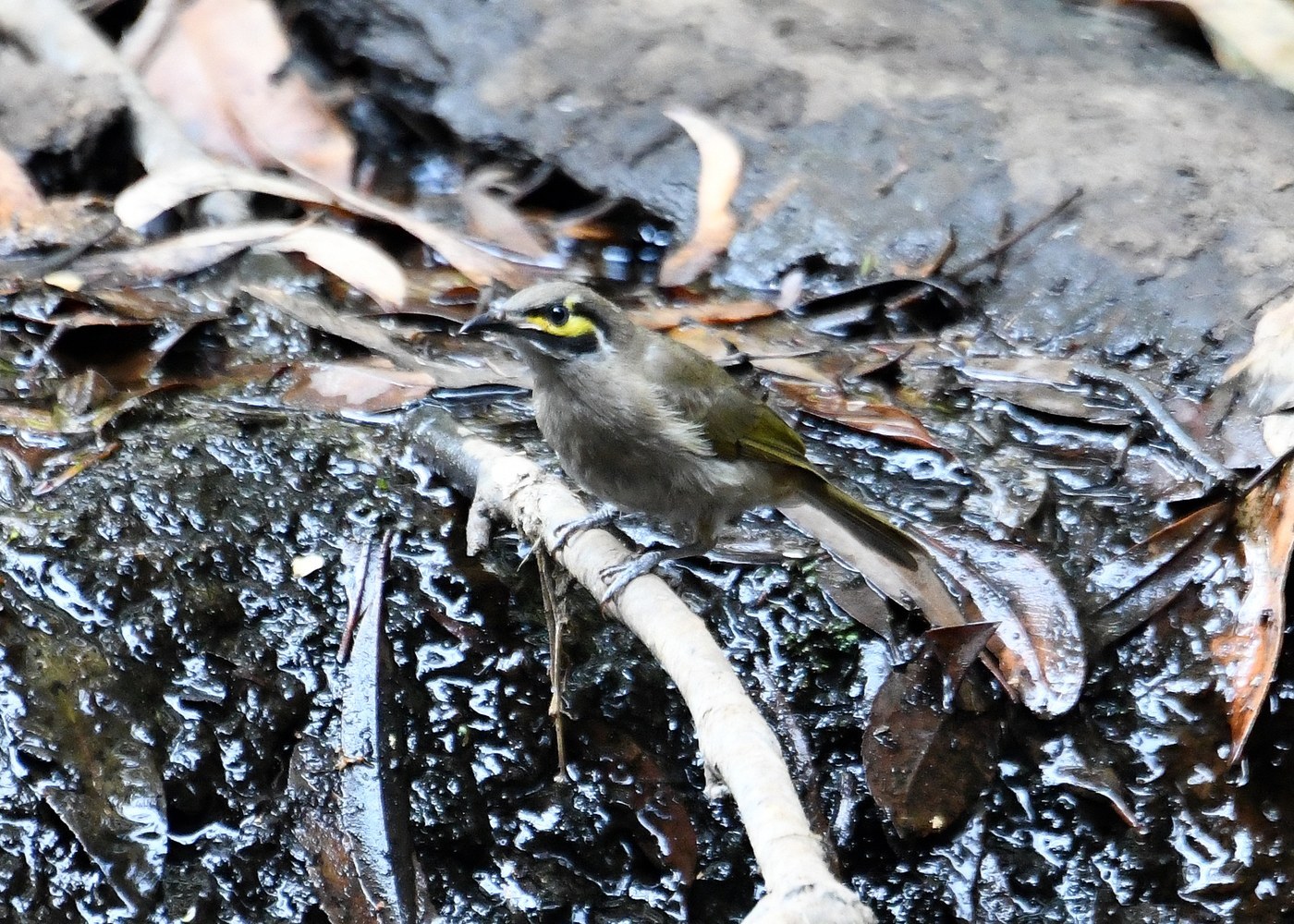
Key Field Marks
- Size and shape: A small, slender honeyeater about 6 inches long, with a fine, slightly downcurved bill suited to nectar feeding and gleaning insects.
- Plumage: Olive-brown above and pale grayish below, unremarkable except for the face pattern.
- Face pattern: The key mark is a black mask through the eye bordered above and below by narrow black lines, with a bright yellow crescent-shaped stripe running below the eye through the mask, giving a distinctive striped look unlike any similarly sized honeyeater.
- Behavior: Active and often in loose flocks, moving through foliage gleaning insects and probing flowers for nectar; well known for forming large, visible migratory flocks that stream along ridgelines in autumn.
Similar Species
- White-eared and other honeyeaters lack the yellow facial stripe; the combination of black mask plus yellow crescent below the eye is diagnostic for Yellow-faced Honeyeater among Australian honeyeaters.
- Superficially similar small honeyeaters can be told apart by the absence of this precise facial pattern and by differences in overall color tone.
Habitat, Range & Season
- Found in eucalypt forest, woodland, heath, and shrubby habitats across eastern and southeastern Australia, from Queensland through New South Wales and Victoria to South Australia.
- Notably migratory for a honeyeater: large numbers move north in autumn (March-May) along coastal ranges, forming spectacular visible flights of hundreds to thousands of birds, then return south in spring.
- Also occurs as a partial resident in parts of its range where food is available year-round.
Voice
- Song is a cheerful, repeated series of clear whistled phrases, often rendered as "chick-up, chick-up" or similar bright, ringing notes.
- Flocking birds give frequent contact calls, especially noticeable during the large-scale autumn migratory movements.
Frequently asked questions
What is the easiest way to identify a Yellow-faced Honeyeater?
Look for a small olive-brown honeyeater with a black facial mask crossed by a bright yellow crescent stripe below the eye, a pattern unique among similarly sized Australian honeyeaters.
Does the Yellow-faced Honeyeater migrate?
Yes, it is one of the few strongly migratory honeyeaters, forming large visible flocks moving north along the eastern ranges in autumn and returning south in spring.
What habitat is best for finding Yellow-faced Honeyeaters?
Eucalypt forest, woodland, and heathy shrubland across eastern and southeastern Australia, especially areas with flowering shrubs and trees.
How can you tell a Yellow-faced Honeyeater's call?
Listen for bright, clear, repeated whistled phrases often described as "chick-up, chick-up," along with frequent contact calls from flocks on migration.