
Yellow-crowned Night-Heron Identification Guide
A stocky gray heron with a bold black-and-white head pattern, pale yellow crown, red eye, and long yellow-orange legs, often seen hunting crabs at dusk.
Read the full Yellow-crowned Night-Heron encyclopedia entry →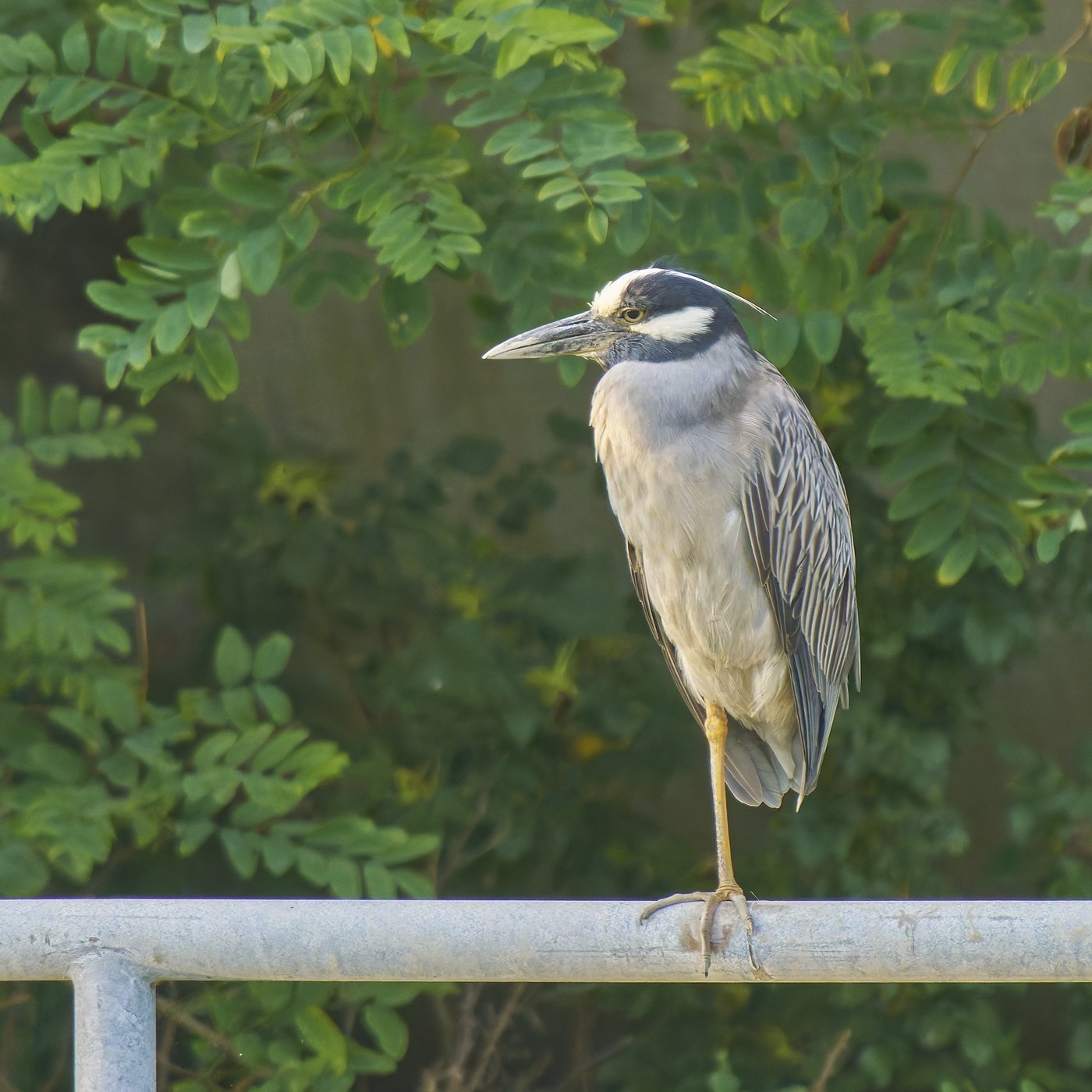
Key Field Marks
- Size and shape: A medium, thickset heron around 24 inches tall, with a shorter neck and thicker bill than most herons, giving it a hunched, powerful look.
- Adult plumage: Overall blue-gray body, black face and crown broken by a bold white cheek patch, and a pale yellowish crown patch that trails into thin plumes during the breeding season.
- Bare parts: Deep red eye, thick black bill, and notably long, thick yellow-orange to orange legs that extend well beyond the tail in flight.
- Immature plumage: Brown overall with bold white spots on the wing coverts and fine streaking below; separated from immature Black-crowned Night-Heron by its thicker, all-dark bill and longer legs.
Similar Species
- Black-crowned Night-Heron is the main confusion species: adults differ by having a black (not gray) back, white underparts, and shorter, duller yellow legs, plus lacking the bold white cheek patch. Immatures of the two are separated mainly by bill thickness (Yellow-crowned's bill is thicker and entirely dark) and leg length (Yellow-crowned's legs project farther past the tail in flight).
Habitat, Range & Season
- Found along coasts, tidal marshes, mangroves, swamps, and increasingly inland waterways and even suburban ponds and lawns in parts of its range.
- Breeds across the southeastern and eastern United States, the Gulf Coast, Mexico, Central America, the Caribbean, and parts of South America; northern populations are migratory and winter in Central America and the Caribbean, while southern populations are largely resident.
- More active at dusk, dawn, and night than by day, though it is regularly seen foraging in daylight, especially away from human disturbance.
Voice
- Gives a sharp, barking "quock" or "woc" call, higher-pitched and shorter than the deeper "quawk" of the Black-crowned Night-Heron, most often heard at dusk or when flushed.
Frequently asked questions
How do I tell Yellow-crowned from Black-crowned Night-Heron?
Adult Yellow-crowned Night-Herons have an all-gray body, a bold white cheek patch, and longer yellow-orange legs, while Black-crowned Night-Herons have a black back, white underparts, and shorter legs.
Why is it called Yellow-crowned Night-Heron if the crown looks pale or cream colored?
The crown patch can appear pale yellow, cream, or almost white depending on light and age, but it is set off by black surrounding feathers and is the source of the name.
What does a Yellow-crowned Night-Heron eat, and how does that help identify it?
It specializes heavily on crabs and crayfish, and its thick, heavy bill is adapted for crushing crustacean shells, a useful clue when comparing bill shape to other herons.
Is the Yellow-crowned Night-Heron active during the day?
Despite its name, it is regularly seen foraging by day, especially in undisturbed areas, though it is also active at dusk and after dark.