
Yellow-breasted Chat Identification Guide
A large, skulking songbird with a brilliant yellow throat and breast, best known for its bizarre, ventriloquial song from dense thickets.
Read the full Yellow-breasted Chat encyclopedia entry →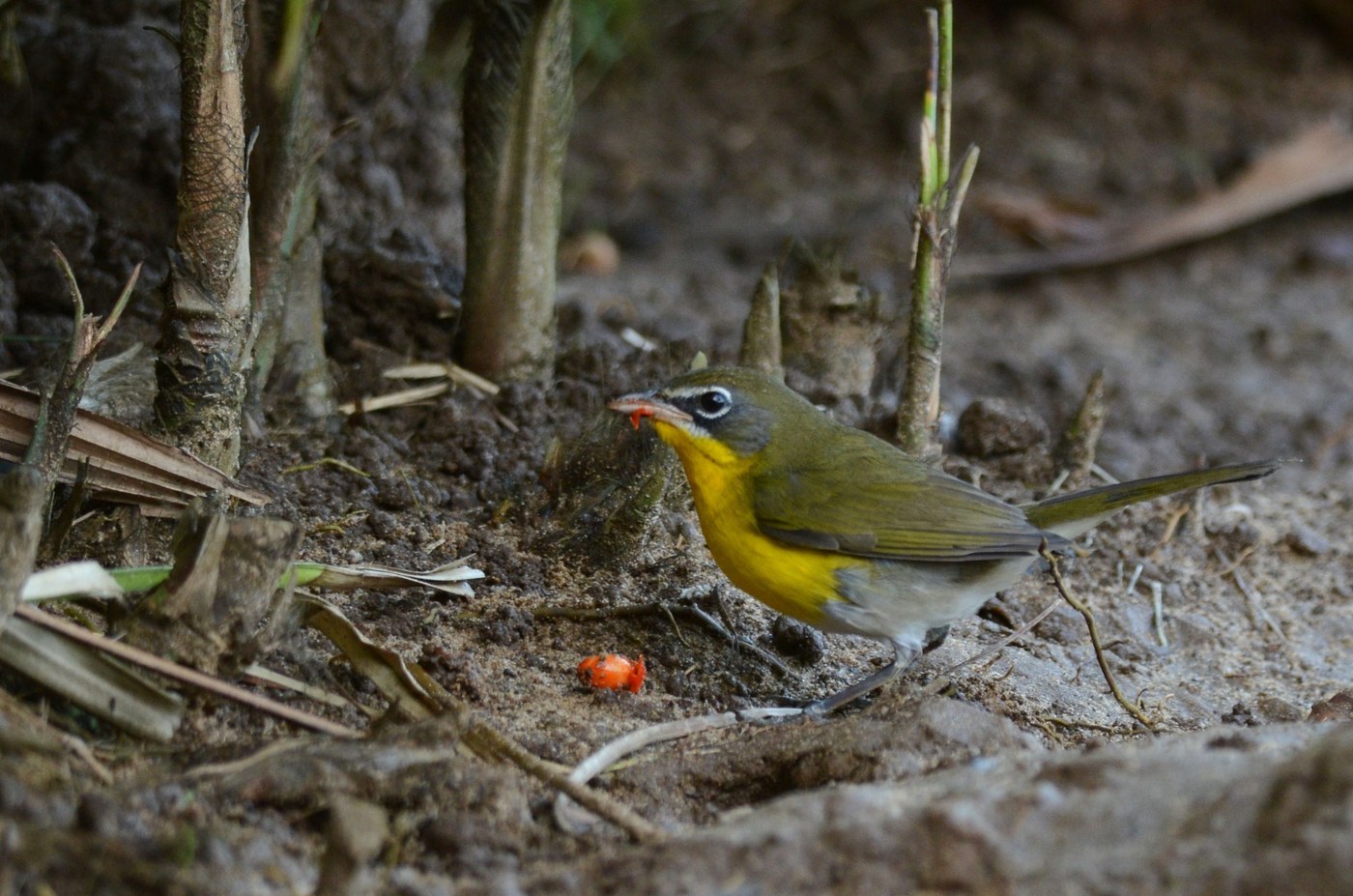
Key Field Marks
- Size and shape: Noticeably larger and chunkier than any true wood-warbler, roughly 7.5 inches long with a long tail, thick neck, and a heavy, slightly downcurved black bill.
- Plumage: Olive-green above, with a vivid lemon-to-orange-yellow throat and breast that sets off sharply against a white lower belly.
- Face pattern: White "spectacles" formed by white lores and a broken white eyering give it a bespectacled look.
- Behavior: Spends most of its time hidden deep in tangled shrubs and briar thickets, hopping and clambering rather than flitting like a typical warbler. Often gives itself away with sound before it is seen.
Similar Species
- No other North American songbird combines its large size, thick bill, and bright yellow throat, making confusion unlikely once seen well.
- Common Yellowthroat and other yellow-throated warblers are far smaller and slimmer with thin bills and lack the chat's bulk and white spectacles.
Habitat, Range & Season
- Breeds across much of the lower 48 United States and northern Mexico in dense early-successional habitat: overgrown fields, forest edges, streamside thickets, and regenerating clear-cuts.
- Strongly migratory; winters primarily in Mexico and Central America.
- Arrives on breeding grounds in late April to May and departs by September in most of its range.
Voice
- One of the oddest songs in North American birding: a jumbled, disjointed series of whistles, harsh chatters, croaks, cackles, and rattles, often delivered with long pauses, sometimes at night.
- Frequently sings from a hidden perch or during a distinctive fluttering, legs-dangling display flight above the brush.
- The scattershot, almost mockingbird-like variety of notes is itself a strong identification clue.
Frequently asked questions
Is the Yellow-breasted Chat really a warbler?
It was long classified with the wood-warblers but its size, thick bill, and behavior are so different that taxonomists now place it in its own family, Icteriidae, as the sole member.
Why is the Yellow-breasted Chat so hard to see?
It stays low in dense, thorny thickets and moves through cover rather than perching in the open, so most encounters are heard-only or brief glimpses.
What habitat should I search for a chat in?
Look in overgrown, scrubby edge habitat such as abandoned fields, streamside brush, and young regrowth after logging or fire, not mature forest interior.
How can I tell a chat is nearby without seeing it?
Listen for its erratic mix of whistles, grunts, and rattling notes, often given from deep cover or during a slow, floppy display flight over the brush.