
Yellow-bellied Sapsucker Identification Guide
A red-capped, black-and-white patterned woodpecker best confirmed by its neat horizontal rows of sap wells drilled in tree bark.
Read the full Yellow-bellied Sapsucker encyclopedia entry →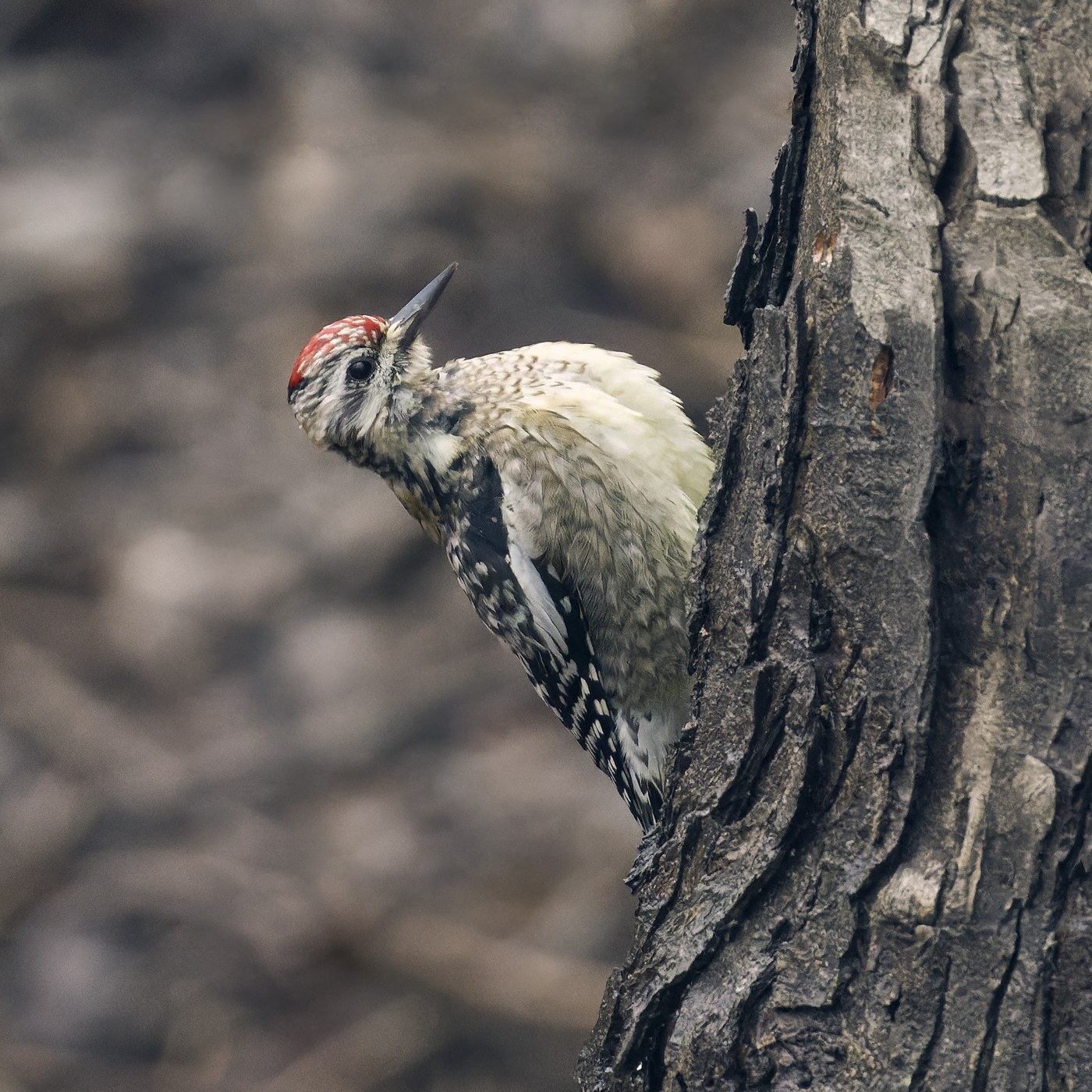
Key Field Marks
- Size & shape: A medium-sized woodpecker, about 8.5 inches, with the typical stiff-tailed, bark-clinging woodpecker shape.
- Plumage: Black-and-white barred back and wings with a bold white wing patch visible at rest and in flight, a black bib across the upper breast, and a pale yellowish wash over the belly (often subtle).
- Head: Red forecrown in both sexes; males also have a red throat outlined in black, while females have a white throat.
- Behavior: The clinching field mark is its feeding sign — neat, evenly spaced horizontal rows of small holes ("sap wells") drilled in live tree bark, which it revisits to drink sap and catch insects attracted to it.
Separating It From Similar Species
- Red-naped Sapsucker: Western counterpart with a red patch on the nape as well as the crown, and a more broken white border around the red throat; ranges barely overlap and hybrids occur where they meet.
- Red-breasted Sapsucker: Pacific coast species with the entire head and breast washed red, lacking the black-and-white facial pattern of Yellow-bellied.
- Downy/Hairy Woodpecker: Both lack the large red crown patch, black breast bib, and barred-back pattern, and neither drills organized sap-well rows.
- Even without a clear view of the bird, finding rows of small, uniform holes girdling a tree trunk is essentially diagnostic for a sapsucker in a given region.
Habitat, Range & Season
- Breeds across Canada and the northeastern/north-central United States in deciduous and mixed forests, often near aspen, birch, and maple.
- Winters through the southeastern United States, Mexico, Central America, and the Caribbean, using a wide range of wooded habitats including orchards and suburban trees.
- A migratory species; look for it on breeding grounds in summer and across the eastern half of the continent, plus the extreme West Coast, during migration and winter.
Voice
- Calls include a nasal, cat-like mewing "waah" and soft "quee-urk" notes.
- Drumming is irregular and stuttering — a slow initial burst followed by an uneven, Morse-code-like pattern — unlike the steady, even drumming rolls of most other woodpeckers.
Frequently asked questions
What is the best sign that a Yellow-bellied Sapsucker has been in an area?
Neat horizontal rows of small, evenly spaced holes drilled into live tree bark — the sap wells the bird maintains and revisits — are a near-diagnostic clue even without seeing the bird.
How do I tell males and females apart?
Males show a red throat bordered in black, while females have a white throat; both sexes share the red forecrown and black-and-white barred back.
How is Yellow-bellied Sapsucker different from Red-naped Sapsucker?
Red-naped Sapsucker adds a red patch on the nape and shows more black intruding into the white border around the throat; the two are largely separated by range, with limited overlap and hybridization in the Rockies.
Does the yellow belly show well in the field?
Not always — the yellow wash on the underparts can be quite subtle and is often less useful for identification than the head pattern, wing patch, and sap-well drilling behavior.