
Woodchat Shrike Identification Guide
A striking Mediterranean shrike with a chestnut crown, black mask, and bold white wing and scapular patches, hunting from exposed perches in open country.
Read the full Woodchat Shrike encyclopedia entry →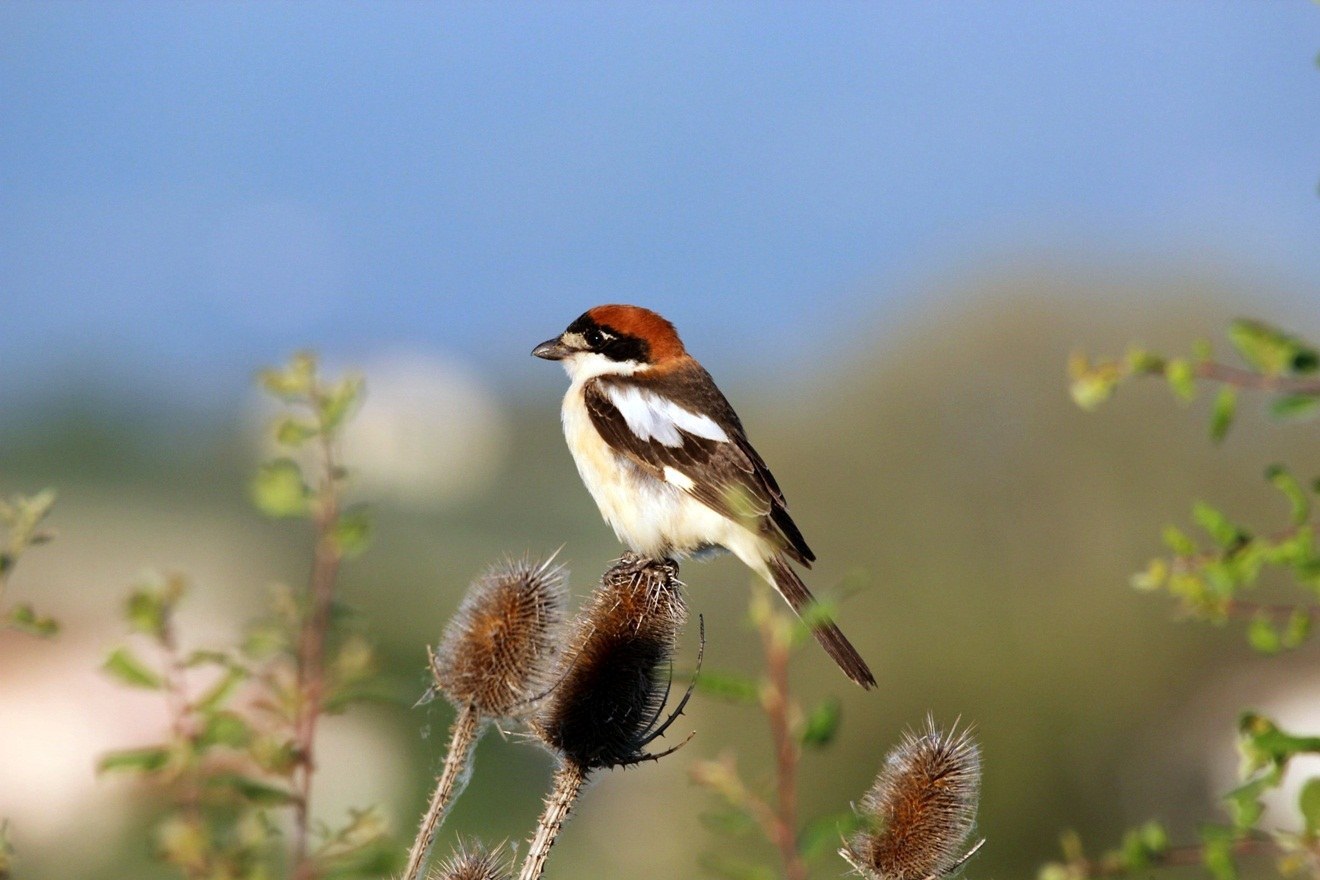
Key Field Marks
- Size & shape: A medium-sized shrike (about 17–18 cm) with the typical hook-tipped bill, upright posture, and long tail of the shrike family.
- Male plumage: Bright chestnut crown and nape contrasting with a black face mask, black upperparts, and a bold white patch on the scapulars (shoulder) plus a white patch at the base of the black wing — very striking in flight or at rest.
- Underparts: Clean white below.
- Female plumage: Duller version of the male pattern — browner crown, less contrasting mask, and finer barring on the underparts, but usually still shows a hint of the white wing/scapular patches.
- Behavior: Perches prominently on wires, bushes, or dead branches in open habitat, dropping down to catch large insects and occasionally small vertebrates; sometimes impales prey on thorns, a classic shrike "larder" behavior.
Separating It From Similar Species
- Red-backed Shrike lacks the chestnut nape and white wing patch, showing a grey crown/nape and rufous back instead.
- Masked Shrike is more black-and-white overall with a much reduced or absent chestnut patch limited to the flanks, and a more slender build.
- Great Grey Shrike is larger, mostly grey with black-and-white wings, and lacks any chestnut on the head.
- The bright chestnut crown/nape combined with bold white wing and scapular patches make adult male Woodchat Shrikes distinctive among European shrikes.
Where and When to Look
- Habitat: Open country with scattered trees, bushes, orchards, vineyards, and scrubby farmland — needs exposed perches for hunting.
- Range: Southern Europe, North Africa, and parts of the Middle East during the breeding season.
- Season: Summer migrant, typically present from April to September; winters in sub-Saharan Africa.
- Best viewing: Scan fence lines, wires, and isolated bushes in warm, open Mediterranean-type habitats during the breeding season.
Voice
- A harsh, chattering series of scratchy notes, along with some mimicry of other bird species mixed into its song.
- Calls include a sharp, harsh alarm note given when disturbed near the nest.
Frequently asked questions
What is the most distinctive feature of a Woodchat Shrike?
The male's bright chestnut crown and nape paired with a black mask and bold white patches on the wing and scapulars make it one of the most striking European shrikes.
How is a Woodchat Shrike different from a Red-backed Shrike?
Woodchat Shrike has a chestnut crown/nape and a bold white wing patch, while Red-backed Shrike has a grey head and rufous back with no white wing patch.
Where does the Woodchat Shrike live and breed?
It breeds in open, scrubby country with scattered trees across southern Europe, North Africa, and the Middle East, wintering in sub-Saharan Africa.
Does the Woodchat Shrike impale its prey?
Yes, like other true shrikes it sometimes impales large insects or small vertebrates on thorns or barbed wire to store or anchor food while feeding.