
Wood Stork Identification Guide
A large, bald-headed American wading bird with white plumage, black flight feathers, and a heavy downcurved bill used to feel for prey in shallow water.
Read the full Wood Stork encyclopedia entry →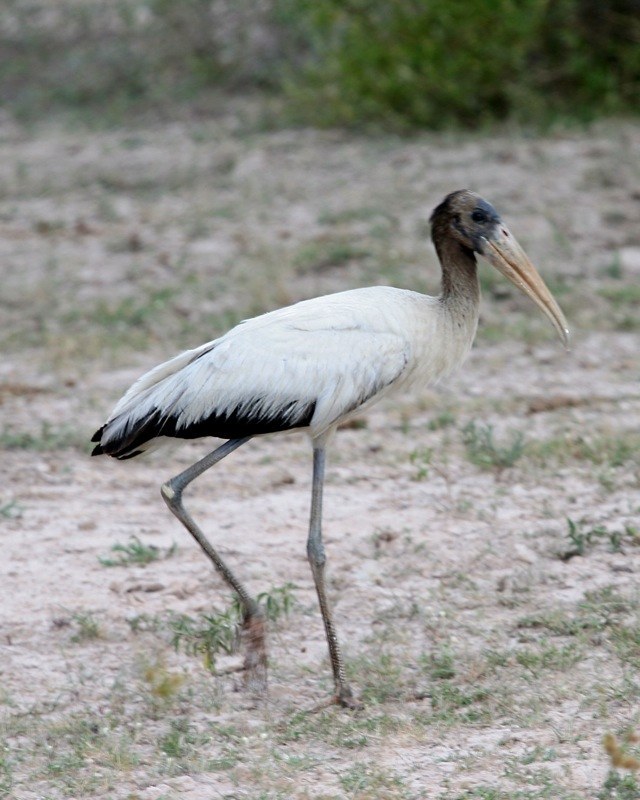
Key Field Marks
- Size & shape: A very large wading bird, up to 115 cm tall with a wingspan over 1.5 m; heavy-bodied with long legs and neck.
- Head: Bald, dark grey to blackish, scaly-looking skin on the head and upper neck — unfeathered like a vulture's, which is a key diagnostic feature among American storks.
- Bill: Thick, long, and distinctly downcurved, dark grey to blackish.
- Plumage: Overall white body with black flight feathers and a black tail, conspicuous in flight; legs dark with pale pink feet.
- Behavior: Feeds by wading with its bill open and partly submerged, snapping shut reflexively (in milliseconds) on contact with prey — a tactile feeding method called "grope-feeding" rather than hunting by sight.
- In flight: Soars on thermals with neck and legs fully extended, often in large groups, distinguishing it from herons and egrets which fly with the neck retracted.
Separating It From Similar Species
- Great Egret and White Ibis are both smaller, fully white-feathered on the head, and have thin, straight or downcurved yellow/pink bills rather than a bald grey head and heavy dark bill.
- Whooping Crane flies with the neck extended too, but has a red facial patch, black wingtips only (not full black flight feathers), and a very different silhouette and range.
- The combination of a bald grey-black head, heavy downcurved bill, and neck-extended flight silhouette is unique among white American wading birds.
Where and When to Look
- Habitat: Freshwater and brackish wetlands, cypress swamps, mangroves, and shallow marshes with fluctuating water levels that concentrate fish as pools shrink.
- Range: Southeastern United States (notably Florida, Georgia, and coastal South Carolina), Mexico, Central America, and much of South America.
- Season: Present year-round in Florida; U.S. populations expand and shift with drought cycles and water management, with post-breeding dispersal bringing birds farther north in late summer.
- Best viewing: Visit managed wetlands and swamp boardwalks during the dry season, when receding water concentrates fish and storks gather to feed communally.
Voice
- Largely silent away from the nest; adults have no true song and rarely vocalize.
- At breeding colonies, they communicate mainly through bill-clattering displays rather than calls.
Frequently asked questions
What is the most distinctive feature of a Wood Stork?
Its bald, dark, scaly-skinned head and neck combined with a heavy downcurved bill — no other white American wading bird shows a fully unfeathered grey-black head.
How does a Wood Stork find food?
It wades with its bill open and partly submerged in shallow water, snapping shut by reflex the instant it touches prey, a tactile technique called grope-feeding rather than visual hunting.
How can you tell a Wood Stork from a Great Egret in flight?
Wood Storks fly with the neck fully extended and show black flight feathers against white body plumage, while Great Egrets fly with the neck tucked in an S-curve and are entirely white.
Where in the United States can I see Wood Storks?
Florida hosts the largest year-round population; birds also occur in coastal Georgia and South Carolina, with wider post-breeding dispersal in late summer.