
Winter Wren Identification Guide
A tiny, dark, stub-tailed wren of eastern North American forests, best known for its remarkably long, bubbling, high-pitched song relative to its minuscule size.
Read the full Winter Wren encyclopedia entry →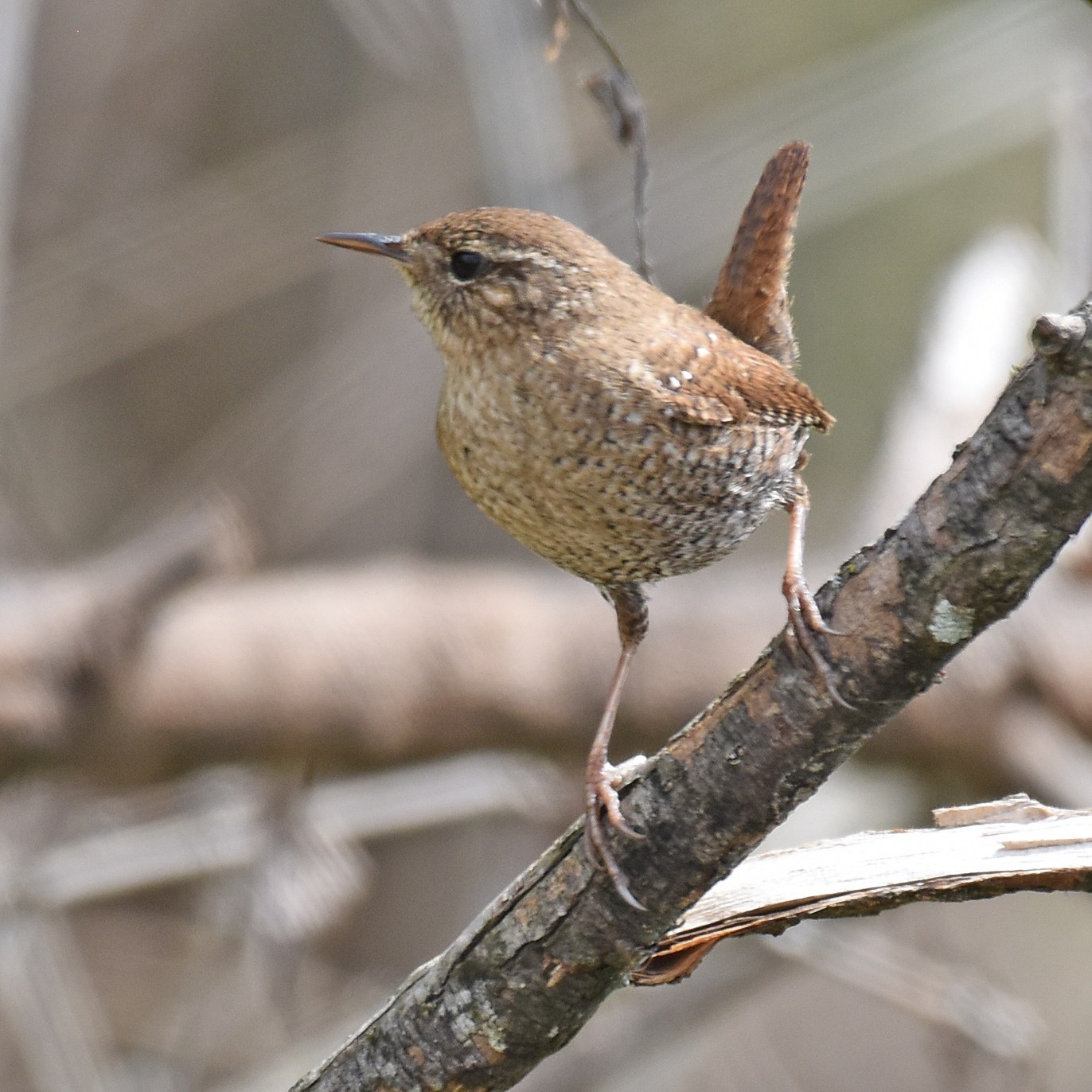
Key Field Marks
- Very small (9-10 cm), plump, dark rufous-brown wren with a proportionally very short tail, usually held cocked sharply upward.
- Fine dark barring across the flanks, belly, and undertail coverts, more extensive and finer than in the similar House Wren.
- Short, thin, slightly downcurved bill and a faint pale eyebrow stripe (supercilium).
- Overall darker and richer chestnut-brown than House Wren, with more contrasting dark barring on the underparts, especially the belly and vent area.
- Rounded wings and a mouse-like habit of creeping through tangles, roots, and brush piles close to the ground, often disappearing into cover.
Similar Species
- House Wren is paler grayish-brown, less richly colored, with less obvious barring on the belly, a slightly longer tail, and prefers more open, brushy habitats including gardens, unlike Winter Wren's preference for dense, damp forest understorey.
- Pacific Wren (western North America) was formerly considered the same species as Winter Wren; it is very similar in appearance but has a different, even more complex and buzzier song, and the two are now separated primarily by range (Pacific Wren in the west, Winter Wren in the east) and voice.
- Sedge Wren and Marsh Wren occupy different habitats (wet marsh/sedge meadows) and both show bolder white streaking on the back that Winter Wren lacks.
Habitat & Range
- Breeds across boreal and northern mixed forests of eastern Canada and the northeastern/upper Midwest United States, extending south in the Appalachians in cool, moist forest.
- Favors dense, shaded forest understorey with fallen logs, root tangles, ferns, and brush piles, especially near streams or in ravines.
- Northern populations migrate south for winter into the eastern and southeastern United States, where they occupy similar dense, brushy, often damp woodland understorey.
Voice
- Song: an extraordinarily long, rapid, high-pitched, bubbling and tinkling cascade of trills and warbles, remarkable for its length and complexity relative to the bird's tiny size; can last 7-10 seconds or more.
- Call: a sharp, hard "chip-chip" or a scolding, rattling call given when agitated.
Behavior Notes
- Forages by creeping mouse-like through dense low cover, root tangles, and brush, gleaning insects and spiders rather than foraging in the open.
- Builds a domed nest tucked into root masses, stumps, or brush piles, often near water in shaded forest.
Frequently asked questions
How can I tell Winter Wren from House Wren?
Winter Wren is darker, richer rufous-brown with finer, more extensive barring on the belly and a shorter tail, and it favors dense, damp forest understorey rather than the more open, brushy habitats House Wren prefers.
What is the difference between Winter Wren and Pacific Wren?
They were once considered one species; Winter Wren occurs in eastern North America and Pacific Wren in the west, and while very similar in plumage, their songs differ and this, along with range, is used to separate them.
Why is the Winter Wren's song so notable?
For such a tiny bird, it produces an unusually long, fast, high-pitched, and complex bubbling song that can run for many seconds, often considered disproportionate to its small size.
What habitat should I search for Winter Wren in?
Look in cool, moist, shaded forest with dense understorey, fallen logs, and root tangles, often near streams or ravines, where the bird creeps low through cover rather than perching in the open.