
Wilson's Snipe Identification Guide
A cryptically patterned North American shorebird with an extremely long bill, best recognized by its explosive zigzag flush and the eerie winnowing sound of its display flight.
Read the full Wilson's Snipe encyclopedia entry →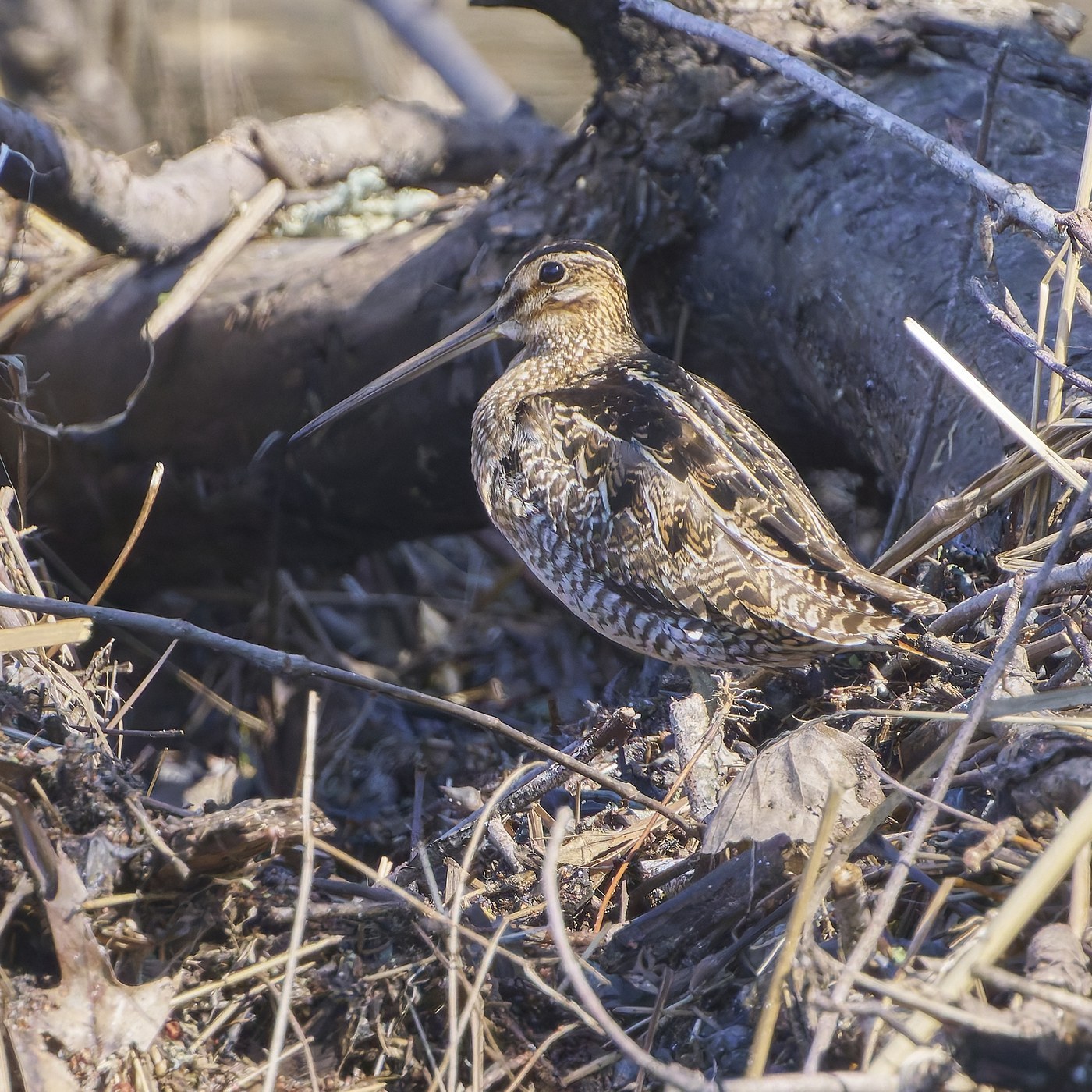
Key Field Marks
- Chunky, short-legged shorebird (25-28 cm) with an extremely long, straight bill used for probing deep into mud.
- Intricately patterned plumage of dark brown, buff, and black streaks and bars, with bold buffy-white stripes running down the back (braces) that create a striped appearance from above - excellent camouflage in marsh vegetation.
- Broad buffy eyebrow stripe and dark eye-line on a striped face; relatively short legs for a shorebird, colored pale olive-gray.
- Stocky, hunch-backed posture; wings appear short and rounded and the tail short in flight.
- In flight, shows a fast, twisting, erratic escape flight low over vegetation before leveling off, often calling a harsh "scaipe" as it flushes.
Similar Species
- American Woodcock is a related but very different-looking bird: much plumper, with a shorter neck, larger eyes set high and far back on the head, and rich buff-orange (not streaked white/brown) underparts; it favors damp woodland rather than open marsh.
- Common Snipe (the Old World counterpart, now considered a separate species from Wilson's Snipe) is very similar but has a narrower white trailing edge to the wing and typically eight rather than seven pairs of tail feathers - a difference really only assessable in the hand.
- Dowitchers have longer legs, a straighter feeding posture with a "sewing machine" probing action, and lack the bold back stripes and hunched shape of snipe.
Habitat & Range
- Breeds across Canada, Alaska, and the northern United States in freshwater marshes, wet meadows, bogs, and the edges of ponds and streams with soft mud and dense low cover.
- Winters across the southern and central United States south through Mexico, Central America, and the Caribbean, in similar wet, marshy habitats.
- Highly cryptic and often stays hidden in dense marsh vegetation until flushed at close range.
Voice
- Flush call: a rasping, nasal "scaipe."
- During courtship, males perform a "winnowing" display flight, diving through the air so that air rushing through modified outer tail feathers produces a distinctive, tremulous, hollow hooting sound audible from a great distance, especially at dawn, dusk, and on overcast days.
Behavior Notes
- Probes soft mud with its long, sensitive, flexible-tipped bill to find earthworms and other invertebrates, often bobbing the whole body while feeding.
- Flushes suddenly at close range with a sharp call and a fast, zigzagging escape flight, a classic identification cue even when the bird itself is hard to see well.
Frequently asked questions
What is the difference between Wilson's Snipe and Common Snipe?
They were formerly considered one species; Wilson's Snipe (the North American form) typically has narrower white wing trailing edges and usually seven pairs of tail feathers versus eight in Common Snipe of Eurasia, differences generally only confirmed in the hand.
How can I tell Wilson's Snipe from American Woodcock?
Snipe has a slimmer body, striped (not solid buffy-orange) underparts, bold pale stripes down the back, and prefers open marshes, while woodcock is plumper, has large eyes set far back on the head, solid buff-orange underparts, and favors damp woodland.
What is the winnowing sound associated with snipe?
It is a hollow, tremulous hooting produced by air vibrating through the outer tail feathers as a displaying male dives through the air during courtship flights, most often heard at dawn or dusk.
Where is the best place to see Wilson's Snipe?
Search wet meadows, marsh edges, and muddy pond or ditch margins with dense low cover; they are easiest to detect when they flush suddenly at close range with a sharp call.