
Willow Ptarmigan Identification Guide
A circumpolar Arctic grouse that molts from mottled brown summer plumage to pure white winter plumage, best told from Rock Ptarmigan by larger size and lack of a black eye-line.
Read the full Willow Ptarmigan encyclopedia entry →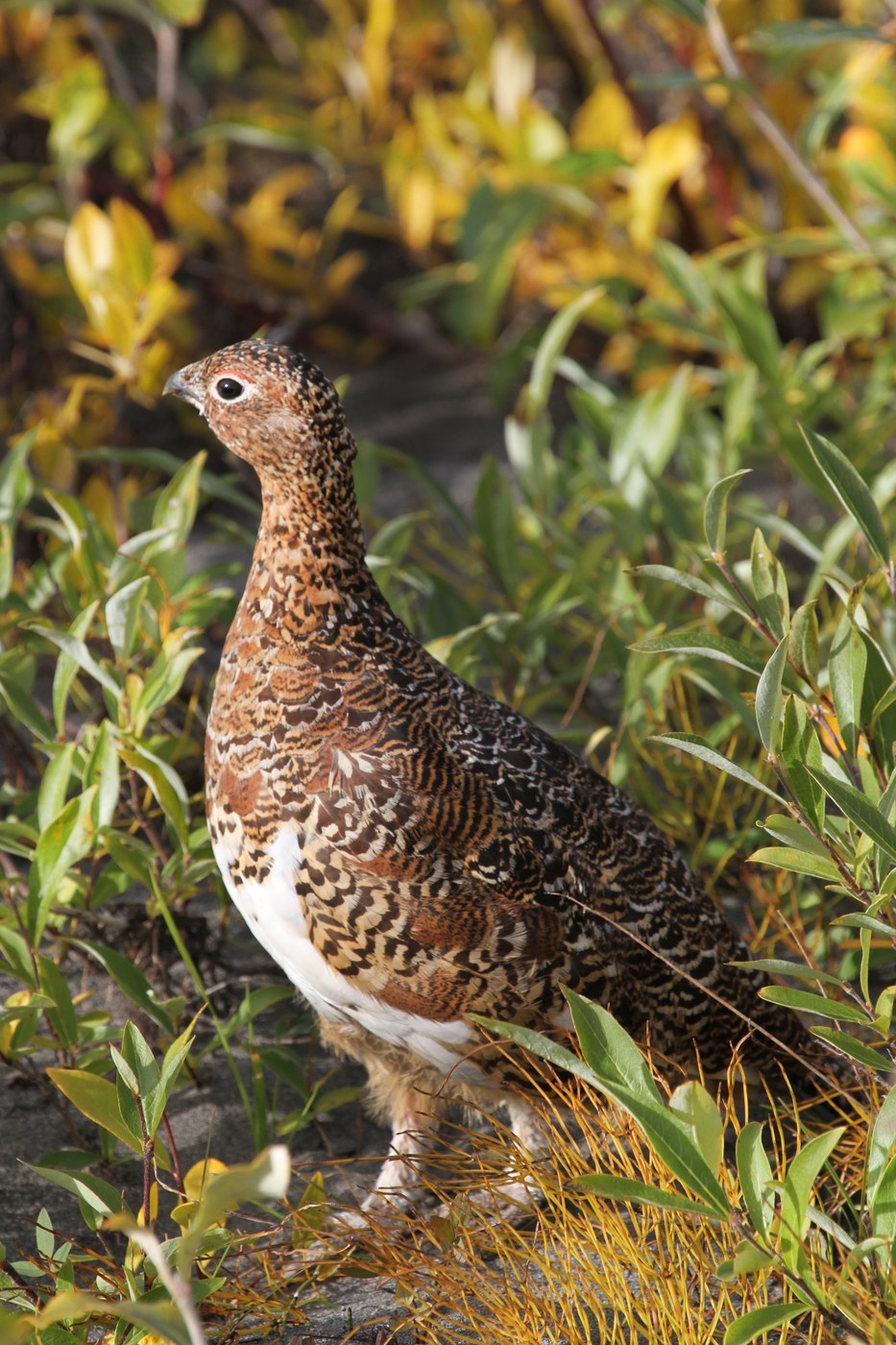
Key Field Marks
- Plump, medium-large grouse (33-43 cm) with a small head, short rounded wings, and heavily feathered legs and feet (an adaptation for walking on snow and cold).
- Three distinct seasonal plumages: pure white in winter (males keep a black tail); rich chestnut-red head, neck, and breast with barred brown-and-black upperparts in early breeding-season males; and finely barred grayish-brown "summer" plumage in females and non-breeding birds.
- Males have a prominent red comb (fleshy wattle) over the eye, most conspicuous in spring display.
- In all plumages, the belly and wings stay white, and the tail is black with a white terminal band (visible in flight).
- Bill is notably heavier and deeper than in Rock Ptarmigan.
Similar Species
- Rock Ptarmigan is smaller and slimmer-billed; breeding-plumage male Rock Ptarmigan has a black line through the eye that Willow Ptarmigan lacks, and in winter male Rock Ptarmigan retains a black eye-line/lore while male Willow Ptarmigan does not.
- White-tailed Ptarmigan (found farther south in alpine zones of western North America) is smaller and has an all-white tail in every season, unlike the black-and-white tail of Willow Ptarmigan.
- Female/winter Willow and Rock Ptarmigan overlap extensively and can be very difficult to separate; overall bulkier shape, heavier bill, and lowland/shrubby habitat favor Willow.
Habitat & Range
- Circumpolar in the Arctic and Subarctic: breeds across northern Scandinavia, Russia, Alaska, and northern Canada, generally at lower elevations than Rock Ptarmigan.
- Prefers willow and birch scrub, tundra with dwarf shrubs, and boggy lowlands - habitat richer in willow than the barer, rockier terrain favored by Rock Ptarmigan.
- Largely non-migratory but shifts to lower, more sheltered shrub habitat in winter, sometimes moving into more open terrain when willow buds are the main winter food.
- The state bird of Alaska, where it is common and widespread.
Voice
- A loud, far-carrying "go-BACK, go-back-back-back" or harsh croaking, cackling calls given by displaying males, often described as raucous and almost laughing.
Behavior Notes
- Feeds heavily on willow buds, catkins, and twigs in winter, and on berries, leaves, and insects (for chicks) in summer.
- Highly cryptic; relies on camouflage and will freeze motionless before flushing explosively at close range.
Frequently asked questions
How do I tell Willow Ptarmigan from Rock Ptarmigan?
Willow Ptarmigan is larger and heavier-billed and males lack the black eye-line present on male Rock Ptarmigan in both breeding and winter plumage; habitat also helps, since Willow Ptarmigan favors shrubby lowlands while Rock Ptarmigan prefers barer, rockier alpine terrain.
Does the Willow Ptarmigan turn completely white in winter?
Yes, both sexes molt into essentially all-white plumage in winter except for the black tail feathers, which helps them blend into snowy tundra.
What is that red patch above a ptarmigan's eye?
It is a fleshy comb (wattle) that becomes enlarged and bright red on males during the breeding season as part of courtship display.
Where is the best place to find Willow Ptarmigan?
Look in willow and dwarf-birch scrub on Arctic and subarctic tundra across Alaska, northern Canada, Scandinavia, and Russia, especially in low, shrubby drainages rather than bare rocky ridgelines.