
Willet Identification Guide
A large, plain gray-brown shorebird that transforms in flight, flashing a bold black-and-white wing pattern unlike any other North American sandpiper.
Read the full Willet encyclopedia entry →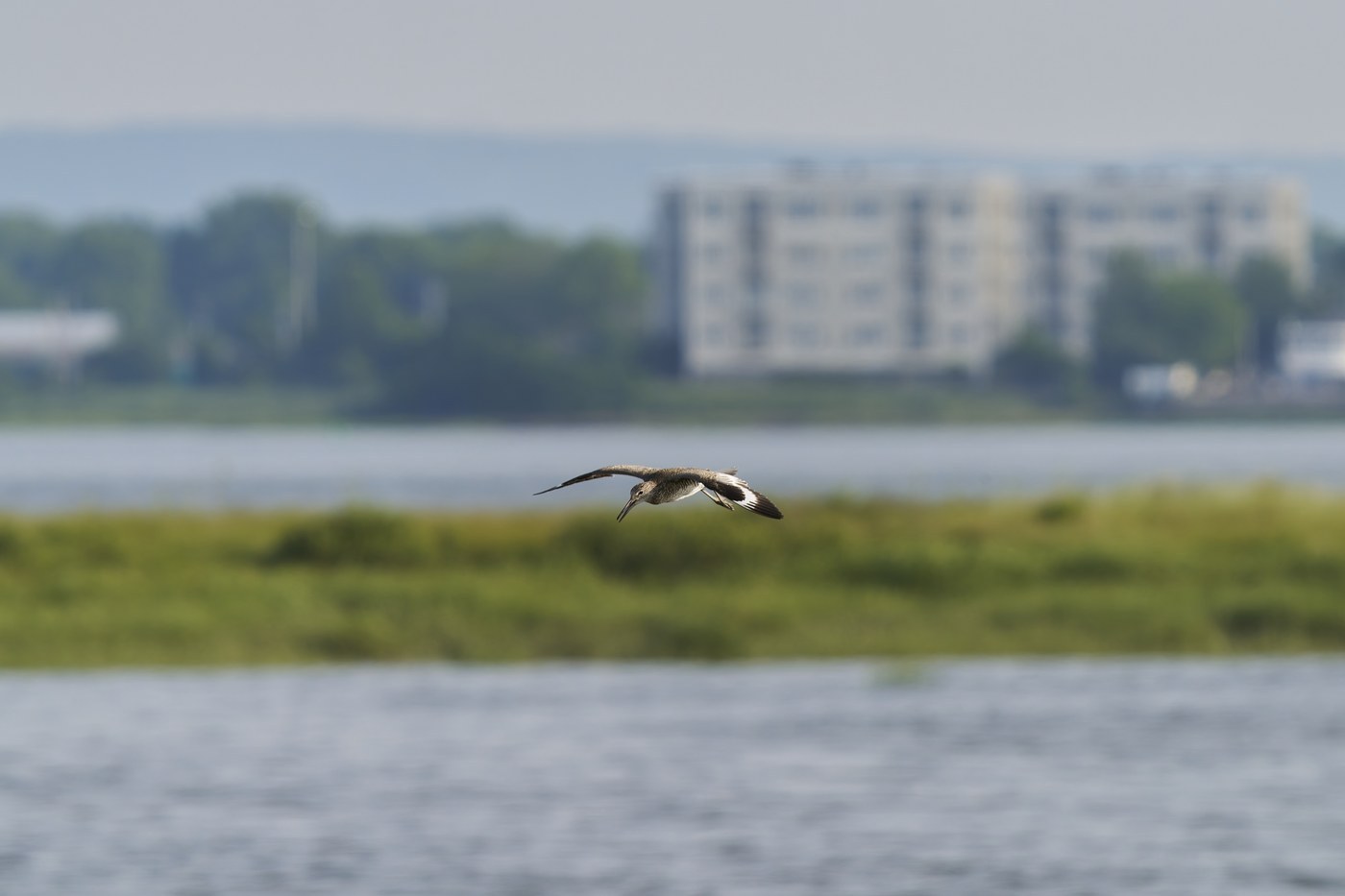
Overview
The Willet (Tringa semipalmata) is a big, robust shorebird found along both coasts and in interior wetlands of North America, often unremarkable-looking at rest but instantly recognizable the moment it takes flight.
Key Field Marks
- Size & shape: Large and stocky for a shorebird, with long, thick, blue-gray legs and a long, straight, heavy bill.
- Plumage at rest: Plain grayish-brown above and paler below, with fairly nondescript, unpatterned plumage that can look almost featureless — one of the plainest-looking large shorebirds.
- Wing pattern in flight: The defining field mark — a bold black-and-white striped pattern across the wing, with a white band bordered by black, visible the instant the bird opens its wings; unmistakable and visible at a great distance.
- Bill and legs: Straight, stout, dark bill; blue-gray legs, longer and thicker than most other Tringa sandpipers.
- Behavior: Often solitary or in loose groups, foraging by probing mud and sand for invertebrates; extremely vocal and aggressive near nests, often the first to give alarm calls that flush other shorebirds.
Separating It From Similar Species
- Greater Yellowlegs: Has bright yellow legs (not blue-gray) and lacks the bold black-and-white wing pattern in flight; more slender bill.
- Marbled Godwit: Larger still with a long, upturned bicolored bill and warm buffy-cinnamon plumage, quite different from Willet's plain gray-brown.
- Two subspecies: Eastern Willet (breeding on the Atlantic and Gulf coasts) is slightly smaller, darker, and more coastal in habitat; Western Willet (breeding in interior wetlands of the western US and Canada) is larger, paler, and longer-billed, wintering more on the Pacific coast — both share the same diagnostic wing pattern.
Where and When to Find One
Willets breed along the Atlantic and Gulf coasts (Eastern Willet, in salt marshes and beaches) and across interior prairie wetlands of the western US and southwestern Canada (Western Willet, in wet meadows and marshes near lakes). Outside the breeding season, Willets of both populations are found along coastlines throughout the US, including the Pacific coast, foraging on beaches, mudflats, and salt marshes; many winter as far south as South America. They can be found year-round in coastal areas, with interior/western breeders present mainly spring through summer before moving to the coast.
Voice
Extremely vocal, especially when nesting or alarmed, giving a loud, ringing, repeated "pill-will-willet" call that gives the species its name, along with sharp, urgent alarm calls when a threat approaches the nesting area.
Frequently asked questions
What is the easiest way to identify a Willet?
At rest it looks like a plain gray-brown shorebird, but the instant it flies it reveals a bold black-and-white striped wing pattern that is unmistakable among North American shorebirds.
How is Willet different from Greater Yellowlegs?
Willet has blue-gray legs and a bold black-and-white flight pattern, while Greater Yellowlegs has bright yellow legs and lacks that striking wing pattern.
Where do Willets breed?
Eastern Willets breed in coastal salt marshes along the Atlantic and Gulf coasts, while Western Willets breed in interior prairie wetlands of the western US and Canada.
Why is the Willet called that?
Its name imitates its loud, ringing call, often rendered as 'pill-will-willet,' frequently heard near nesting territories.