
Whitehead Identification Guide
A small, active New Zealand forest songbird with a snow-white head and underparts contrasting with brown upperparts, moving in noisy foraging flocks through the canopy.
Read the full Whitehead encyclopedia entry →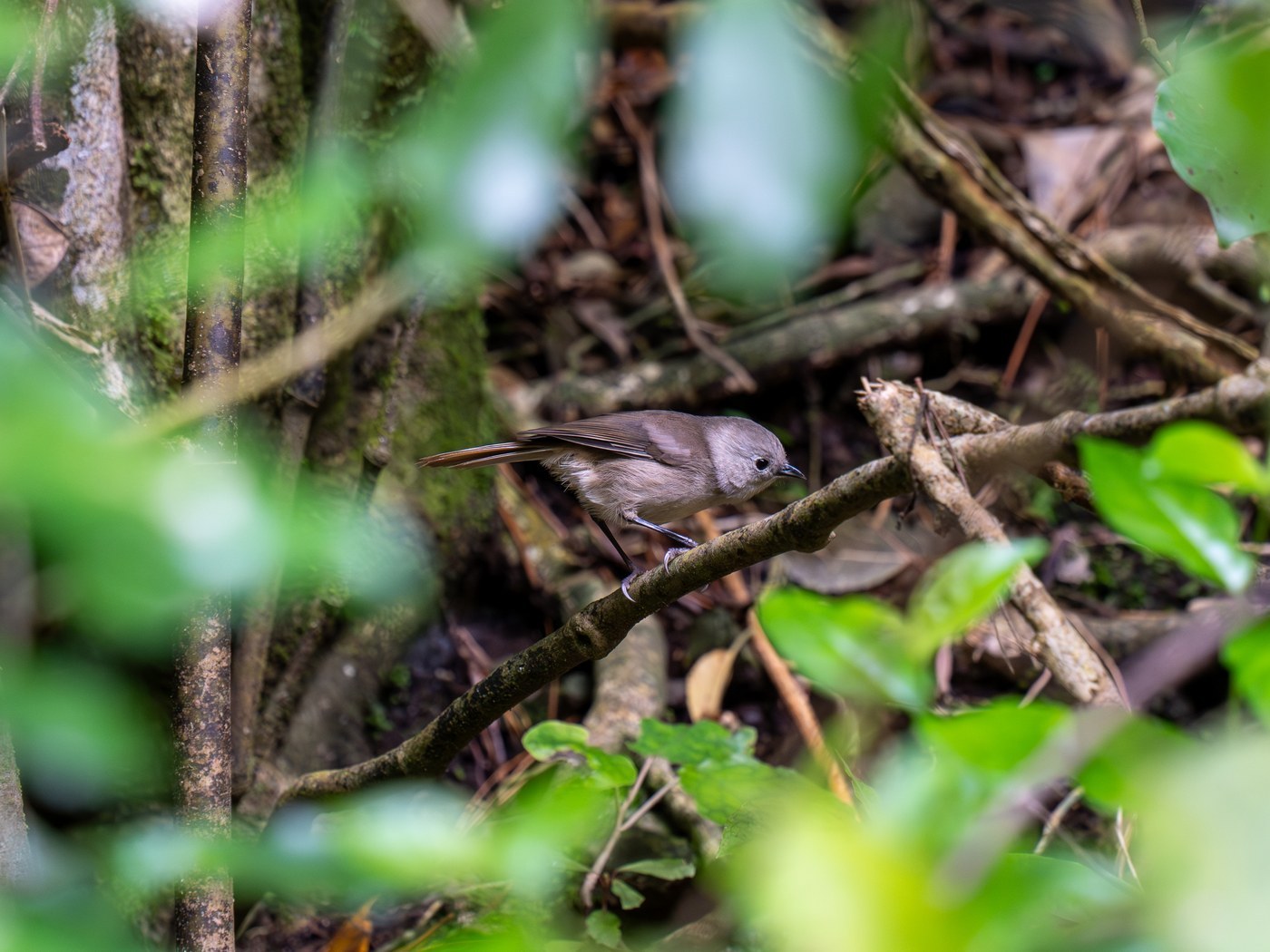
Overview
The Whitehead (Mohoua albicilla), known in Maori as popokotea, is a small forest passerine endemic to the North Island of New Zealand, part of a small family of New Zealand endemics. It is a lively, social bird typically encountered in mixed-species foraging flocks moving actively through native forest canopy.
Key Field Marks
- Size & shape: Small, roughly sparrow-sized, with a slim build, fine bill, and a moderately long tail often held cocked.
- Male plumage: Head, neck, and underparts are clean white, sharply contrasting with warm grayish-brown to olive-brown back, wings, and tail.
- Female/immature plumage: Similar pattern but duller and more washed with brown/gray on the head, less crisply white than the male.
- Bill: Thin, pointed, dark bill suited to gleaning insects from foliage and bark.
- Behavior: Highly social and vocal, moving in family or mixed flocks through the mid- and upper canopy, constantly calling to maintain contact while gleaning insects; also known for occasionally hosting parasitic Long-tailed Cuckoo eggs.
Separating It From Similar Species
- Yellowhead (South Island only, no range overlap): Yellowhead has a bright yellow head and underparts rather than white; the two species are geographically separated (Whitehead: North Island; Yellowhead: South Island), so range alone usually settles identification.
- Silvereye: Much smaller with an obvious white eye-ring and greenish upperparts, lacking the clean white head/body contrast of Whitehead.
- New Zealand Fantail: Has a distinctive fanned tail habitually spread wide and a different overall brown-and-white or black-and-white pattern, with erratic aerial insect-catching flight unlike Whitehead's canopy gleaning.
Where and When to Find One
Whitehead is found only on New Zealand's North Island and some offshore islands, inhabiting native forest, including beech and podocarp-broadleaf forest, as well as some mature exotic plantations and revegetated reserves. It is a non-migratory resident present year-round, and is often one of the more conspicuous small birds in North Island forest due to its constant chattering calls and tendency to travel in flocks, making it relatively easy to detect by ear even when hard to see in the canopy.
Voice
Gives a variety of cheerful, chattering calls, including a repeated "cheep" or scolding chatter used to keep flock members together, along with a more musical warbling song. Its calls are a key way birders locate flocks moving through dense canopy.
Frequently asked questions
How do you tell a Whitehead from a Yellowhead?
Whitehead has a white head and underparts and lives only on the North Island, while Yellowhead has a yellow head and underparts and is restricted to the South Island — their ranges do not overlap.
Where can I see a Whitehead?
Whiteheads are found only on New Zealand's North Island and nearby offshore islands, in native forest and some plantation or regenerating forest habitat.
Do Whiteheads travel in flocks?
Yes, they are highly social and typically move through the forest canopy in family groups or mixed-species foraging flocks, calling constantly.
Is the Whitehead related to any cuckoo species?
Whiteheads are a known host species for the parasitic Long-tailed Cuckoo, which lays its eggs in Whitehead nests on the North Island.