
White-winged Scoter Identification Guide
The largest North American scoter, a bulky black sea duck with a white eye-crescent, orange-and-black bill, and a white speculum patch that flashes in flight.
Read the full White-winged Scoter encyclopedia entry →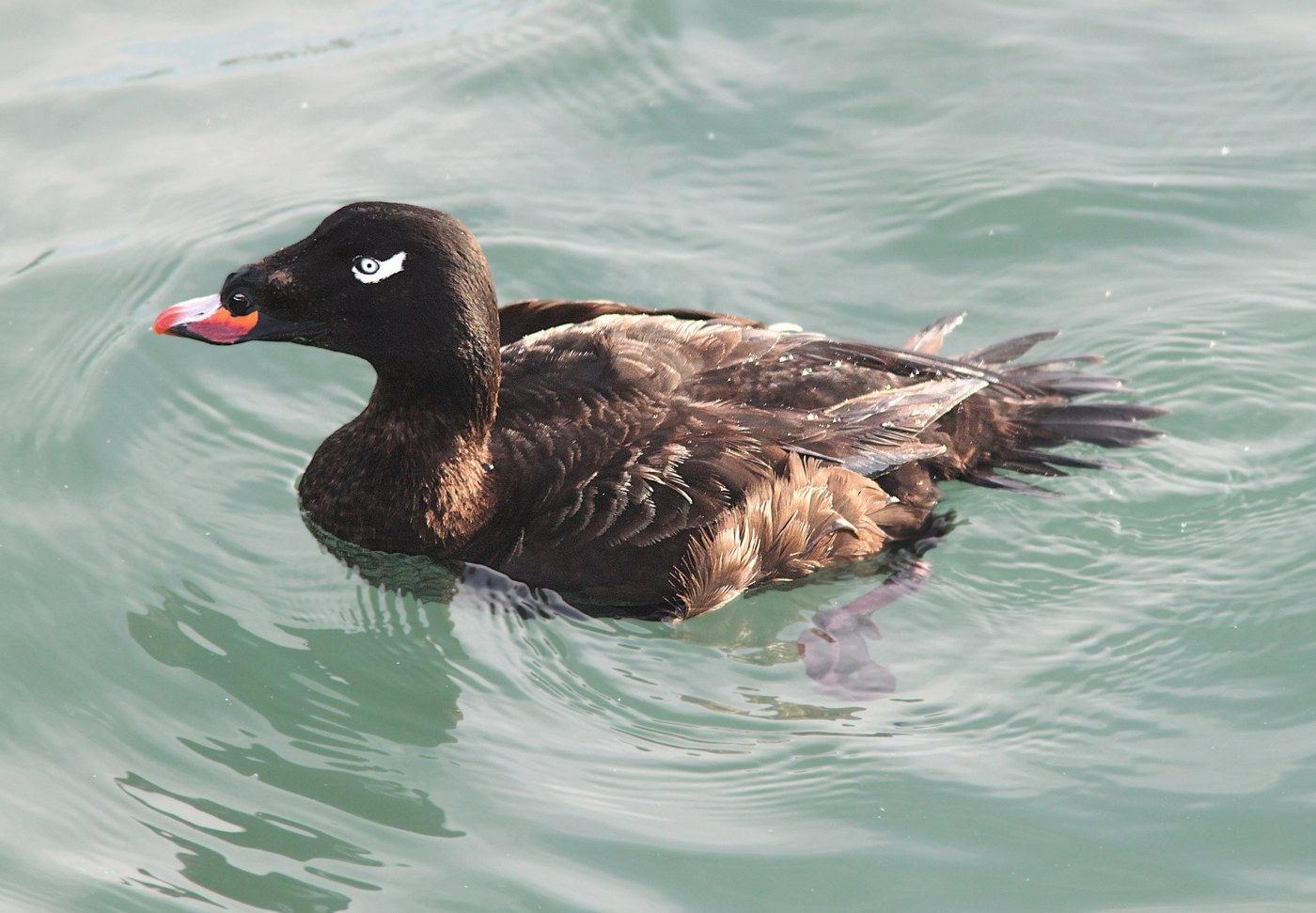
Overview
The White-winged Scoter (Melanitta deglandi) is the largest of the three scoter species, a heavy-bodied sea duck that breeds on northern lakes and winters in large rafts along both coasts and on the Great Lakes, diving for mollusks in nearshore waters.
Key Field Marks
- Size & shape: The bulkiest scoter, with a large, wedge-shaped head, a sloping forehead-to-bill profile, and a thick neck.
- Male plumage: Glossy black overall with a small, comma-shaped white crescent below and behind the eye; the white secondary patch (speculum) is usually hidden at rest but flashes prominently in flight.
- Female/immature plumage: Sooty brown with two pale, diffuse patches on the face (in front of and behind the eye) and the same white wing speculum.
- Bill: Male's bill is swollen at the base with an orange tip and black knob near the base; female's bill is duller gray-black, less ornate.
- Behavior: Dives for mollusks, often in flocks on open water; flies in lines low over the water with strong, steady wingbeats.
Separating It From Similar Species
- Surf Scoter: Lacks any white in the wing entirely; males show bold white patches on the forehead and nape instead of an eye-crescent, and have a differently patterned orange, white, and black bill.
- Black Scoter: Smallest scoter, males entirely black with a bright orange-yellow knob at the base of the bill and no white anywhere in the plumage or wing.
- Common Eider (female/immature): Larger still with a distinctively wedge-shaped bill profile extending onto the forehead, but lacks the white wing patch of scoters.
- In flight: The white speculum patch on the trailing inner wing is the quickest way to confirm White-winged Scoter versus the other two all-dark-winged scoters.
Where and When to Find One
White-winged Scoters breed on lakes and wetlands across the boreal forest and subarctic tundra of Alaska and northern Canada. In winter they are found in large flocks on coastal waters of the Pacific and Atlantic, from the northern US south to about Baja California and the Carolinas/Gulf states respectively, as well as on the Great Lakes and other large inland lakes. Peak viewing is fall through spring along coastlines and large lakes, where flocks raft offshore and dive repeatedly for mussels and clams.
Voice
Generally quiet away from the breeding grounds; on the water, flocks may give low, guttural growling or whistled notes during interactions, but scoters are far less vocal than dabbling ducks and are usually identified visually.
Frequently asked questions
How can I tell a White-winged Scoter from a Surf Scoter?
White-winged Scoter shows a white patch in the wing (visible in flight) and a small white eye-crescent, while Surf Scoter has no white in the wing but bold white patches on the forehead and nape.
What makes White-winged Scoter the largest scoter?
It has the bulkiest body, thickest neck, and largest head-and-bill profile of the three scoter species found in North America.
Where do White-winged Scoters spend the winter?
They winter in large offshore flocks along the Pacific and Atlantic coasts and on the Great Lakes, diving for mollusks in nearshore waters.
Do female White-winged Scoters also show white in the wing?
Yes, both sexes and immatures show the white speculum patch on the wing, making it a reliable mark across ages and sexes.