White Wagtail Identification Guide
A slim, long-tailed, black-and-white ground bird of Eurasia and coastal Alaska that constantly pumps its tail while walking briskly after insects.
Read the full White Wagtail encyclopedia entry →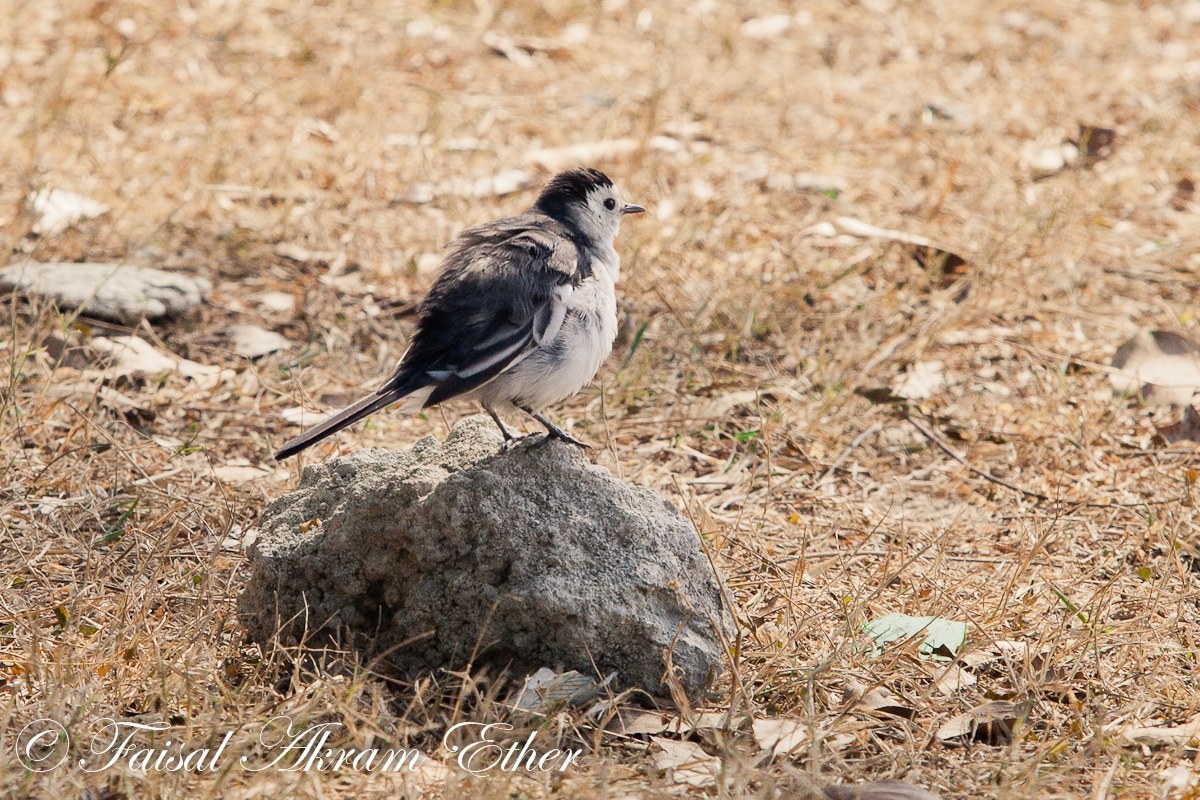
Overview
The White Wagtail (Motacilla alba) is a slender, animated songbird found across Europe, Asia, and North Africa, with a small breeding population in western Alaska. Its constant tail-wagging and bouncy walk make it one of the most recognizable ground-foraging birds in its range.
Key Field Marks
- Size & shape: Slim and long-tailed, roughly sparrow-sized but with a proportionally much longer tail, giving a lanky silhouette.
- Plumage: Breeding adults are boldly patterned in black, white, and gray — a black crown and nape, white face, black bib, and clean gray back, with white underparts.
- Wings: Black wings show two white wing bars and broad white edges to the flight feathers, conspicuous in flight.
- Bill and legs: Thin, black, pointed bill suited to picking insects; legs are dark and slender.
- Behavior: Walks and runs on the ground rather than hopping, constantly bobbing and wagging its long tail up and down, and makes short sallies to catch flying insects.
- Flight: Deeply undulating flight, often accompanied by a sharp, two-syllable call.
Separating It From Similar Species
- Black-backed Wagtail (subspecies group, e.g., "Black-backed Wagtail"): Some White Wagtail subspecies have black rather than gray backs; range and subspecies-specific head pattern help narrow identification, but all share the core white-face-and-black-bib structure.
- American Pipit: Superficially similar in habit (tail-bobbing, ground-walking) but streaky brown overall, lacking the crisp black-and-white pattern of White Wagtail.
- Eastern Yellow Wagtail: Shows yellow underparts and olive upperparts rather than the black-white-gray of White Wagtail; ranges overlap in western Alaska.
- Black Phoebe: Also black-and-white with tail-pumping, but is a flycatcher with a different shape (larger head, shorter tail relatively) and different habitat and range (Americas, not Eurasia/Alaska).
Where and When to Find One
White Wagtail breeds across most of Europe and Asia, favoring open ground near water, farmland, villages, rooftops, and gravel areas — it is notably tolerant of human settlement and common in towns and cities. In North America it breeds locally in western and northern Alaska (e.g., around Nome and the Seward Peninsula) in summer, arriving in spring and departing by early fall to winter in Africa and southern Asia. Elsewhere in North America it is a rare vagrant, chiefly noted along the Pacific coast and in the Aleutians.
Voice
The flight call is a bright, sharp "chizzik" or "tsli-vee," often given as the bird flies overhead. The song is a simple, cheerful jumble of twittering notes mixed with call-like phrases, delivered from the ground or a low perch.
Frequently asked questions
Where can White Wagtails be seen in North America?
They breed locally in western Alaska, such as near Nome, and are otherwise a rare vagrant elsewhere on the continent, mostly along the West Coast.
How do I recognize a White Wagtail in the field?
Look for a slim black, white, and gray bird with a very long tail that it constantly wags up and down while walking briskly on open ground.
What is the difference between White Wagtail and Eastern Yellow Wagtail?
White Wagtail is black, white, and gray with no yellow, while Eastern Yellow Wagtail has yellow underparts and olive-toned upperparts.
Does the White Wagtail hop or walk?
It walks and runs on the ground rather than hopping, which is typical of wagtails and pipits and helps distinguish it from many sparrows and finches.
White Wagtail identified by the community
Recent White Wagtail sightings identified with Bird Identifier.