
White-throated Toucan Identification Guide
One of the largest Amazonian toucans, with glossy black plumage, a clean white throat and breast, red uppertail coverts, and a massive dark bill with a pale culmen stripe.
Read the full White-throated Toucan encyclopedia entry →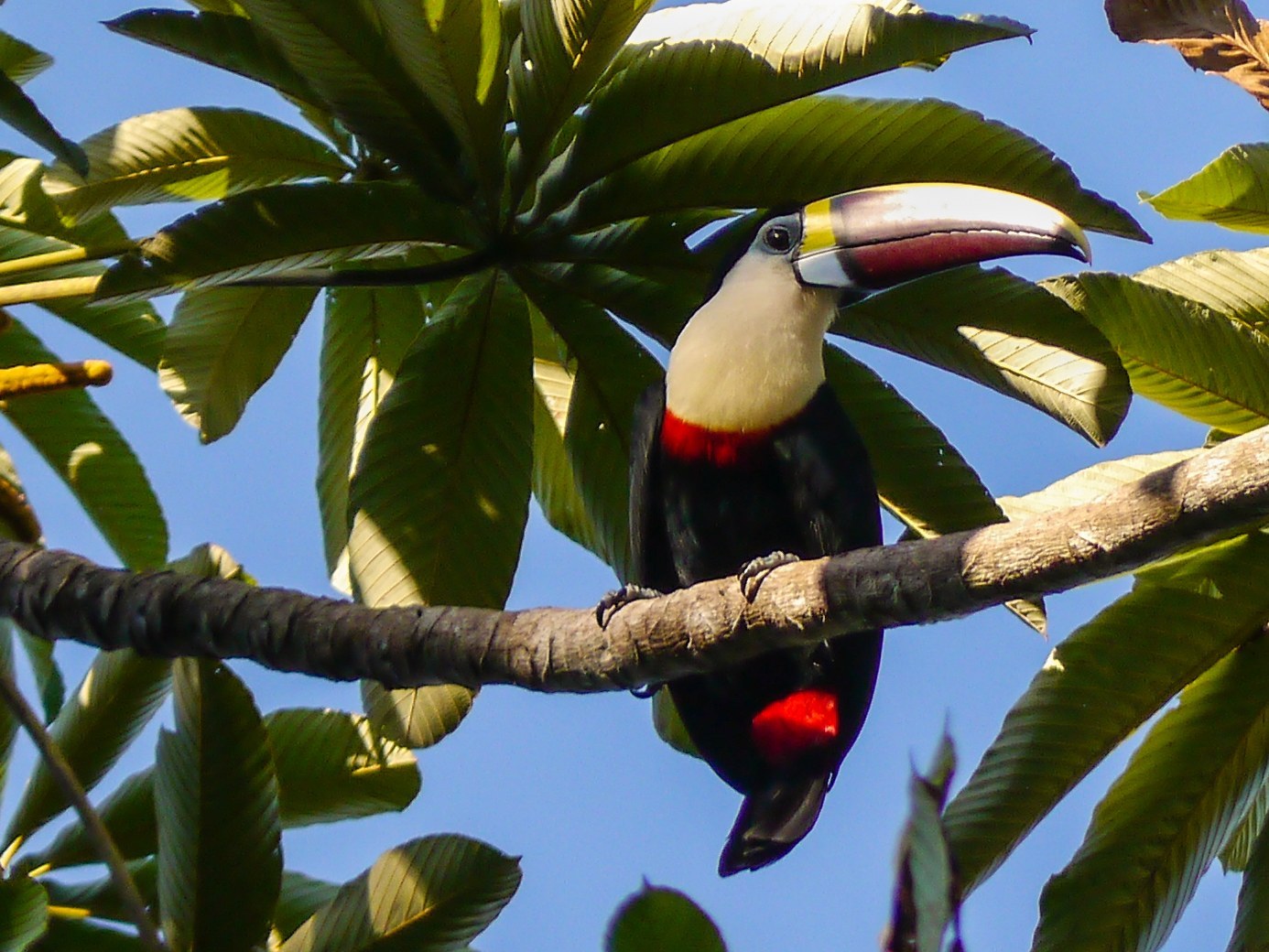
Key Field Marks
- Large toucan (53-61 cm), among the biggest in the Amazon
- Glossy black body plumage overall, with a crisp white throat and upper breast patch
- Black belly and undertail coverts, with bright red uppertail coverts visible from behind or in flight
- Massive bill, mostly blackish to dark maroon with a pale yellow-green stripe along the top (culmen) and often orange-red tones at the base
- Bare blue skin around the eye
Similar Species
- Channel-billed Toucan: smaller, with a more colorful bill showing bolder black, yellow, and red-orange patterning, and a throat that often shows more cream or yellow tones rather than pure white
- Toco Toucan: much larger overall with an entirely bright orange bill, a very different and unmistakable pattern from White-throated Toucan's darker, striped bill
- The combination of huge size, mostly dark bill with a pale culmen stripe, and a pure white throat/breast patch helps confirm White-throated Toucan where ranges overlap with other black-bodied toucans
Behavior & Habitat
Lives in the canopy and subcanopy of humid lowland rainforest, moving in small noisy groups and feeding mainly on fruit, supplemented by insects, eggs, and small vertebrates raided from nests. Often first detected by its loud, far-carrying calls before being seen, and frequently perches conspicuously on bare canopy branches at dawn to call.
Where & When to See It
Resident across the Amazon and Orinoco basins of northern and central South America, including Venezuela, the Guianas, Colombia, Ecuador, Peru, and Brazil, in lowland tropical rainforest. Non-migratory, present year-round throughout its range.
Voice
A loud, yelping, far-carrying call often rendered as a repeated "Dios-te-de, Dios-te-de" cadence, delivered from high, exposed perches, especially at dawn.
Frequently asked questions
How do I separate White-throated Toucan from Channel-billed Toucan?
White-throated Toucan is larger, with a mostly dark bill showing a pale culmen stripe and a pure white throat, while Channel-billed Toucan has a more boldly multicolored bill and often a creamier or yellower throat.
What color are White-throated Toucan's uppertail coverts?
Bright red, a useful mark visible from behind or in flight against the otherwise black body.
What does White-throated Toucan eat?
Mainly fruit, supplemented by insects, and it will also raid nests for eggs and nestlings of other birds.
How is White-throated Toucan usually first detected in the field?
Most often by its loud, far-carrying yelping calls given from exposed canopy perches, especially around dawn, before the bird itself is spotted.