
White-throated Sparrow Identification Guide
A common North American sparrow with a crisp white throat patch, yellow lores, and two distinct head-stripe color morphs, best known for its clear whistled song.
Read the full White-throated Sparrow encyclopedia entry →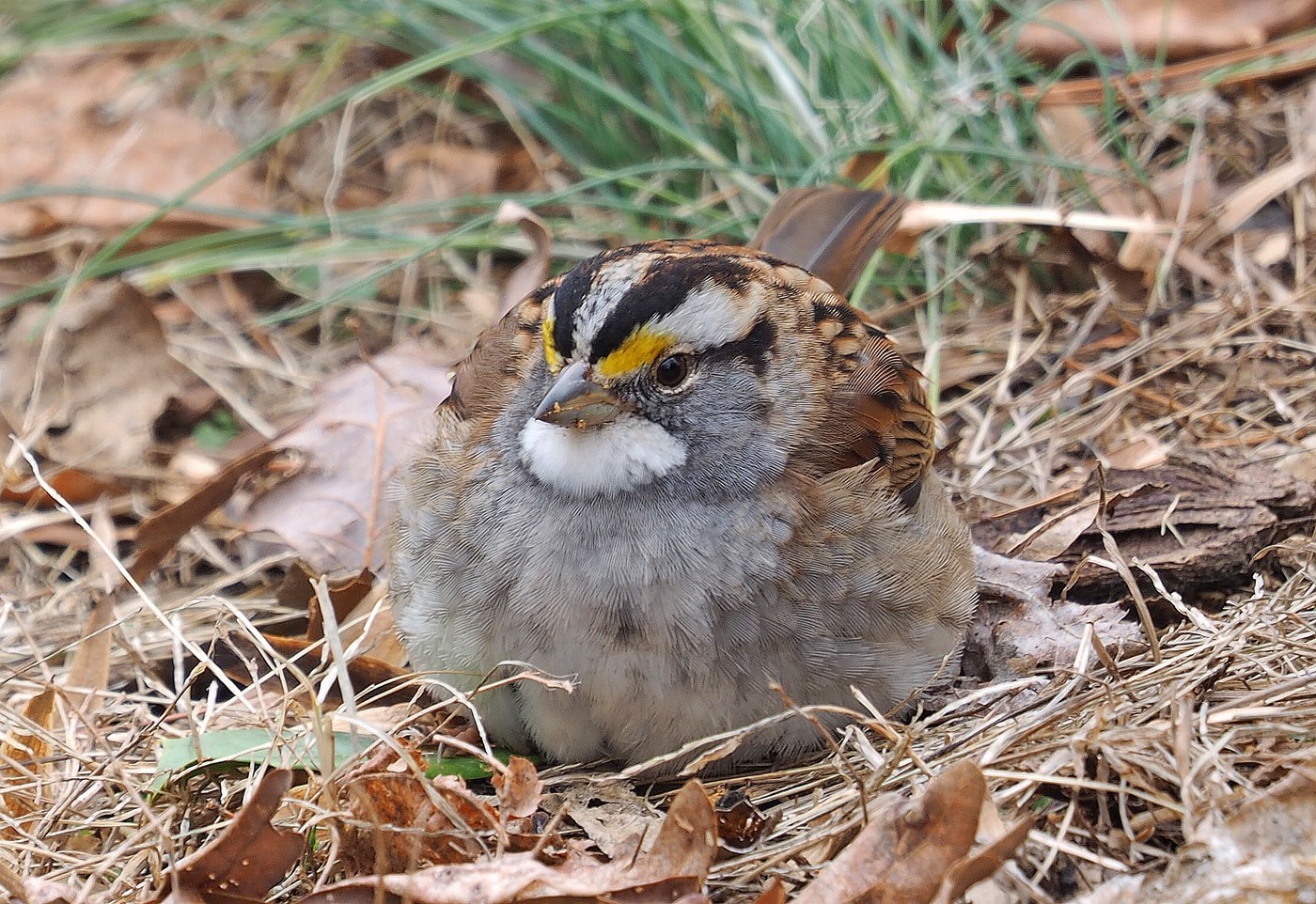
Key Field Marks
- Medium-sized, chunky sparrow (16-19 cm) with a gray face and breast and a brown, streaked back
- Sharply defined white throat patch bordered below by a dark malar stripe
- Small yellow spot (lores) just in front of each eye, visible at close range
- Occurs in two distinct color morphs regardless of sex: white-striped birds have bold black-and-white head stripes, while tan-striped birds have duller brown-and-tan head stripes
- Plain grayish unstreaked breast and belly, distinguishing it from streak-breasted sparrows
Similar Species
- White-crowned Sparrow: lacks the white throat patch and yellow lores, has a plain gray face without brown cheek patches, and shows a pink or orange (not dark) bill
- Song Sparrow: has a heavily streaked breast with a central spot, and no clean white throat patch
- Fox Sparrow: larger, rustier overall, with heavy triangular breast streaking
- The crisp white throat bib plus yellow lores is the quickest way to confirm this species
Behavior & Habitat
Forages mostly on the ground, often in loose flocks, characteristically double-scratching or "kicking" through leaf litter with both feet at once to expose seeds and insects. Breeds in boreal and mixed coniferous-deciduous forest edges, clearings, and shrubby second growth across Canada and the northeastern U.S.
Where & When to See It
Breeds across much of Canada and the northeastern United States. Winters widely across the eastern and central United States, becoming a familiar visitor to backyard feeders, brushy woodland edges, and parks during the colder months, arriving in fall and departing by late spring.
Voice
A clear, thin, whistled song often rendered as "Oh-sweet-Canada-Canada-Canada" or "Old-Sam-Peabody-Peabody-Peabody," frequently sung even in winter and one of the most recognizable sparrow songs in North America.
Frequently asked questions
What is the quickest way to identify White-throated Sparrow?
Look for the crisp white throat patch and small yellow spot in front of the eye (lores), both good marks even on the duller tan-striped morph.
What are the two color morphs of White-throated Sparrow?
White-striped birds have bold black-and-white head stripes, and tan-striped birds have duller brown-and-tan head stripes; both morphs occur in males and females.
How do I separate it from White-crowned Sparrow?
White-crowned Sparrow lacks a white throat patch and yellow lores and has a plain gray face with a pink or orange bill, while White-throated Sparrow shows both throat patch and yellow lores clearly.
What does White-throated Sparrow's song sound like?
A clear, whistled song commonly rendered as 'Oh-sweet-Canada-Canada-Canada' or 'Old-Sam-Peabody-Peabody-Peabody.'
Where can I see White-throated Sparrow in winter?
It is a common winter visitor to backyard feeders, brushy edges, and parks across the eastern and central United States.