
White-tailed Hawk Identification Guide
A striking pale buteo of open grasslands with a white tail crossed by a single black band, gray upperparts, and rufous shoulder patches.
Read the full White-tailed Hawk encyclopedia entry →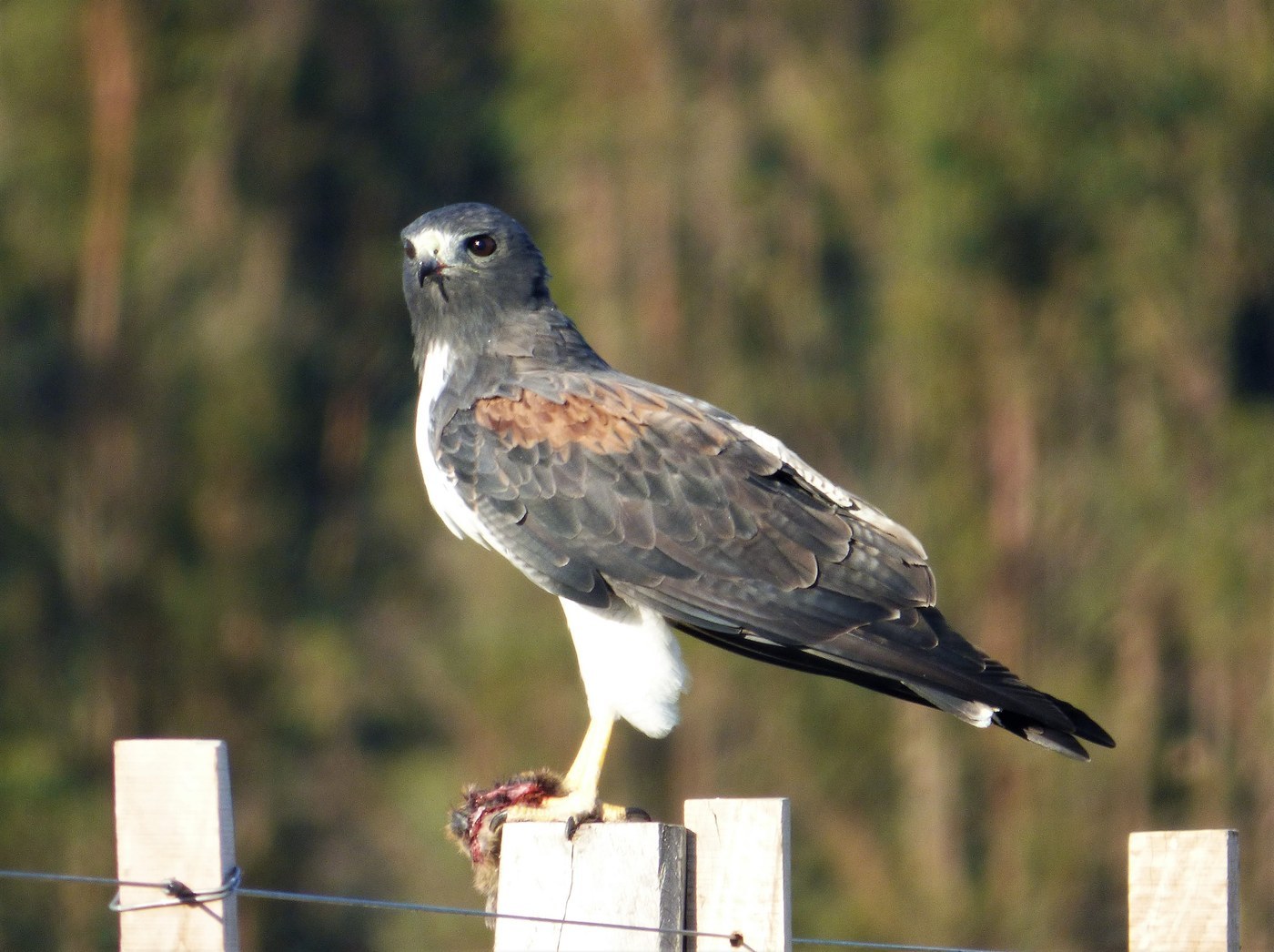
Key Field Marks
- Medium-large hawk with notably long, broad wings and a short tail relative to body size
- Adult: pale gray head and upperparts, clean white underparts, and rufous "shoulder" patches on the lesser wing coverts
- Short white tail crossed by one bold black subterminal band — the source of the name and best mark on adults
- Juveniles are dark brownish overall with heavy streaking and a paler, barred tail, making them much harder to identify; look for the distinctive long-winged, short-tailed structure and often a pale U-shaped patch across the breast
Similar Species
- Swainson's Hawk: longer tail, dark bib across the chest, and a different tail pattern with fine barring rather than one bold band
- Red-tailed Hawk: has a rufous (not white) tail in adults and a much more variable plumage pattern
- Ferruginous Hawk: larger, with rufous leggings and a paler, rufous-and-white tail pattern rather than a crisp black band
- Structure is a key clue at any age: White-tailed Hawk's proportionally long wings and short tail give it a distinctive silhouette in flight, even before plumage details are visible
Behavior & Habitat
A bird of open coastal prairies, savanna, and grasslands, White-tailed Hawk spends much of the day soaring on flat or slightly raised wings, often at great height. It is well known for gathering at grassland and brush fires to hunt insects and small vertebrates flushed by flames and smoke, and it will also hover briefly, kite-like, into the wind while hunting. Perches on fence posts, utility poles, and low trees in open country.
Where & When to See It
Resident from the coastal plain of southern Texas south through Mexico and Central America into much of South America's savanna belt, including the Llanos and Cerrado. It does not undertake long migrations, though some local and altitudinal movements occur.
Voice
A harsh, descending scream or a repeated sharp kip-kip-kip, given especially in territorial or alarm situations.
Frequently asked questions
What is the single best mark for adult White-tailed Hawk?
A short white tail with one bold black band near the tip, combined with gray upperparts, white underparts, and rufous shoulder patches.
How do I identify a juvenile White-tailed Hawk?
Juveniles are dark and heavily streaked, so rely on structure — long wings and a short tail — along with any pale breast patch and the barred (not solid) tail pattern.
Where in the United States can I see White-tailed Hawk?
It reaches the U.S. only along the coastal grasslands of southern Texas, where it is resident year-round.
Why does White-tailed Hawk gather at grass fires?
It hunts insects, rodents, and reptiles flushed by flames and smoke, a foraging strategy shared with a few other grassland raptors.