
White-faced Heron Identification Guide
Australasia's most widespread heron, a slender blue-gray wader with a clean white face and long yellow legs, common in wetlands and even suburban lawns.
Read the full White-faced Heron encyclopedia entry →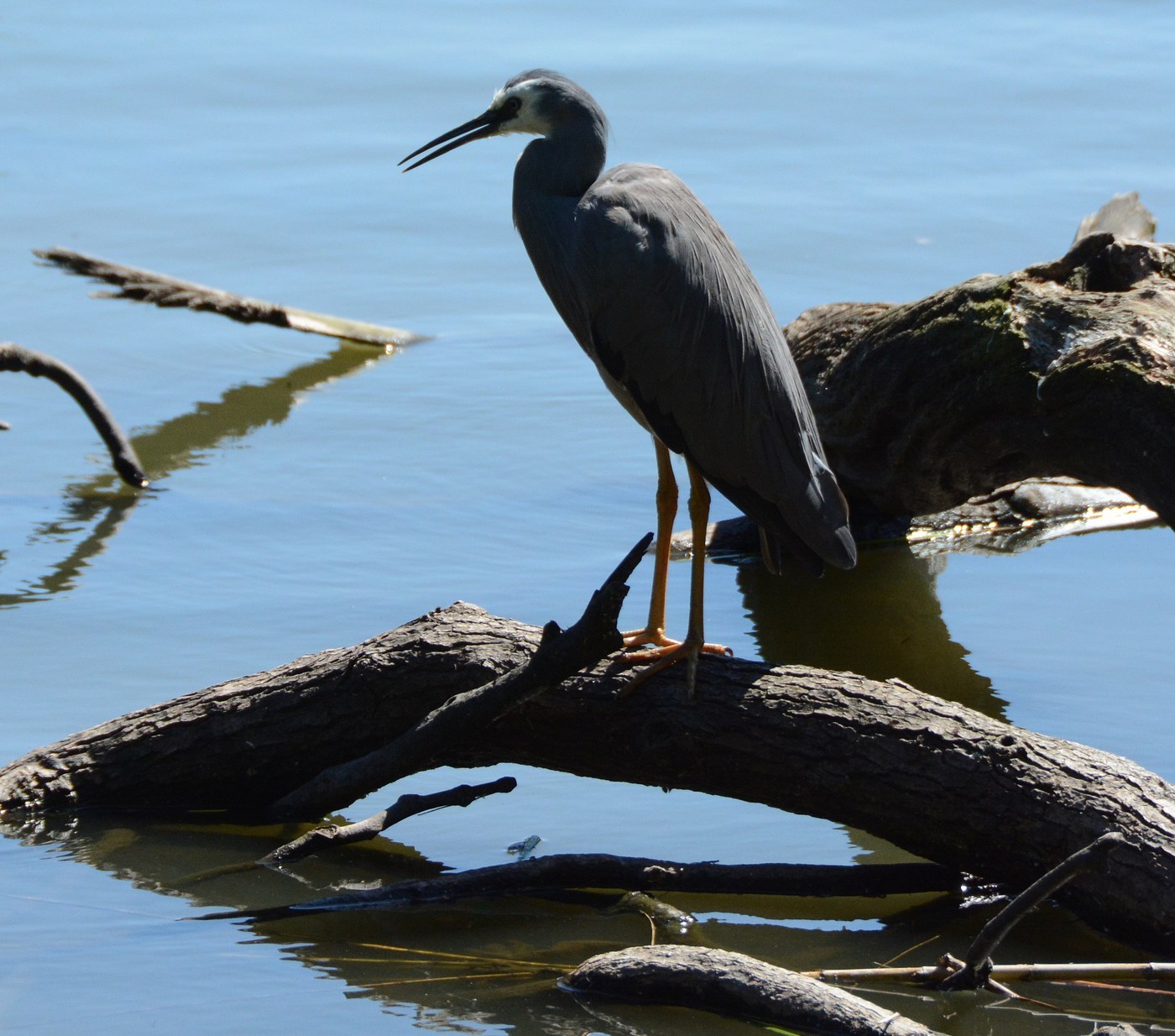
Key Field Marks
- Size & shape: A medium-large, slender heron around 60-70 cm (24-28 in) tall, with a long neck, long legs, and a straight, pointed bill.
- Plumage: Overall pale blue-gray body plumage, appearing almost silvery in bright light.
- Face: Distinct clean white face contrasting sharply with the gray neck and crown, the key diagnostic feature.
- Legs and bill: Long, dull yellow to olive legs; bill is dark gray to blackish, sometimes with a yellowish base.
- Breeding plumage: Develops fine plume-like feathers on the back and lower neck during the breeding season.
Similar Species
- Grey Heron: Larger and bulkier, with a black stripe over the eye and a mostly white head and neck (not just the face), and lacks the clean-cut white face of White-faced Heron.
- Little Egret: All-white plumage distinguishes it easily; White-faced Heron is gray-bodied with only the face white.
- Pied Heron: Found in northern Australia, has a black cap and neck contrasting with a white face and underparts, quite different overall pattern.
Behavior
- Forages by walking slowly and deliberately in shallow water or on land, striking quickly at prey with its bill.
- Highly adaptable, often seen foraging on wet lawns, playing fields, and pastures far from water, hunting insects and worms.
- Usually solitary or in loose small groups when foraging, though may roost communally.
Habitat & Range
- Found throughout Australia, New Zealand, and parts of the southwest Pacific, in virtually any wetland habitat.
- Uses estuaries, mudflats, rivers, lakes, flooded fields, and also readily forages on suburban lawns, golf courses, and parks.
- One of the most common and widespread herons in the region, adaptable to both natural and highly modified landscapes.
Voice
- Generally quiet away from breeding colonies; gives harsh, guttural croaking or barking calls, especially in flight or when alarmed.
- At nesting colonies, adults and chicks produce a variety of croaks and grunts.
Seasonal Notes
- Largely resident and can be seen year-round throughout its range, though some local movements occur in response to water availability.
- Breeding season varies regionally but often peaks in spring and summer, with birds nesting colonially in trees, sometimes alongside other waterbirds.
Frequently asked questions
What makes the White-faced Heron easy to identify?
Its overall blue-gray body plumage combined with a clean, crisp white face is unique among herons in its range.
How does the White-faced Heron differ from the Grey Heron?
Grey Heron is larger with a mostly white head and neck and a black eye-stripe, while White-faced Heron has gray on the neck and only the face is white.
Can White-faced Herons be seen away from water?
Yes, they commonly forage on wet lawns, sports fields, and pastures well away from wetlands.
Is the White-faced Heron common?
Yes, it is the most widespread and frequently seen heron across Australia and New Zealand.
Does the White-faced Heron migrate?
It is largely sedentary, though it may make local movements depending on water conditions.