
White-crowned Sparrow Identification Guide
A large, sharply patterned North American sparrow with bold black-and-white head stripes, a plain gray breast, and a pink or yellowish bill.
Read the full White-crowned Sparrow encyclopedia entry →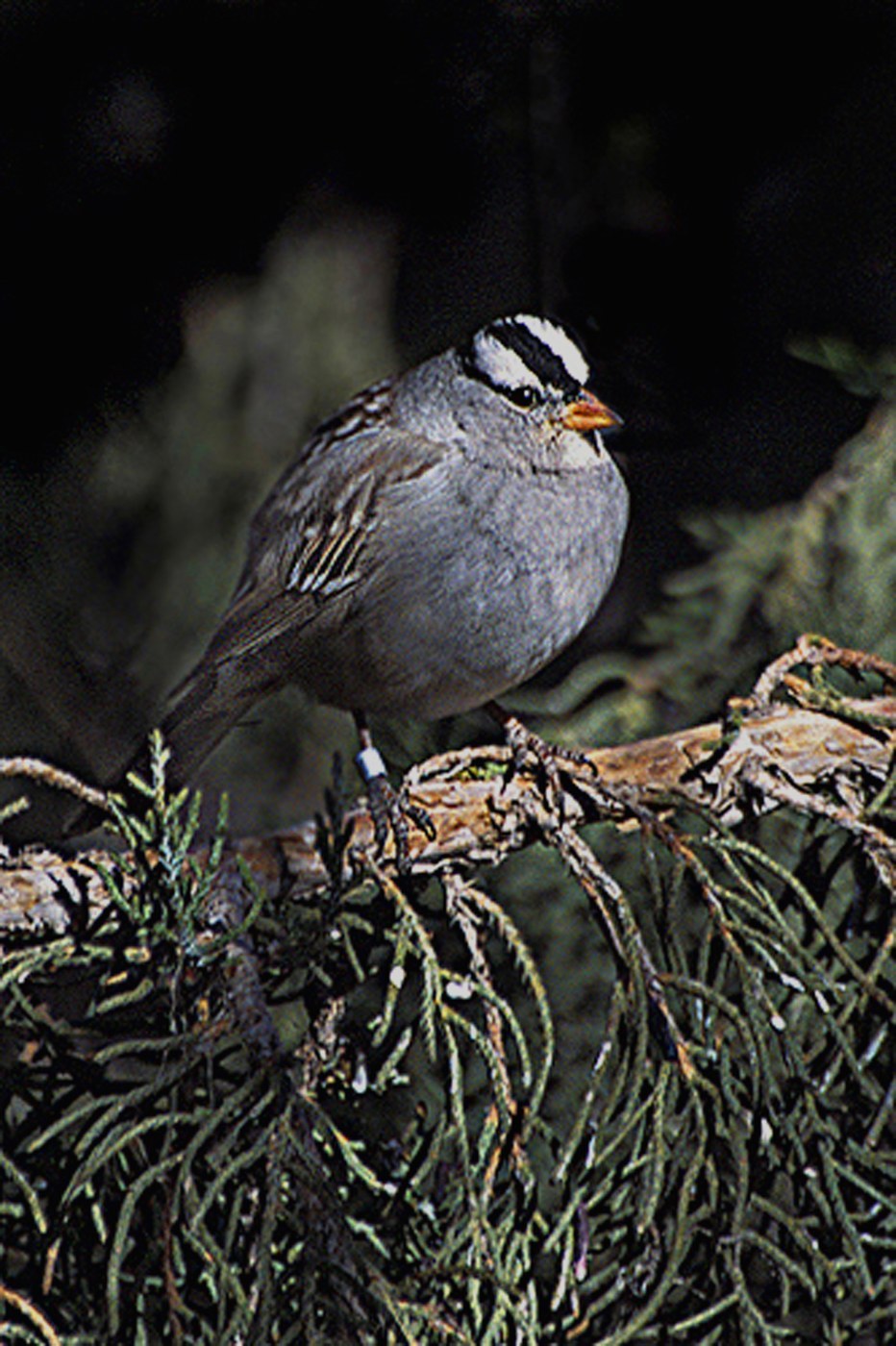
Key Field Marks
- Size & shape: A large, long-tailed sparrow around 15-18 cm (6-7 in), with an upright, alert posture and a small, conical bill.
- Head pattern: Crisp black-and-white striped crown (in adults) running from the bill over the crown to the nape, bordered by a white supercilium and black eyeline.
- Body: Clean gray face, throat, and breast without streaking; back is brown with dark streaks; belly is pale gray to whitish.
- Bill: Pink, orange, or yellowish, varying somewhat by subspecies/region.
- Immatures: Show the same striped pattern but in rufous-brown and buffy tan instead of black and white, which can cause confusion.
Similar Species
- White-throated Sparrow: Shows a distinct white throat patch bordered by a dark malar stripe and often yellow lores, and has a browner, more streaked breast; White-crowned lacks the white throat patch and yellow lores.
- Golden-crowned Sparrow: Has a duller, all-dark crown with a yellow central stripe rather than crisp black-and-white stripes, and lacks the clean white supercilium.
- Harris's Sparrow: Larger with a black crown and bib in adults, and a pink bill, but lacks the white-striped crown pattern.
- Immature/first-winter birds: Best separated from young White-throated Sparrows by the plainer, unstreaked buffy-gray breast and lack of a defined throat patch.
Behavior
- Often forages on the ground in open or brushy areas, hopping and scratching through leaf litter for seeds and insects.
- Frequently seen in loose flocks, especially during migration and winter, often with other sparrows.
- Sings from an exposed perch, particularly during breeding season and even sometimes on winter territories.
Habitat & Range
- Breeds across much of northern and western North America, including the Arctic tundra edge, subalpine meadows, and coastal scrub of the Pacific Northwest and California.
- Winters widely across the southern and western United States and Mexico, often in backyards, brushy fields, hedgerows, and parks.
- During migration, can be found in a wide range of open and semi-open habitats with dense low cover nearby.
Voice
- Song is a clear, plaintive series of whistles followed by buzzy trills, often rendered as "oh-dear-me, I-feel-sad"; regional dialects vary noticeably across its range.
- Call note is a sharp, metallic "pink" or "tsip."
Seasonal Notes
- Look for adults with crisp black-and-white crowns in breeding and wintering areas; juveniles with tan-and-brown striping are common in late summer and early fall before they molt into adult-like plumage.
- Several recognizable subspecies exist with subtle differences in bill color and lore pattern, useful for advanced regional identification.
Frequently asked questions
How can I tell a White-crowned Sparrow from a White-throated Sparrow?
White-crowned Sparrow has a plain gray throat and breast with no distinct throat patch, while White-throated Sparrow shows a clearly demarcated white throat bordered by a dark malar stripe.
Why do some White-crowned Sparrows have brown and tan stripes instead of black and white?
Those are immature or first-winter birds; the crisp black-and-white crown pattern develops as they molt into adult plumage.
What does the White-crowned Sparrow's song sound like?
A clear whistle followed by buzzy trills, often described as sounding like 'oh-dear-me, I-feel-sad,' with distinct regional dialects.
Where do White-crowned Sparrows breed?
They breed in Arctic tundra, subalpine meadows, and shrubby coastal habitats across northern and western North America.
What habitat is best for finding wintering White-crowned Sparrows?
Brushy fields, hedgerows, gardens, and parks with dense low cover across the southern and western United States and Mexico.