
White-breasted Nuthatch Identification Guide
A compact, tree-trunk-climbing songbird with a black cap, blue-gray back, and white face, famous for creeping down trunks headfirst.
Read the full White-breasted Nuthatch encyclopedia entry →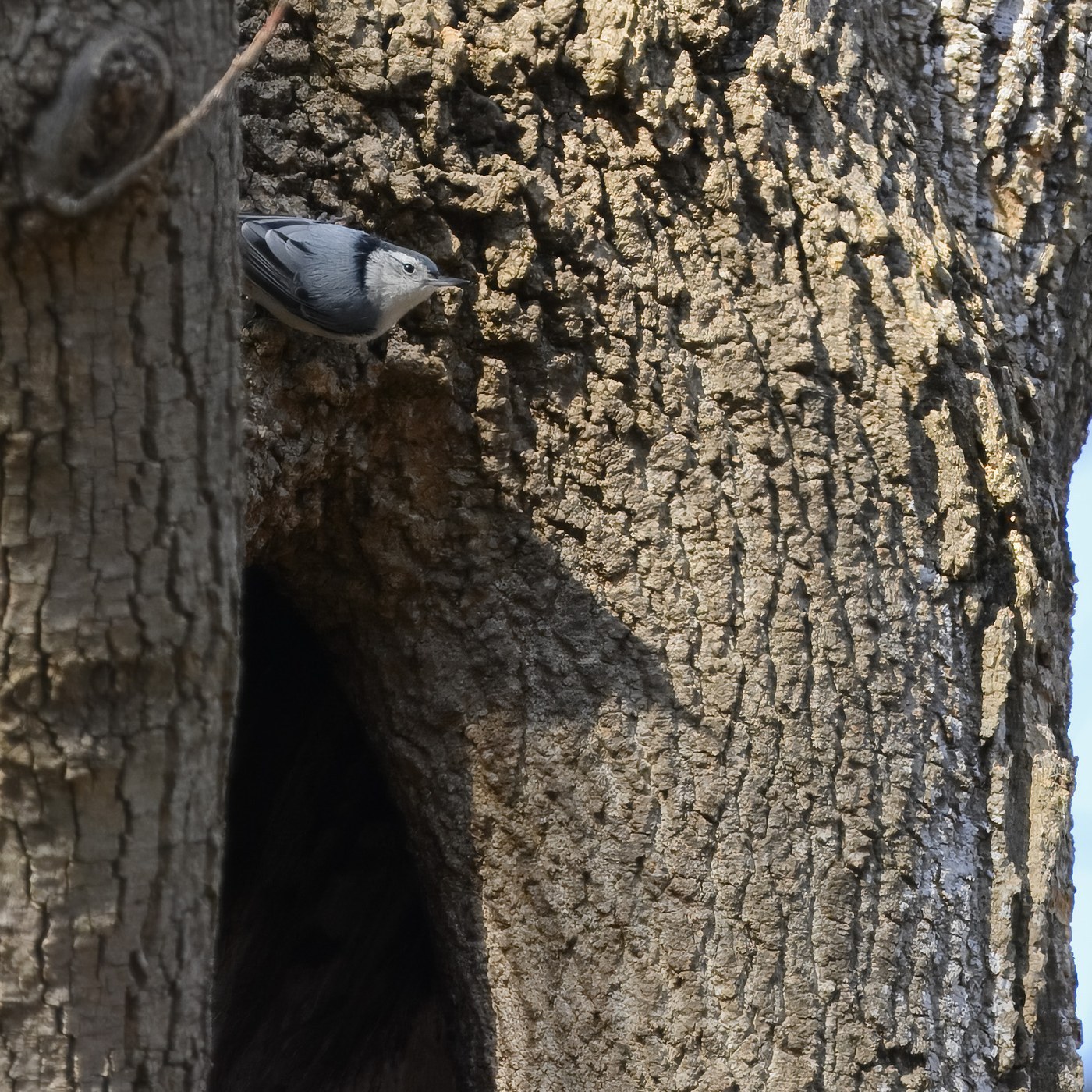
Key Field Marks
- Small, stocky, short-tailed songbird, about 13-14 cm (5-5.5 in), with a large head, long straight bill, and essentially no visible neck.
- Blue-gray upperparts, a clean white face, and white underparts.
- Males show a solid black cap extending down the nape; females have a duller gray cap.
- Rusty or chestnut wash may appear on the lower flanks and undertail in some individuals, but the breast and belly remain predominantly white.
Separating It From Similar Species
- Red-breasted Nuthatch: Smaller, with rusty-orange underparts and a bold black eye-line bordered by a white supercilium, quite different from the plain white face of White-breasted Nuthatch.
- Pygmy Nuthatch and Brown-headed Nuthatch: Both notably smaller with brown (not black or gray) caps and more limited, patchy ranges, easily separated by cap color and size.
Habitat, Range & Season
- Found in mature deciduous and mixed forests, open woodlands, and wooded suburban and park settings with large trees.
- Widespread across most of the continental United States, southern Canada, and highland areas of Mexico.
- A year-round resident throughout its range; does not migrate.
Voice
- Common call is a nasal, repeated "yank-yank-yank."
- Song is a rapid series of low, whistled "who-who-who" notes.
Behavior
- Famous for foraging by creeping headfirst down tree trunks, a habit that helps it spot insects and their eggs missed by birds foraging upward.
- Wedges large seeds and nuts into bark crevices and hammers them open, a behavior that gives the nuthatch family its name.
- Regularly visits bird feeders for sunflower seeds and suet, and often joins mixed-species foraging flocks with chickadees and titmice in winter.
Frequently asked questions
What is the easiest way to identify a White-breasted Nuthatch?
Look for a compact bird with a black cap, blue-gray back, and clean white face and underparts, often seen creeping headfirst down a tree trunk.
How do you tell White-breasted Nuthatch from Red-breasted Nuthatch?
Red-breasted Nuthatch is smaller with rusty-orange underparts and a black eye-line, while White-breasted Nuthatch has a plain white face and white underparts.
Why does the White-breasted Nuthatch climb down trees headfirst?
This foraging technique lets it spot insects and eggs hidden in bark crevices from a different angle than birds that only climb upward, such as woodpeckers.
Does the White-breasted Nuthatch migrate?
No, it is a non-migratory year-round resident across most of its range in the United States, southern Canada, and highland Mexico.