
White-backed Vulture Identification Guide
Africa's most widespread Gyps vulture, identified by its bare pinkish head, dark brown body, and the contrasting white lower back visible in adult flight.
Read the full White-backed Vulture encyclopedia entry →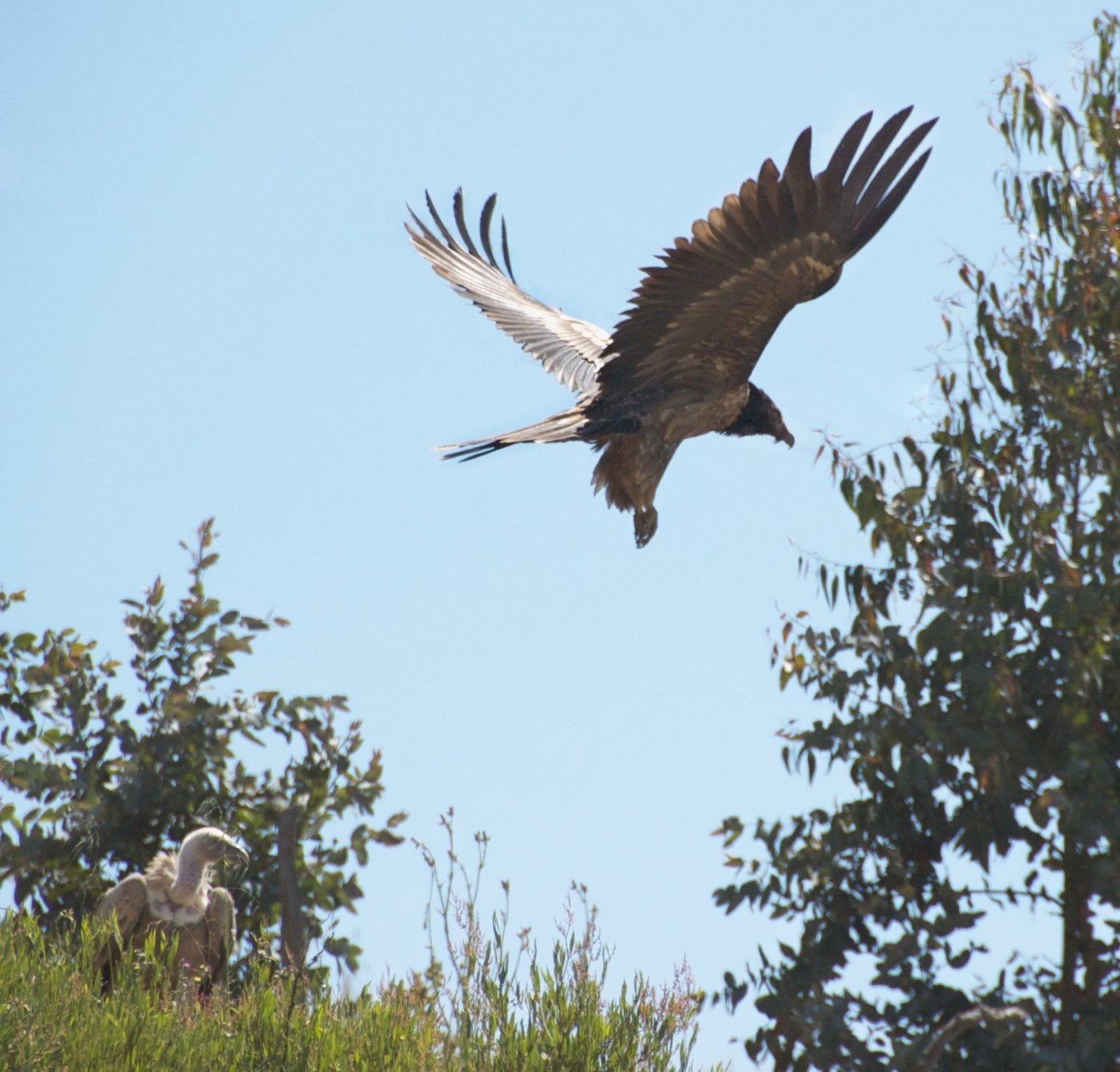
Key Field Marks
- Large vulture, about 78-98 cm (31-39 in), with a bare, pinkish-white head and neck covered only in sparse white down.
- Overall dark brown body plumage; adults show a contrasting white patch on the lower back and rump that is diagnostic in flight and gives the species its name.
- In flight, pale underwing coverts contrast against darker flight feathers, and the wings are broad with fingered tips typical of Gyps vultures.
- Juveniles are browner overall and lack the clean white back patch, developing it with maturity.
Separating It From Similar Species
- Rüppell's Vulture: Shows a scaly, pale-edged feather pattern over the body, a pale yellowish bill and eye, and lacks the clean white lower-back patch of White-backed Vulture.
- Cape Vulture: Larger and paler overall with a cream-buff body color, pale yellow eye, and does not show the same sharply contrasting white back patch.
- White-headed Vulture: Has a fully white-down head, a pink facial patch, and a stockier build with a shorter tail, quite different in overall impression from White-backed Vulture.
Habitat, Range & Season
- Inhabits open savanna and woodland across sub-Saharan Africa, generally avoiding dense forest and true desert.
- Widespread historically but now Critically Endangered due to poisoning (both deliberate and incidental) and habitat loss; populations have crashed severely in recent decades.
- Resident, non-migratory, though individuals may range widely in search of carcasses.
Voice
- Largely silent away from food; at carcasses it gives harsh hisses, cackles, and grunting calls during competitive feeding.
Behavior
- Soars for hours on thermals scanning for carrion, often gathering in large numbers at carcasses alongside other vulture species.
- Unlike many Gyps vultures that nest on cliffs, White-backed Vulture nests in the crowns of tall trees, typically in loose colonies.
Frequently asked questions
What is the key field mark for White-backed Vulture?
Adults show a distinctive white patch on the lower back and rump, visible in flight, combined with a bare pinkish-white head and otherwise dark brown body.
How do you tell White-backed Vulture from Rüppell's Vulture?
Rüppell's Vulture has a scaly, pale-edged body pattern and a pale bill and eye, and it lacks the clean white lower-back patch that White-backed Vulture shows.
Why is the White-backed Vulture endangered?
Populations have declined severely mainly due to poisoning, both from baited carcasses targeting predators and veterinary drug contamination, along with habitat loss.
Where does White-backed Vulture nest?
It nests in the tops of tall trees rather than on cliffs, often in loose colonies across open African savanna and woodland.