
Western Sandpiper Identification Guide
The Western Sandpiper is a tiny, abundant North American shorebird identified by its slightly drooped, fine bill tip, rufous scapular markings in breeding plumage, and black legs, often forming huge flocks on tidal mudflats.
Read the full Western Sandpiper encyclopedia entry →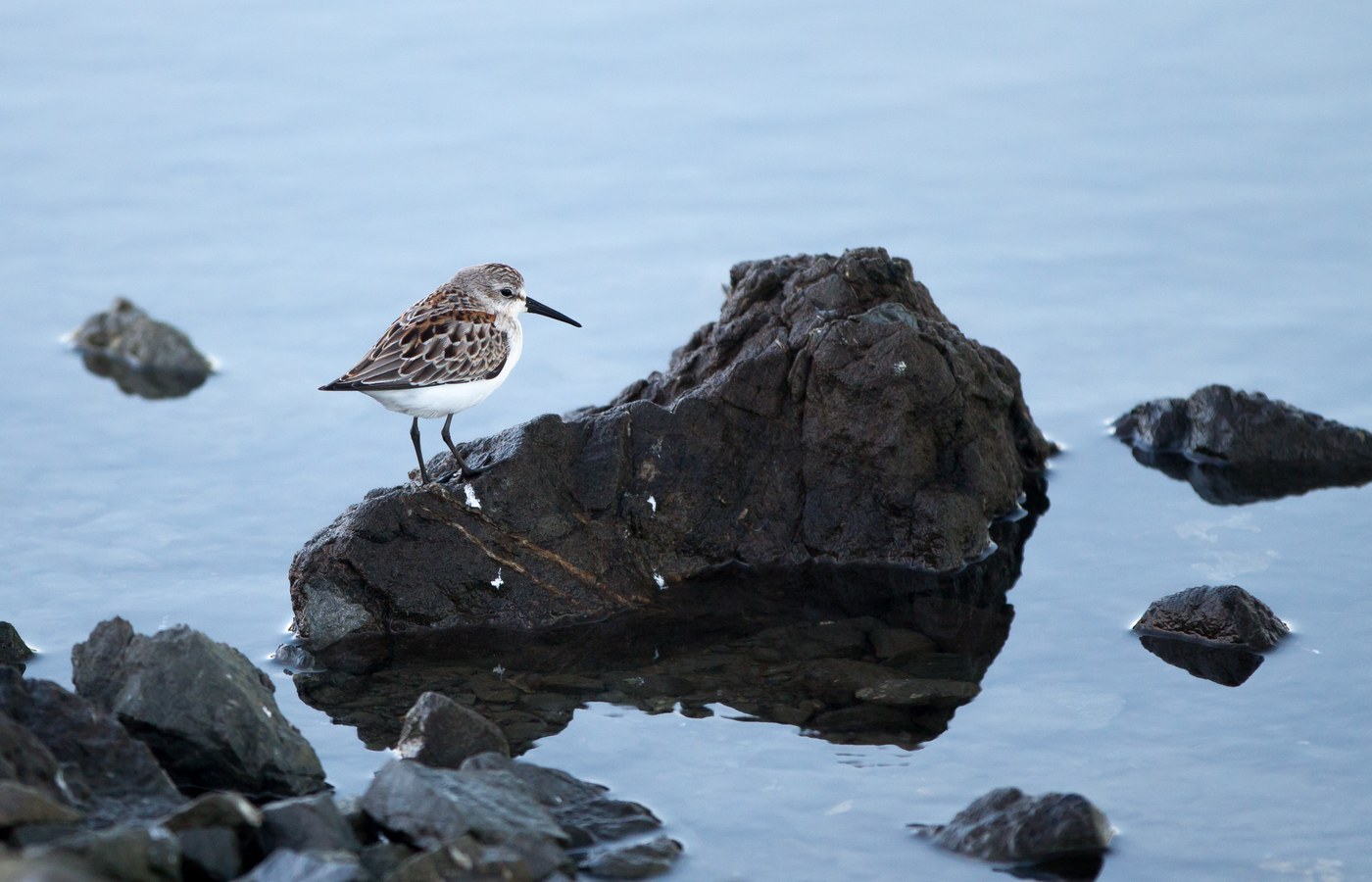
Key Field Marks
- Size and shape: A very small "peep" sandpiper, similar in size to Semipalmated Sandpiper but with a slightly longer, finer bill that droops subtly at the tip — a key structural clue.
- Breeding plumage: Bright rufous edging on the scapulars (upper back feathers) and often a rufous wash on the crown and ear coverts, with dark chevron-shaped streaking extending down the flanks — much more colorful than the plain grey-brown of nonbreeding birds.
- Nonbreeding plumage: Plain grey-brown above and white below with a grey wash across the breast, quite similar to other small "peeps" at this season.
- Bill: Black, fine, and noticeably longer than Semipalmated Sandpiper's, with a subtle downward droop toward the tip — the single best mark for separating the two species, though bill length varies (longer in females).
- Legs: Black (helping rule out yellow-legged species like Least Sandpiper).
- Behavior: Forages by probing rapidly and repeatedly into wet mud and shallow water, often wading belly-deep; highly gregarious, forming massive flocks — sometimes tens of thousands strong — on migration stopover mudflats.
Similar Species
- Semipalmated Sandpiper: Very similar but has a shorter, straighter, blunter-tipped bill and lacks strong rufous tones in breeding plumage; separating the two often requires close study of bill shape and structure.
- Least Sandpiper: Smaller still, with yellow-green (not black) legs and a browner, more mottled overall tone — leg color is the quickest separator.
- Dunlin: Larger, with a longer, more strongly downcurved bill and, in breeding plumage, a solid black belly patch not shown by Western Sandpiper.
Where and When to Look
Breeds on Arctic tundra in western Alaska and adjacent Siberia, then undertakes one of the most impressive shorebird migrations in the world, moving down both coasts of North America (and inland at major wetland stopovers) to winter along the coasts of the southern US, Mexico, Central America, and northern South America. Huge concentrations gather at key staging areas such as the Copper River Delta, the Fraser River estuary, and San Francisco Bay during spring (April–May) and fall (July–September) migration, making these peak periods and locations for observation.
Voice
A thin, high-pitched "jeet" or "cheet" call, sharper and more emphatic than the softer calls of Semipalmated Sandpiper, often given in flight by flushing flocks.
Frequently asked questions
How can I tell Western Sandpiper from Semipalmated Sandpiper?
Look at the bill: Western Sandpiper has a longer, finer bill with a subtle downward droop at the tip, while Semipalmated Sandpiper's bill is shorter, straighter, and blunter-tipped.
What color are a Western Sandpiper's legs?
Black, which helps separate it from the yellow-green-legged Least Sandpiper.
When do Western Sandpipers show rufous coloring?
In breeding plumage, when they show bright rufous edges on the scapulars and often a rufous wash on the crown and ear coverts; nonbreeding birds are plain grey-brown.
Where is the best place to see large flocks of Western Sandpipers?
Major shorebird staging areas along the Pacific and Gulf coasts during migration, such as San Francisco Bay, the Fraser River estuary, and the Copper River Delta, where flocks can number in the tens of thousands.
Where does the Western Sandpiper breed?
On Arctic tundra in western Alaska and adjacent far-eastern Siberia.