
Western Reef-Heron Identification Guide
The Western Reef-Heron is a small, coastal heron occurring in two color morphs — slate-grey and white — identified by its stout, slightly downcurved bicolored bill, yellow legs with contrasting dark feet, and habit of actively chasing fish in shallow tidal water.
Read the full Western Reef-Heron encyclopedia entry →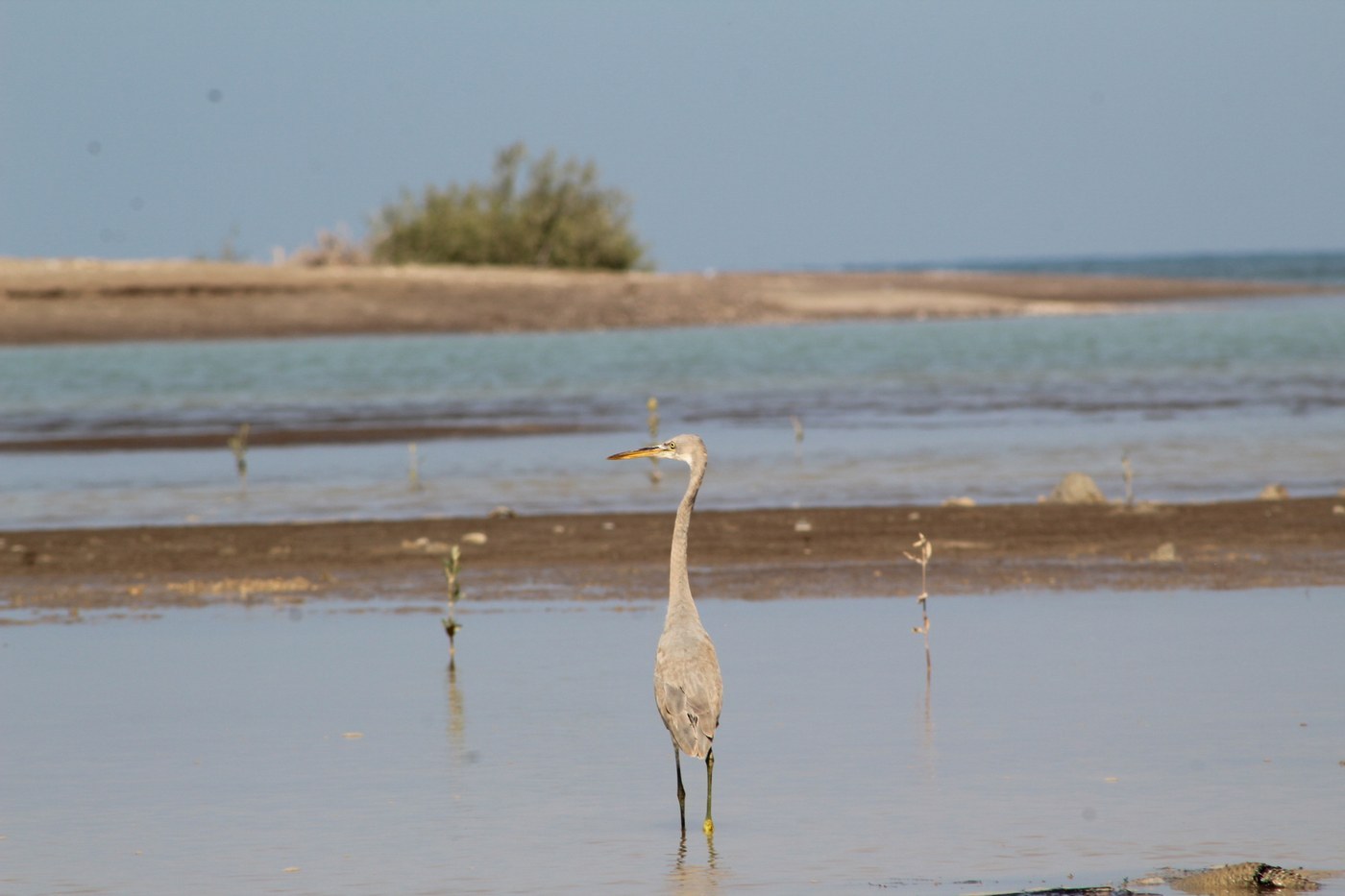
Key Field Marks
- Size and shape: A medium-small heron, roughly the size of a Little Egret but with a proportionally stouter body, thicker neck, and a heavier, slightly downcurved bill giving a more front-heavy look.
- Color morphs: Occurs in two forms — a dark slate-grey morph (often with a small white throat patch) and a white morph, which closely resembles Little Egret. Intermediate/pied individuals also occur.
- Bill: Fairly heavy and often bicolored — dark upper mandible with a paler, yellowish or greyish lower mandible/base — distinctly thicker than the fine, all-dark bill of Little Egret.
- Legs and feet: Legs typically dull greenish-yellow to greyish-yellow, often duller than the black legs of Little Egret, with the feet sometimes only slightly paler than the legs (less contrast than Little Egret's bright yellow feet).
- Behavior: Highly active feeder, running, dashing, and lurching after fish in shallow coastal water, often with wings half-spread for balance or to reduce glare — much more animated than the slower-stalking Little Egret.
- Habitat preference: Strictly coastal — tidal mudflats, rocky shores, mangroves, lagoons, and reef flats; almost never found on freshwater inland, unlike Little Egret.
Similar Species
- Little Egret (white morph confusion): Little Egret has a finer, entirely black bill, black legs with bright yellow feet, and prefers a broader range of wetland habitats including freshwater; Western Reef-Heron's white morph has a heavier, often bicolored bill and duller leg/foot contrast, and sticks to salt water.
- Dark morph vs. Little Blue Heron / dark egrets: In regions of range overlap (e.g., parts of the Americas for vagrant Reef-Herons), structure and bill thickness plus strictly coastal habits help distinguish it from other dark herons.
- Grey Heron (immature): Much larger overall with a longer neck and legs; Reef-Heron is notably smaller and stockier.
Where and When to Look
Resident along coastlines of West Africa, the Red Sea, the Arabian Gulf, the Indian Ocean coast, and south to parts of southern Africa and South Asia, favoring tidal flats, rocky shorelines, estuaries, and mangrove creeks. Largely non-migratory though some post-breeding dispersal and vagrancy occurs (including records well outside the core range). Best looked for at low tide when mudflats and rock pools are exposed and the bird is actively feeding.
Voice
Generally silent away from breeding colonies; at nesting colonies gives harsh, guttural croaking and grunting calls typical of herons, along with bill-snapping during interactions.
Frequently asked questions
How do I tell a white-morph Western Reef-Heron from a Little Egret?
Look at the bill and legs: Reef-Heron has a heavier, often bicolored bill and duller, less contrasting leg/foot color, whereas Little Egret has a fine all-black bill and black legs with bright yellow feet.
Does the Western Reef-Heron come in more than one color?
Yes — it has a dark slate-grey morph and a white morph, plus occasional pied intermediates, all within the same population.
What habitat is most reliable for finding Western Reef-Herons?
Strictly coastal habitats — tidal mudflats, rocky shores, mangroves, and lagoons — it rarely if ever uses freshwater wetlands.
How does the Western Reef-Heron feed?
Very actively, running and lurching after small fish in shallow water, sometimes spreading its wings for shade or balance, in contrast to the slower stalking of many other herons.
Is the Western Reef-Heron migratory?
It is largely resident and sedentary along its coastal range, though individuals occasionally wander well outside the normal range.