
Western Plantain-eater Identification Guide
The Western Plantain-eater is a large, long-tailed African turaco relative with grey plumage, a shaggy crest, and a distinctive stout yellow-and-red bill, usually seen and heard in noisy groups in savanna woodland.
Read the full Western Plantain-eater encyclopedia entry →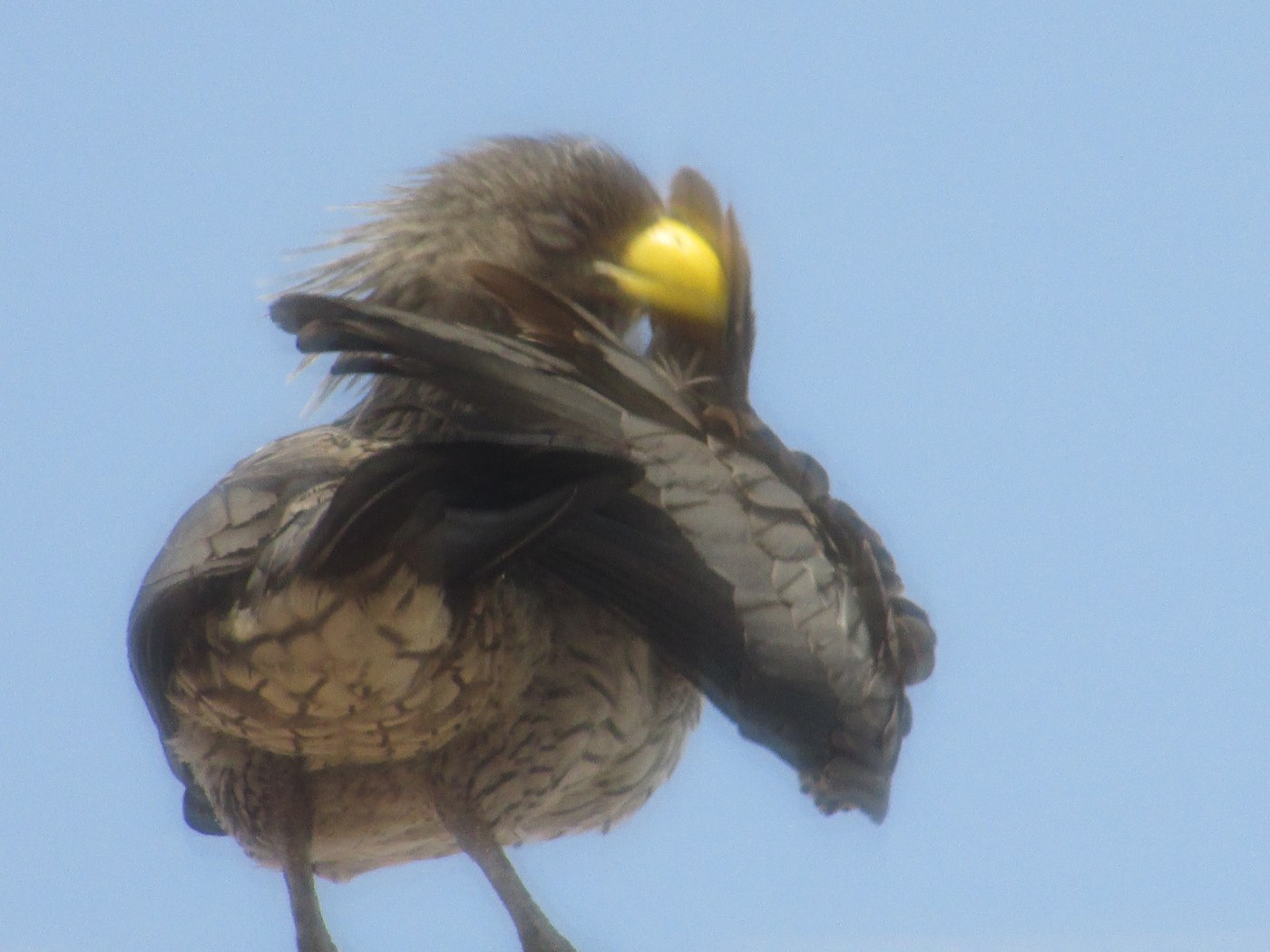
Key Field Marks
- Size and shape: A large, gangly bird (around 48–50 cm including the very long, broad tail), with a bushy, somewhat unkempt-looking crest, a long neck, and a heavy, slow, undulating flight low between trees.
- Plumage: Overall grey-brown, streaked with fine white shaft-streaks on the head, neck, and breast, giving a slightly scaly or frosted look. Wings and long tail are darker grey-brown with a broad pale (whitish to yellowish) terminal tail band, most obvious in flight or when the tail is fanned.
- Bill: Short, thick, and strongly hooked, colored yellow with a red tip — a distinctive combination unlike the plain bills of most other grey birds in its range.
- Crest: Shaggy and often raised, giving the head an untidy, spiky look, especially when the bird is alert or calling.
- Behavior: Usually encountered in small, noisy family groups moving through the canopy, hopping and clambering along branches (turacos and their relatives are more agile climbers than fliers). Flight is heavy and looping, with the long tail trailing behind, typically flying just above treetop level between patches of woodland.
Similar Species
- Eastern Plantain-eater: Very similar but ranges do not overlap broadly (Eastern occurs further east in East Africa); Eastern shows a slightly different bill color pattern and yellow (versus paler) tail band — geography is the most reliable separator.
- Grey Go-away-bird (Grey Lourie): Found in southern Africa (non-overlapping range), plainer grey overall without the streaking, and with a different, unmistakable "go-away" call.
- Violet Turaco / other turacos: Much more colorful (glossy violet-blue and crimson), unmistakable when seen well, though shared shaggy crest and long tail give a similar silhouette in poor light.
Where and When to Look
Resident throughout the year in savanna woodland, forest edge, riverine woodland, and even leafy gardens and parks across West Africa, from Senegal east to Chad and northern DR Congo. Non-migratory, so present in the same locations year-round; most easily found by listening for its loud, far-carrying call from a group moving through tall trees, then scanning the canopy for the shaggy-crested silhouette.
Voice
A loud, harsh, cackling series of nasal notes, often rendered as a raucous "kow-kow-kow" or "go-away"-like call, given by several birds in a group and carrying well through woodland — frequently the first clue to the bird's presence before it is seen.
Frequently asked questions
What is the best field mark for identifying a Western Plantain-eater?
The combination of grey, finely white-streaked plumage, a shaggy crest, a long broad tail with a pale terminal band, and a stubby yellow-and-red bill.
How do you separate Western Plantain-eater from Eastern Plantain-eater?
The two species' ranges barely overlap — Western occurs across West and West-Central Africa while Eastern replaces it further east — so location is the most reliable clue, backed up by subtle bill and tail-band color differences.
What kind of habitat does the Western Plantain-eater favor?
Savanna woodland, forest edges, riverine woodland, and wooded gardens or parks across West Africa.
Is the Western Plantain-eater a migratory bird?
No, it is a non-migratory resident, found in the same general areas throughout the year.
How is the Western Plantain-eater usually detected in the field?
Most often heard first — a loud, raucous, cackling call from a family group — before being spotted moving through the canopy.