
Western Meadowlark Identification Guide
The Western Meadowlark is a chunky, ground-dwelling songbird of open grasslands, known for its bright yellow underparts, bold black V-shaped breast band, and rich, flute-like, bubbling song.
Read the full Western Meadowlark encyclopedia entry →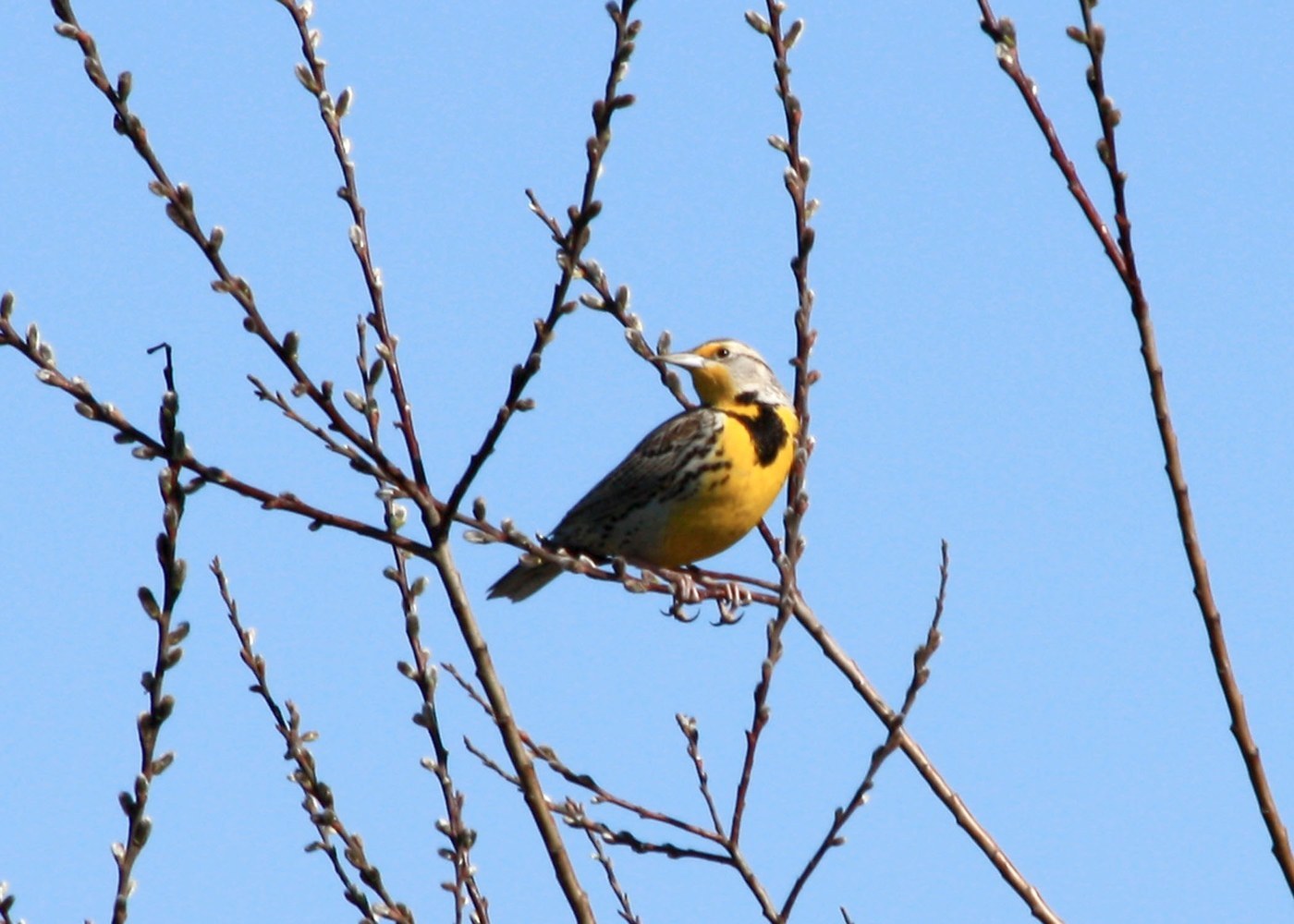
Key Field Marks
- Size and shape: A stocky, robin-to-dove-sized grassland bird with a flattened head profile, a long, pointed, spike-like bill, a short tail, and a somewhat hunched, ground-hugging posture while walking.
- Underparts: Bright lemon-yellow throat and belly with a bold black "V" or crescent across the upper breast — one of the most eye-catching field marks of any North American grassland bird.
- Upperparts: Intricately patterned brown, buff, and black, providing excellent camouflage against dry grass when the bird crouches or walks on the ground.
- Tail: Short and dark with white outer tail feathers that flash conspicuously in flight, especially when the bird flushes low over the grass.
- Behavior: Walks on the ground rather than hopping, often bobbing its tail; sings from fence posts, wires, or shrubs; flight is a distinctive stiff-winged, fluttering glide low over the grassland.
Similar Species
- Eastern Meadowlark: Nearly identical in plumage; best separated by voice — Eastern gives clear, slurred whistles ("spring-of-the-year") while Western gives a rich, gurgling, flute-like song. Western tends to show slightly more yellow extending onto the malar (cheek) area, but this mark is unreliable; range and voice are far more dependable.
- Dickcissel: Much smaller with a stubbier bill and a smaller black bib rather than a full V-shaped band, and lacks the meadowlark's chunky, hunched shape.
- Horned Lark: Smaller, slimmer, lacks any yellow-and-black breast pattern, and has a very different thin, buzzy flight call.
Where and When to Look
Common and widespread across open grasslands, prairies, agricultural fields, and pastures of western and central North America, from southern Canada south through the western and midwestern US into Mexico. Present year-round across much of its southern and central range, with northern populations migrating south for winter. Listen for its song from spring through mid-summer, when males sing persistently from prominent perches to defend territory.
Voice
A rich, gurgling, flute-like song of 7–10 notes that tumbles and bubbles downward, quite different from the clearer, more whistled song of the Eastern Meadowlark — often the single best way to separate the two species where their ranges meet. The call note is a low, harsh "chuck" or a rattling chatter given in flight.
Frequently asked questions
How do I tell Western Meadowlark from Eastern Meadowlark?
Plumage is nearly identical, so voice is the most reliable clue: Western Meadowlark sings a rich, bubbling, flute-like song, while Eastern Meadowlark gives clearer, slurred whistled phrases.
What is the most distinctive field mark of a Western Meadowlark?
Bright yellow underparts crossed by a bold black V-shaped breast band, combined with a chunky body and short, white-edged tail.
What habitat do Western Meadowlarks prefer?
Open grasslands, prairies, pastures, and agricultural fields across western and central North America.
Are Western Meadowlarks present year-round?
Yes, in much of the central and southern part of their range they are year-round residents, while northern breeders migrate south in winter.
How does a Western Meadowlark move on the ground?
It walks rather than hops, often with a subtle tail-bob, and flushes with a stiff, fluttering, low flight showing flashes of white outer tail feathers.