
Western Gull Identification Guide
The Western Gull is a heavyset, dark-backed gull of the Pacific coast, identified by its slate-grey to blackish mantle, thick yellow bill with a bold red gonydeal spot, and bubblegum-pink legs.
Read the full Western Gull encyclopedia entry →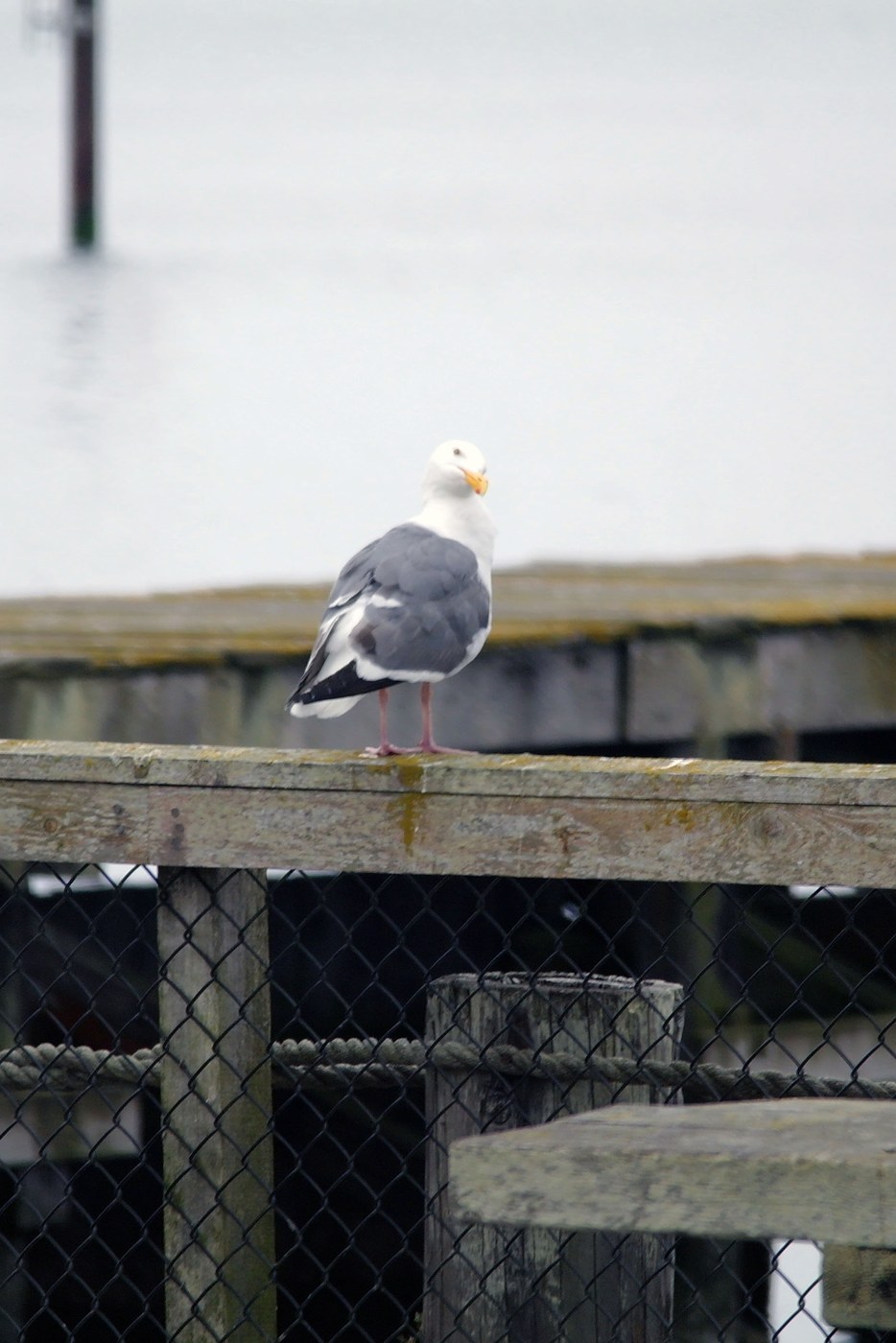
Key Field Marks
- Size and shape: A large, bulky, broad-winged gull with a thick neck, heavy chest, and a stout, deep bill — one of the beefiest gulls on the Pacific coast.
- Adult plumage: Dark slate-grey to blackish-grey mantle and upperwings (darkest in southern populations), contrasting with a clean white head, neck, and underparts. Wingtips are black with limited white spots.
- Bill: Thick, yellow, with a prominent red spot on the lower mandible (gonydeal spot) — bold and easy to see even at a distance.
- Legs: Bubblegum pink, a useful mark separating it from dark-backed gulls with yellow legs.
- Eye: Dark, giving a somewhat fierce, small-eyed expression compared to pale-eyed gulls.
- Immatures: Take about four years to reach adult plumage; first-cycle birds are heavily mottled dusky brown overall with a dark bill, gradually acquiring the grey mantle and white head over subsequent molts.
- Behavior: A bold, aggressive coastal scavenger, frequently seen around piers, fishing boats, and seabird colonies (where it will prey on chicks and eggs). Often stands hunched with a heavy-shouldered look.
Similar Species
- Glaucous-winged Gull: Paler grey mantle with pale (not black) wingtips, and hybridizes extensively with Western Gull in the Pacific Northwest, producing confusing intermediates.
- California Gull: Smaller and slimmer, with yellow-green (not pink) legs, a smaller bill, and paler grey upperparts.
- Slaty-backed Gull (vagrant): Darker overall with a distinctive "string of pearls" white spots along the folded primaries and pink legs, but much rarer and found further north/west.
Where and When to Look
A true Pacific coast specialist, resident year-round from Washington south to Baja California, rarely straying far from saltwater. Breeds on offshore rocks, islands, and coastal cliffs, and is a familiar sight around harbors, beaches, and fishing piers throughout the year — no strong migration, so it can be found in the same coastal towns in every season.
Voice
A deep, throaty "kyow" or "kuk-kuk-kuk" long call, lower-pitched and hoarser than many other large gulls, often given with head thrown back in the classic gull long-call posture.
Frequently asked questions
What's the best mark for identifying an adult Western Gull?
The combination of a dark slate-grey mantle, thick yellow bill with a red gonydeal spot, and bright pink legs is diagnostic along the Pacific coast.
How do I separate Western Gull from Glaucous-winged Gull?
Western Gull has a darker grey mantle with black wingtips, while Glaucous-winged Gull has a paler mantle with pale grey (not black) wingtips — though hybrids are common where ranges overlap.
Does the Western Gull migrate?
Not really — it is a year-round resident of the Pacific coast and rarely wanders far from saltwater or inland.
How long does it take a Western Gull to reach adult plumage?
About four years, passing through progressively paler and greyer immature plumages before acquiring the full dark mantle and white head of an adult.
Where do Western Gulls nest?
On offshore rocks, islands, and coastal cliffs from Washington to Baja California, often in dense colonies alongside other seabirds.