Western Bluebird Identification Guide
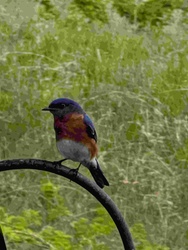
The Western Bluebird is a small western North American thrush identified in males by a deep blue head and back, chestnut breast and shoulders, and grayish belly, favoring open woodland and orchards.
Read the full Western Bluebird encyclopedia entry →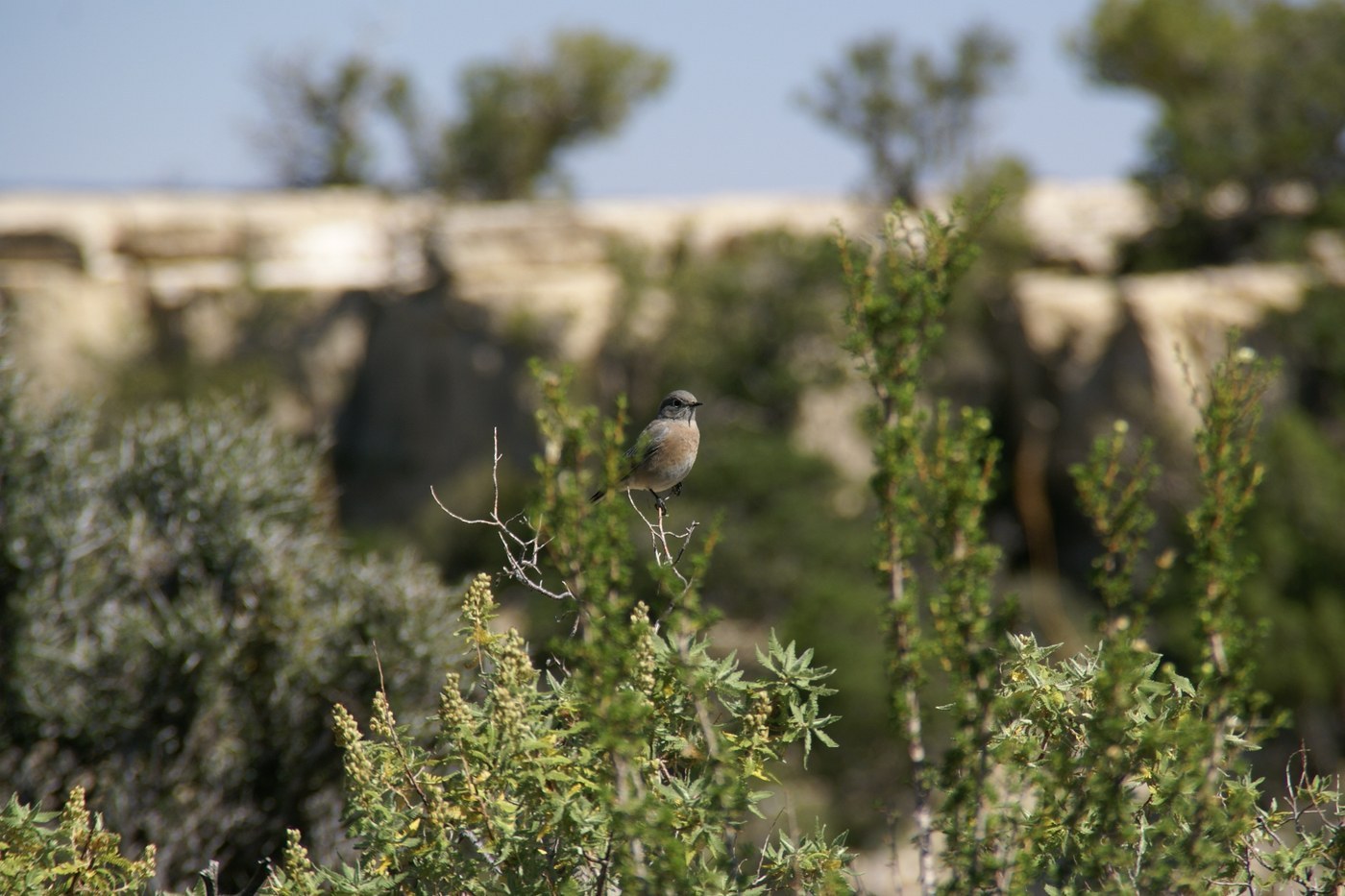
Key Field Marks
- Size and shape: A small, compact thrush around 16-18 cm, with a fairly large head, straight thin bill, and upright perching posture.
- Male plumage: Deep blue head, back, wings, and tail; rich chestnut-orange breast and flanks that notably extends up onto the shoulders and upper back (not just the breast); grayish lower belly.
- Female plumage: Duller grayish-blue overall with a muted orange wash on the breast and a grayish (not white) throat.
Separating It From Similar Species
- Eastern Bluebird: Male Eastern Bluebird has a solid blue back with no chestnut on the shoulders, and shows rusty-orange color extending onto the throat, whereas Western Bluebird has a blue throat and chestnut confined to breast/flanks/shoulders. Females differ similarly, with Eastern showing a whiter throat.
- Mountain Bluebird: Male is entirely sky-blue with no orange/chestnut coloring at all; female is plain grayish with only a blue wash on the wings and tail and a thinner bill than Western Bluebird.
Habitat, Range & Season
Found in open woodlands, oak savanna, pine and pine-oak forest, orchards, and semi-open edge habitat across western North America, from southern British Columbia south through the western United States into Mexico. Readily uses nest boxes and natural cavities. Largely resident in milder parts of its range, with some altitudinal and short-distance movement, and forms small flocks in winter, often feeding on mistletoe and other berries alongside insects.
Behavior
Perches conspicuously on wires, fences, and low bare branches, dropping to the ground to catch insects, and switching to fruit and berries in colder months.
Voice
Calls and song are soft and subdued compared to Eastern Bluebird — a short "few" or "pew" call, and a quiet, slightly chattering warbled song, less musical and less far-carrying than its eastern counterpart.
Frequently asked questions
How do I tell a male Western Bluebird from a male Eastern Bluebird?
Western Bluebird has a blue throat with chestnut confined to the breast, flanks, and shoulders/upper back, while Eastern Bluebird has rusty-orange extending onto the throat and a solid blue back with no chestnut on the shoulders.
How is Western Bluebird different from Mountain Bluebird?
Male Mountain Bluebird is entirely sky-blue with no chestnut or orange coloring, while male Western Bluebird shows a clear chestnut breast, flanks, and shoulder patches against its blue head and back.
What habitat does the Western Bluebird prefer?
Open woodlands, oak savanna, pine-oak forest edges, and orchards across western North America, often using nest boxes or natural tree cavities.
What does the Western Bluebird's call sound like?
A soft, subdued 'few' or 'pew' call, quieter and less musical than the song of the Eastern Bluebird.
Western Bluebird identified by the community
Recent Western Bluebird sightings identified with Bird Identifier.