
Welcome Swallow Identification Guide
The Welcome Swallow is a common Australasian swallow identified by its glossy blue-black upperparts, rufous forehead and throat, pale gray underparts, and moderately forked tail.
Read the full Welcome Swallow encyclopedia entry →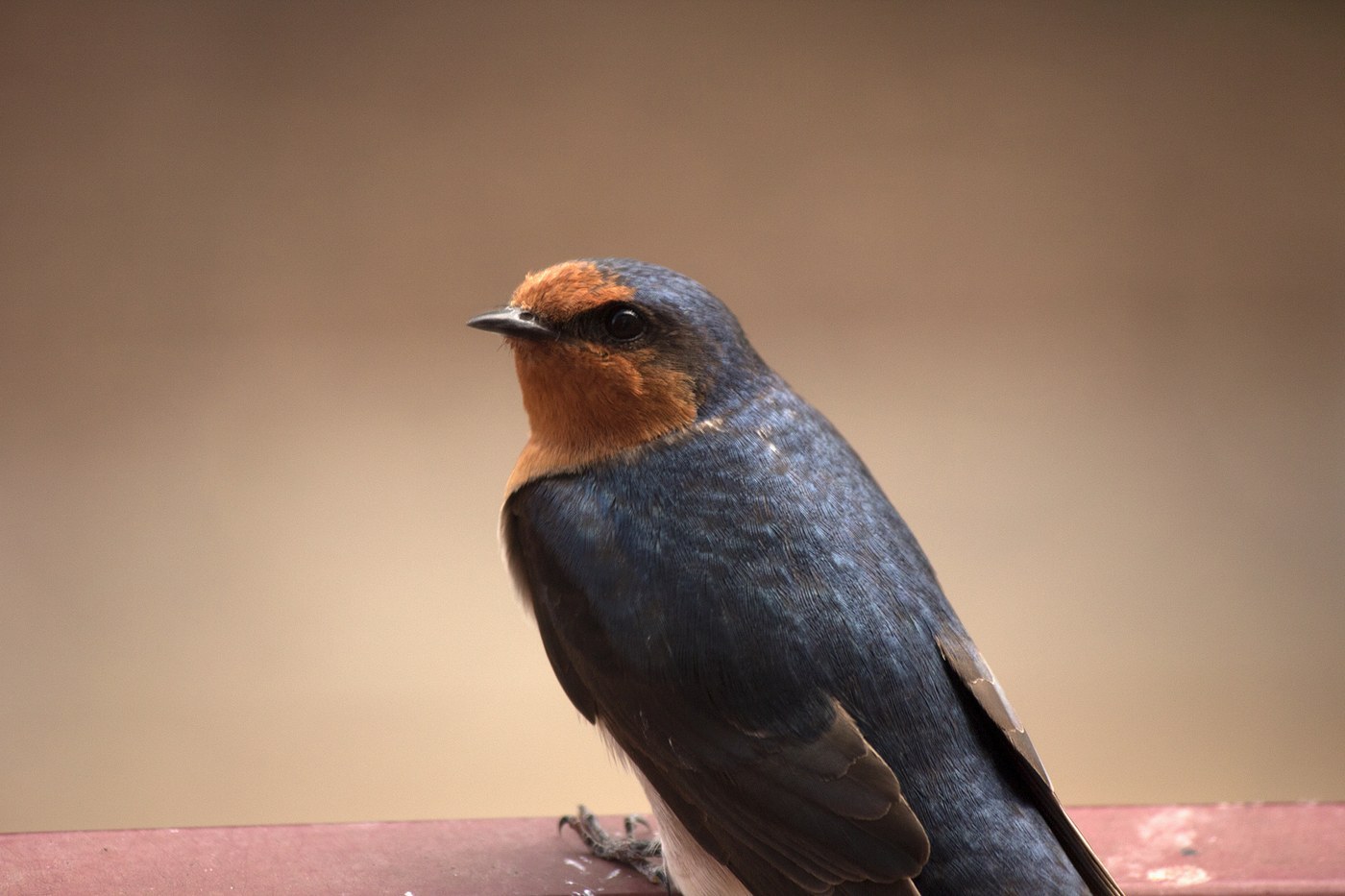
Key Field Marks
- Size and shape: A small, sleek swallow around 14-16 cm with long pointed wings and a moderately forked tail.
- Upperparts: Glossy blue-black crown, back, and wings.
- Head: Rich rufous/chestnut forehead and throat.
- Underparts: Pale grayish-white belly and underparts, without a complete dark breast band.
- Tail: Shows white spots near the tip and is forked, but with noticeably shorter tail streamers than Barn Swallow.
Separating It From Similar Species
- Barn Swallow: Barn Swallow has longer, more pronounced tail streamers, buffier or whiter underparts, and typically a more complete dark breast band; it is a rare vagrant in Australia and New Zealand, so most swallows seen there are Welcome Swallows.
- Tree Martin: Shows a pale whitish rump patch and a shorter, only slightly notched (not deeply forked) tail, plus a pale (not rufous) forehead — distinguishing it readily from Welcome Swallow.
- Fairy Martin: Has an orange-rufous rump and cap combined with a square tail, unlike Welcome Swallow's blue-black crown and forked tail.
Habitat, Range & Season
Common and widespread across Australia in open country near water — farmland, wetlands, coastlines, and towns — frequently nesting on human structures such as bridges, culverts, and building eaves. Self-introduced to New Zealand in the early-to-mid 20th century and now common and widespread there too. Largely resident in warmer areas, with some seasonal movement in cooler southern parts of its range.
Voice
A soft, pleasant twittering chatter, similar in quality to other swallow species, given both in flight and while perched near the nest.
Frequently asked questions
How do I tell Welcome Swallow from Barn Swallow?
Welcome Swallow has shorter tail streamers, grayer (not buffy or white) underparts, and lacks a complete dark breast band; Barn Swallow is only a rare vagrant in Australia and New Zealand.
What color is the Welcome Swallow's forehead and throat?
A rich rufous or chestnut color, contrasting with its glossy blue-black crown and back.
Is the Welcome Swallow native to New Zealand?
It self-introduced from Australia in the early-to-mid 20th century and is now common and widespread there, so it's considered a natural colonist rather than a human-introduced species.
Where does the Welcome Swallow typically nest?
On human-made structures such as bridges, culverts, and building eaves, as well as natural sites near open water and farmland.