
Wattled Crane Identification Guide
The Wattled Crane is Africa's tallest crane, identified by its long white throat wattles, white neck and breast contrasting with a dark gray body, and dependence on large wetlands.
Read the full Wattled Crane encyclopedia entry →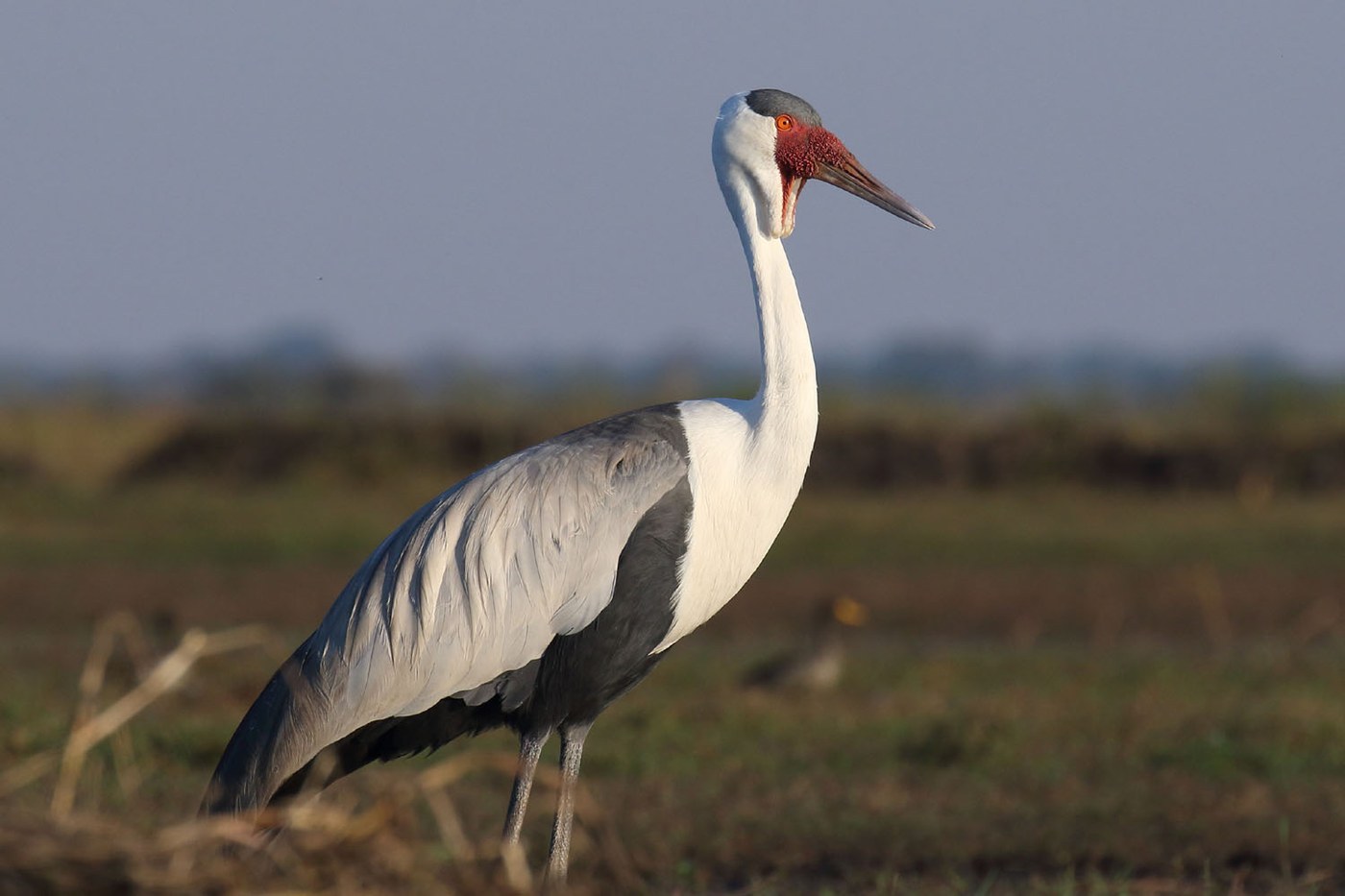
Key Field Marks
- Size and shape: The tallest African crane, standing up to 1.75 m, with a long neck and legs and a notably elegant, slender profile.
- Wattles: Long, fleshy white wattles hang from the chin/throat — longer and more conspicuous than in any other crane species, giving the bird its name.
- Head: Black crown with a small patch of red skin in front of the eye; white feathering covers much of the face and foreneck.
- Body: Sharply two-toned — white head, neck, and breast plumage (the breast feathers often droop in long white plumes) contrasting with a dark slate-gray body and wings.
- Legs: Long and black.
Separating It From Similar Species
- Grey Crowned Crane: Has a spiky golden-yellow crown of bristly feathers and much more colorful bare facial skin (red and white cheek patches); lacks throat wattles.
- Blue Crane: Smaller and uniformly pale blue-gray overall with elongated inner wing plumes trailing behind, no white neck contrast, and no wattles.
- Demoiselle Crane: Much smaller with a gray body, black foreneck plumes, and white eye-stripe tufts — no wattles and no white neck.
Habitat, Range & Season
Highly wetland-dependent, found in large, undisturbed floodplains, shallow marshes, and seasonally flooded grasslands across sub-Saharan Africa, including the Okavango Delta and Zambezi floodplains, Ethiopian highland wetlands, and KwaZulu-Natal wetlands in South Africa. Largely sedentary but makes local movements tracking water levels; population is fragmented and considered globally threatened due to wetland loss.
Voice
A loud, resonant, deep trumpeting call, harsher and lower-pitched than the calls of most other crane species; pairs also give soft purring contact notes.
Frequently asked questions
What makes the Wattled Crane easy to identify?
Its long, fleshy white throat wattles are unique among cranes, combined with a strongly two-toned look: white head, neck, and breast against a dark slate-gray body.
How is the Wattled Crane different from the Grey Crowned Crane?
Grey Crowned Crane has a spiky golden crown and colorful bare cheek patches but no wattles, while Wattled Crane has a plain black crown and prominent hanging white wattles instead.
Where do Wattled Cranes live?
They depend on large, undisturbed wetlands such as floodplains and shallow marshes in sub-Saharan Africa, including the Okavango Delta, Zambezi floodplains, and highland wetlands in Ethiopia.
Is the Wattled Crane endangered?
Yes, it is considered globally threatened, largely because of the loss and degradation of the large wetland habitats it depends on.