
Virginia Rail Identification Guide
A small, secretive marsh bird with a cinnamon breast, gray face, and long downcurved reddish bill, best known by its distinctive kidick-kidick call.
Read the full Virginia Rail encyclopedia entry →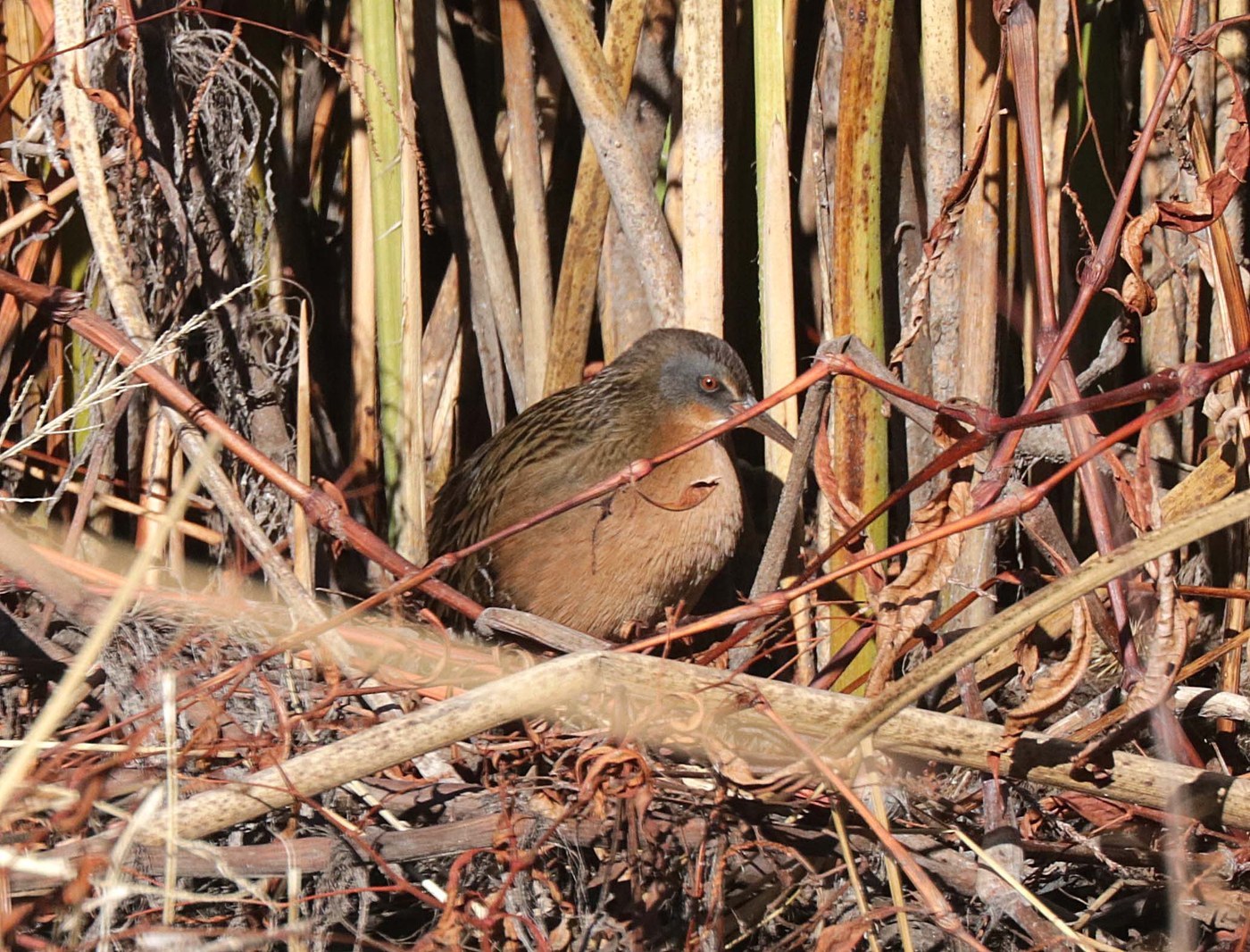
Key Field Marks
- Size & shape: A small, slender rail with a laterally compressed body adapted for slipping through dense marsh vegetation, and a short, often cocked-up tail.
- Bill: Long, slightly downcurved, and reddish-orange to dull orange in color — proportionally long for such a small rail.
- Plumage: Rich cinnamon-rufous breast and face sides, contrasting with a gray face, and flanks strongly barred black-and-white.
- Behavior: Extremely secretive, typically staying hidden within dense marsh vegetation; more often heard than seen, though it may walk into the open at marsh edges, especially at dawn or dusk, flicking its short tail as it moves.
Separating Virginia Rail from Similar Species
- Sora: Shorter, stubby yellow bill (versus Virginia Rail's long reddish bill), a black face patch, and a different, whinnying call rather than the Virginia Rail's kidick-kidick.
- Clapper Rail / King Rail: Both are considerably larger and duller/browner overall, found more often in coastal or larger river marshes, versus the smaller, brighter Virginia Rail of freshwater marshes.
Where & When to See One
Breeds across much of the northern and central United States and southern Canada in freshwater and brackish marshes with dense stands of cattails, sedges, and other emergent vegetation. Many populations winter in the southern United States, coastal marshes, and Mexico, while some remain resident where marshes stay unfrozen year-round. Patience and careful listening near dense marsh edges, especially early or late in the day, offer the best chance of a look.
Voice
A distinctive, repeated "kidick-kidick-kidick" call, along with a descending series of grunting or oinking notes. Vocalizations are the primary way birders detect this highly secretive species.
Frequently asked questions
How do I tell a Virginia Rail from a Sora?
Virginia Rail has a long, downcurved reddish-orange bill and cinnamon breast, while Sora has a short, stubby yellow bill and a black face patch.
What is the easiest way to detect a Virginia Rail?
By voice — listen for its distinctive kidick-kidick call and descending grunting notes from dense marsh vegetation, since the bird itself is very secretive.
What habitat does the Virginia Rail prefer?
Freshwater and brackish marshes with dense emergent vegetation such as cattails and sedges.
Is the Virginia Rail migratory?
Many populations migrate to the southern US, coastal marshes, and Mexico for winter, though some remain resident where marshes do not freeze.