
Vinous-throated Parrotbill Identification Guide
A tiny, long-tailed East Asian songbird with a warm reddish-brown wash on the crown and throat and a short, stubby parrotbill bill.
Read the full Vinous-throated Parrotbill encyclopedia entry →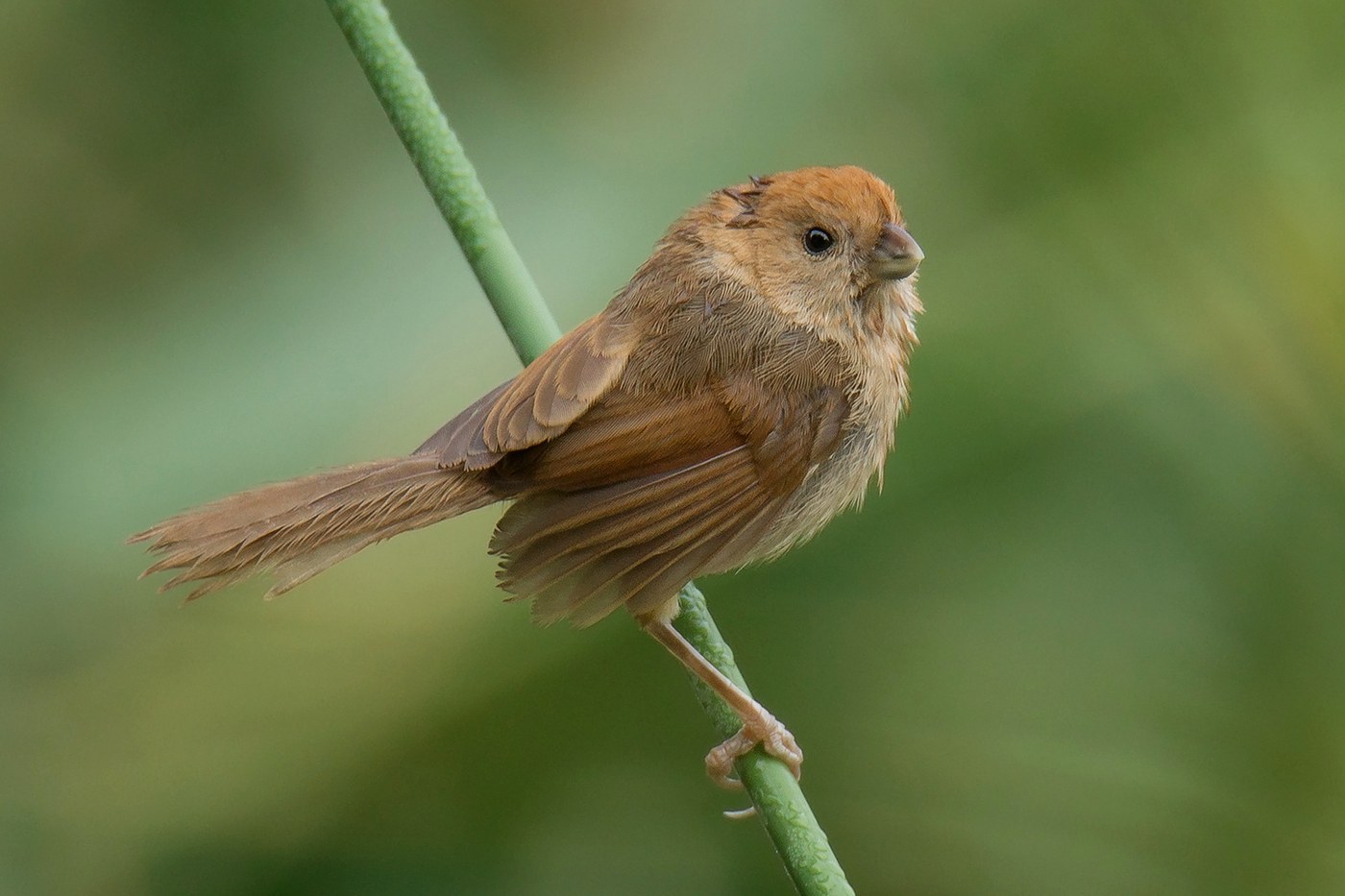
Key Field Marks
- Size & shape: Very small and long-tailed, with a proportionally long, graduated tail that often makes up nearly half the bird's total length.
- Plumage: Warm brown overall, with a distinctive vinous (reddish-wine) wash across the crown and throat that gives the species its name.
- Bill: Short, stubby, and slightly hooked, yellowish in color — the classic "parrotbill" shape adapted for gleaning insects and seeds from stems and reeds.
- Behavior: Highly social, moving in tight, noisy flocks that flit low through scrub and reeds, rarely seen alone.
Separating Vinous-throated Parrotbill from Similar Species
- Other parrotbills: Separated from similar Sinosuthora and Paradoxornis parrotbills by the specific extent and intensity of the vinous throat/crown wash, overall smaller size, and bill shape/color — range also helps narrow down possibilities where multiple parrotbill species overlap.
- Bushtits/tits: The stubby, hooked parrotbill bill and warm brown tones (versus gray) distinguish it from superficially similar small, long-tailed songbirds.
Where & When to See One
A resident, non-migratory species found in China, the Korean Peninsula, Taiwan, and parts of northern Vietnam, with introduced or expanding populations noted in some other areas. Favors scrubby thickets, tall grass, reed beds, bamboo stands, and forest edges at low to moderate elevations. Because it travels in flocks, once one bird is located, several more are usually nearby.
Voice
A constant, buzzy chattering of contact calls kept up by flock members as they move through dense cover — often the first clue to the flock's presence before any bird is seen.
Frequently asked questions
What is the most distinctive feature of a Vinous-throated Parrotbill?
A warm reddish-wine (vinous) wash on the crown and throat combined with a stubby, hooked yellowish bill and a very long tail relative to body size.
Are Vinous-throated Parrotbills usually seen alone?
Rarely — they are highly social and almost always found moving in noisy, active flocks through dense scrub or reeds.
What habitat do Vinous-throated Parrotbills prefer?
Scrubby thickets, reed beds, bamboo, tall grass, and forest edges at low to moderate elevations.
Where is the Vinous-throated Parrotbill found?
China, the Korean Peninsula, Taiwan, and parts of northern Vietnam, where it is a non-migratory resident.