
Vesper Sparrow Identification Guide
A streaky grassland sparrow best known for its white outer tail feathers, chestnut shoulder patch, and musical, dusk-sung song.
Read the full Vesper Sparrow encyclopedia entry →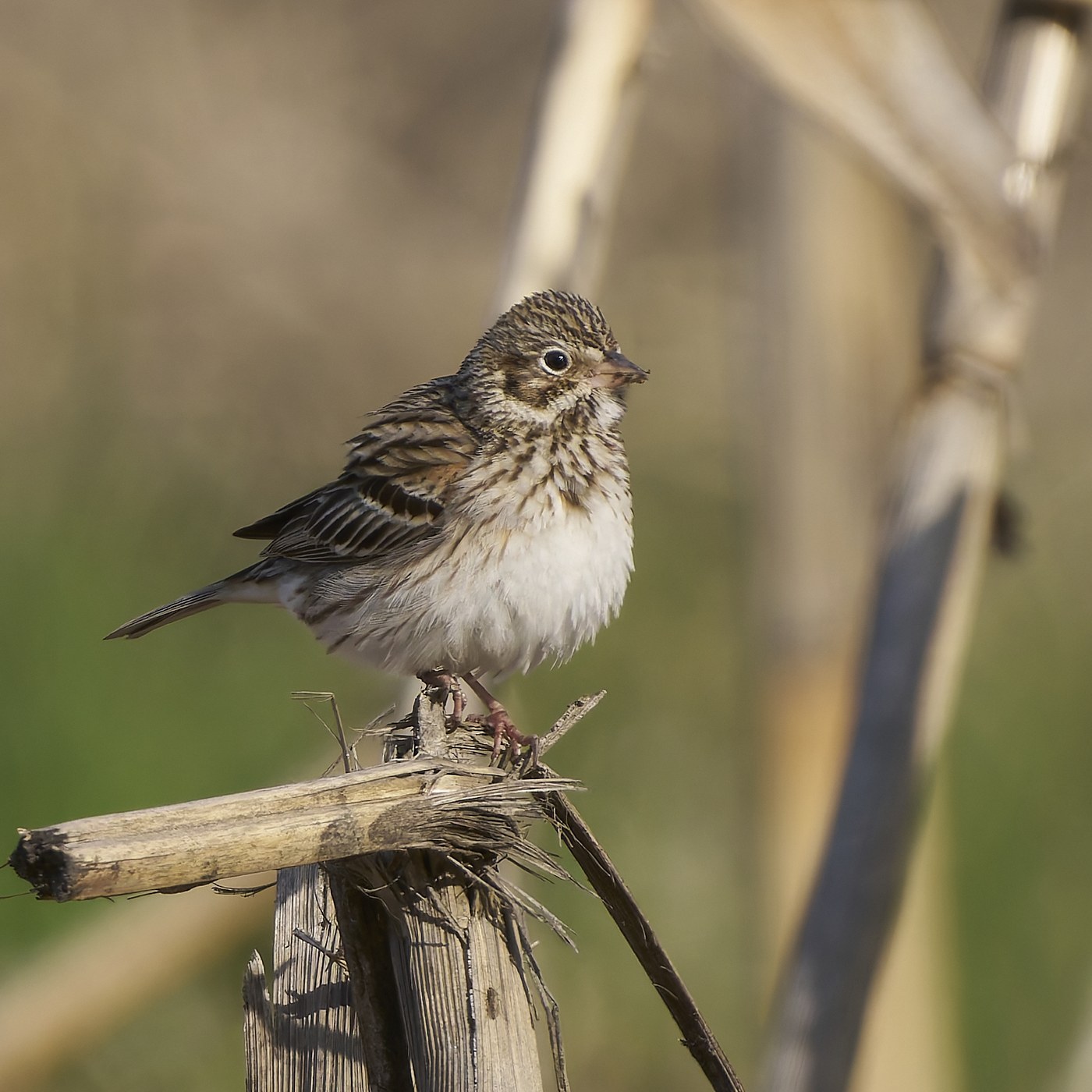
Key Field Marks
- Size & shape: A medium-sized, fairly slim sparrow with a rounded head and a moderately long, notched-looking tail.
- Plumage: Streaky brown-and-buff upperparts and a whitish breast with fine dark streaking that lacks a bold central spot.
- Tail: White outer tail feathers are the single best field mark — they flash conspicuously when the bird flies and are visible even in brief glimpses.
- Shoulder patch: A chestnut patch on the lesser wing coverts, often subtle but visible at close range or in good light.
- Face: A pale, unmarked grayish face with a thin white eye-ring and a pale malar (mustache) stripe.
- Behavior: Forages on the ground in open grassland and agricultural fields, often running rather than hopping, and perches on fence posts or low shrubs to sing.
Separating Vesper Sparrow from Similar Species
- Savannah Sparrow: Shows yellow lores (in front of the eye), a shorter and more notched tail without white outer feathers, and generally a more heavily streaked breast.
- Song Sparrow: Has a bold dark central breast spot, warmer/browner overall tones, and a longer, rounded tail lacking white edges.
- Lark Sparrow: Has a much bolder head pattern with chestnut ear patches and a central breast spot, plus white tail corners rather than fully white outer tail feathers.
Where & When to See One
Vesper Sparrows breed in open grasslands, pastures, hayfields, sagebrush flats, and agricultural areas across much of the northern and central United States and southern Canada. In winter, they retreat to the southern United States and Mexico, favoring similar open, grassy or weedy habitats. Look for them on the ground in short-grass fields or perched on fences at field edges during the breeding season.
Voice
A rich, musical song that begins with two or more long, clear whistled notes, followed by a series of buzzy trills — often described as one of the more beautiful sparrow songs. True to its name, it is frequently sung in the evening ("vespers"), though it also sings throughout the day.
Frequently asked questions
What is the best field mark for a Vesper Sparrow?
White outer tail feathers that flash when the bird flies, combined with a chestnut shoulder patch and an unstreaked, plain grayish face.
How is a Vesper Sparrow different from a Savannah Sparrow?
Vesper Sparrow lacks the yellow lores of a Savannah Sparrow and shows white outer tail feathers, which Savannah Sparrow does not have.
What habitat should I search for Vesper Sparrows?
Open grasslands, pastures, hayfields, and agricultural edges with scattered fences or shrubs for singing perches.
Why is it called the Vesper Sparrow?
It is named for its habit of singing its musical, whistled song frequently at dusk, though it sings at other times of day as well.