
Verreaux's Eagle Identification Guide
A large, nearly all-black African eagle of cliffs and mountains, marked by a white back patch and white "windows" near the wingtips.
Read the full Verreaux's Eagle encyclopedia entry →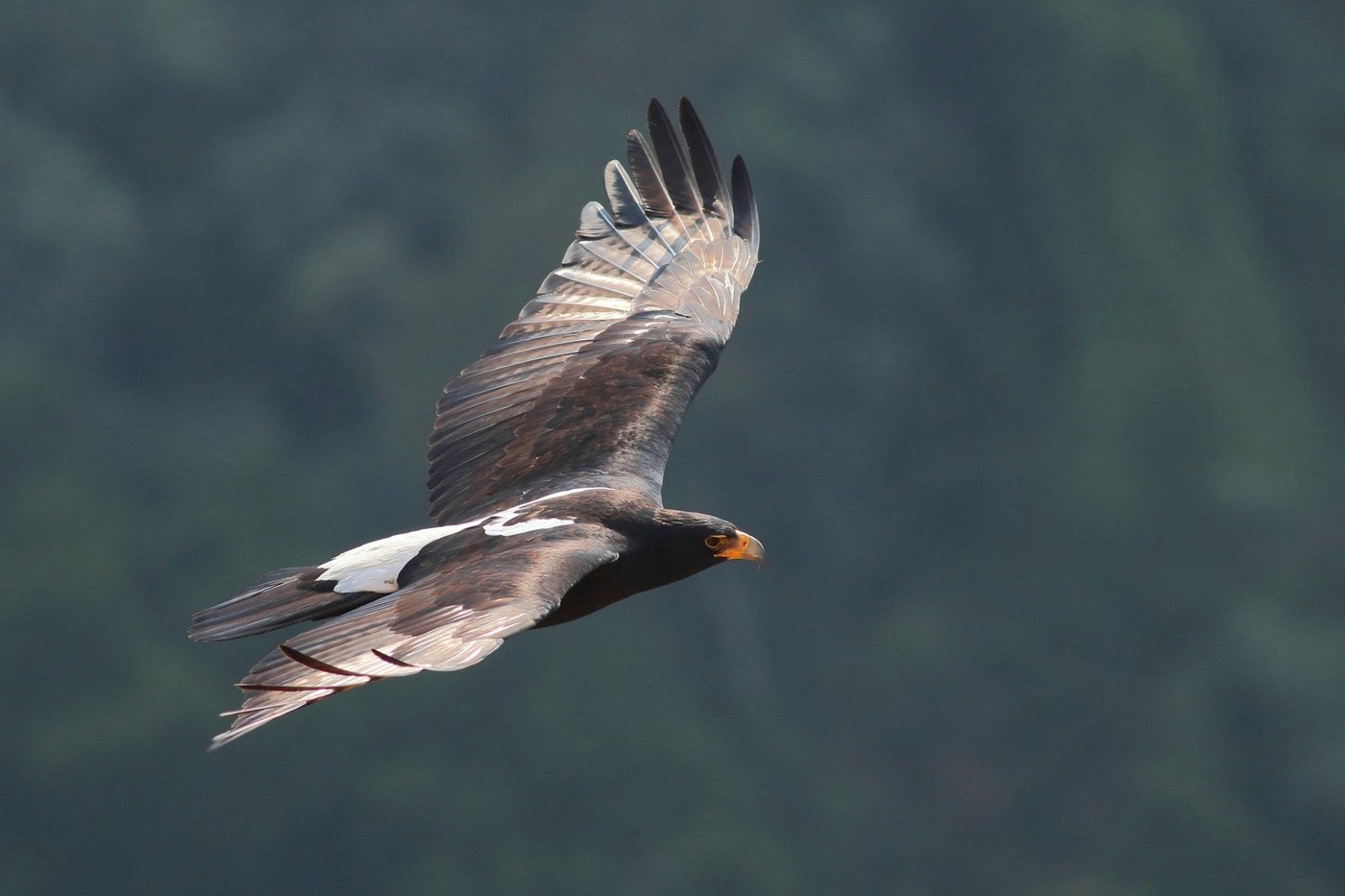
Key Field Marks
- Size & shape: A very large eagle (wingspan up to 6.5 feet) with long, broad wings that narrow at the base, giving a distinctive hourglass silhouette in soaring flight.
- Plumage: Almost entirely glossy black, with a conspicuous white "V" or rump/back patch visible when perched or from above in flight.
- In flight: From below, pale "windows" (light patches) near the base of the primaries are diagnostic and visible at a distance.
- Bare parts: Yellow cere and yellow feet contrast with the black plumage.
- Build: Powerful, heavy-bodied eagle built for hunting on rocky terrain.
Separating Verreaux's Eagle from Similar Species
- Other black raptors: The combination of large size, black plumage, white back patch, and pale wing "windows" distinguishes it from other dark eagles and vultures in its range.
- Immatures: Show more mottled brown-and-black plumage with a paler head, gradually darkening to adult plumage over several years — habitat and structure (broad-based, tapered wings) remain useful clues.
- Flight profile: The pinched-in wing base combined with heavy body separates it from broader-winged vultures at a distance.
Where & When to See One
Verreaux's Eagle is a resident, non-migratory species found across mountainous, rocky, and cliff-dominated habitats throughout sub-Saharan Africa, from the Sahel south to South Africa, with a strong association with areas holding healthy populations of rock hyrax, its primary prey. Look for pairs soaring on thermals above cliffs, gorges, and kopjes, or perched on rock outcrops and cliff ledges near their nest sites, which are typically large stick nests built on cliff faces.
Voice
Generally a quiet species away from the nest; near breeding cliffs it gives occasional barking, yelping, or high-pitched calls, especially during territorial displays and food exchanges between mates.
Frequently asked questions
What is the easiest way to identify a Verreaux's Eagle in flight?
Look for an almost entirely black eagle with a white back patch and pale windows near the wingtips, soaring on long wings with a pinched-in base over cliffs or mountains.
What does Verreaux's Eagle mainly eat?
It specializes heavily on rock hyrax, and its distribution closely tracks areas with healthy hyrax populations on rocky, cliff-lined terrain.
Where does Verreaux's Eagle nest?
On ledges of tall cliffs and rock faces, building a large stick nest that pairs reuse and add to across breeding seasons.
How do immature Verreaux's Eagles differ from adults?
Immatures show mottled brown and black plumage with a paler head that gradually darkens to full glossy black over several years to adulthood.