
Variable Oystercatcher Identification Guide
A New Zealand shorebird whose plumage ranges from fully black to pied, unified by its long orange-red bill and stout pink legs.
Read the full Variable Oystercatcher encyclopedia entry →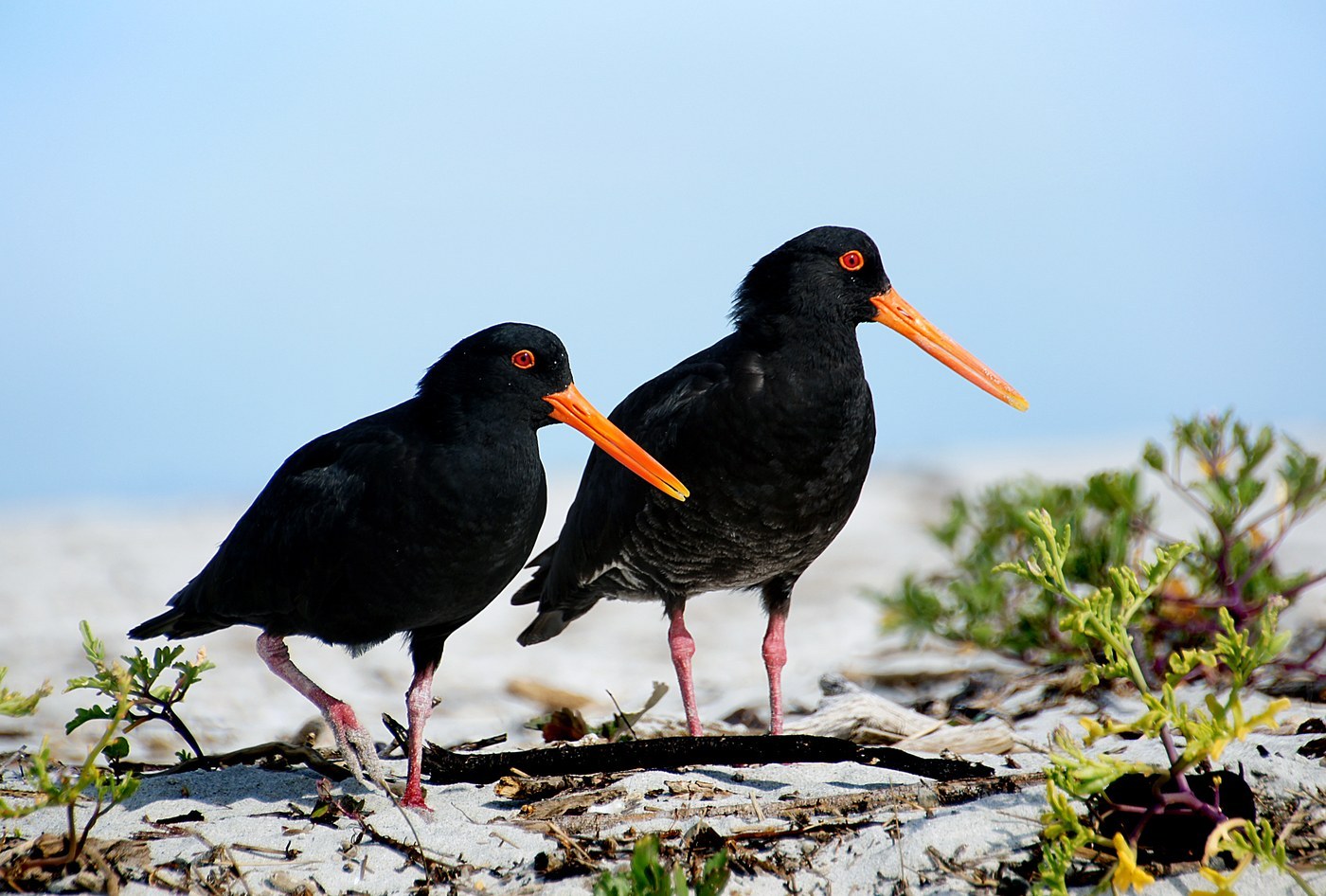
Key Field Marks
- Large, heavy-bodied shorebird (about 48 cm) with a long, straight, laterally flattened orange-red bill and stout dull pink legs.
- Highly variable plumage, as the name suggests: birds range from entirely sooty-black (black morph) through various intermediate patterns to strongly pied black-and-white (pied morph), with every gradation possible.
- Pied-morph birds show a black head, neck, and upperparts with a clean white breast and belly and a white wing bar visible in flight.
- Black-morph and intermediate birds can show smudgy, incomplete white patches on the belly or flanks rather than the crisp border of a true pied bird.
- Red eye-ring and red iris in adults; bill is proportionately heavier and straighter than in many other oystercatchers.
Similar Species
- South Island Pied Oystercatcher (SIPO): pied-morph Variable Oystercatchers can look similar, but SIPO shows a sharply defined, straight border between the black chest and white belly, a slimmer build, and typically a thinner bill; Variable Oystercatcher's pied border is more diffuse or irregular.
- Chatham Oystercatcher: restricted to the Chatham Islands and always dark morph with a stockier build and heavier bill than mainland Variable Oystercatchers; range does not overlap with mainland New Zealand birds.
- Because Variable Oystercatcher plumage spans a continuum, individual identification often relies as much on structure (heavier bill, stockier build) and location as on plumage pattern alone.
Habitat, Range & Season
- Endemic to New Zealand, breeding around the coastline of both the North and South Islands and some offshore islands.
- Found on sandy and shell beaches, rocky shorelines, estuaries, and tidal mudflats, foraging for shellfish, crabs, and marine invertebrates.
- Largely resident and sedentary, defending breeding territories on beaches through spring and summer (roughly September to February in New Zealand's seasons), with some local dispersal to estuaries in the non-breeding period.
- Often seen in pairs or small family groups rather than large flocks, unlike some other oystercatcher species.
Voice
- Loud, piercing "kleep" or "peep" calls typical of oystercatchers, used in alarm and territorial displays.
- Piping duets and displays occur between paired birds, especially during the breeding season when defending nesting territory.
Frequently asked questions
Why is it called the Variable Oystercatcher?
It is named for its highly variable plumage, which ranges continuously from all-black through intermediate patterns to fully pied black-and-white.
How do you separate a pied Variable Oystercatcher from a South Island Pied Oystercatcher?
Look at the border between black and white on the chest: South Island Pied Oystercatcher has a crisp, straight demarcation, while pied Variable Oystercatchers usually show a more diffuse, irregular, or smudgy border, along with a heavier bill and stockier build.
Is the black form or the pied form more common?
This varies regionally in New Zealand; on the North Island black and intermediate morphs are relatively common, while on parts of the South Island pied-like individuals are more frequent, though all morphs can occur anywhere in the range.
What does the Variable Oystercatcher eat?
It forages on beaches, rocks, and mudflats for shellfish (such as mussels and pipi), crabs, worms, and other marine invertebrates, using its strong bill to pry or hammer open shells.