
Tricolored Heron Identification Guide
A slim, dark, long-necked heron of southeastern U.S. and Gulf/Caribbean coasts, instantly recognizable by its contrasting white belly against otherwise slate-blue plumage.
Read the full Tricolored Heron encyclopedia entry →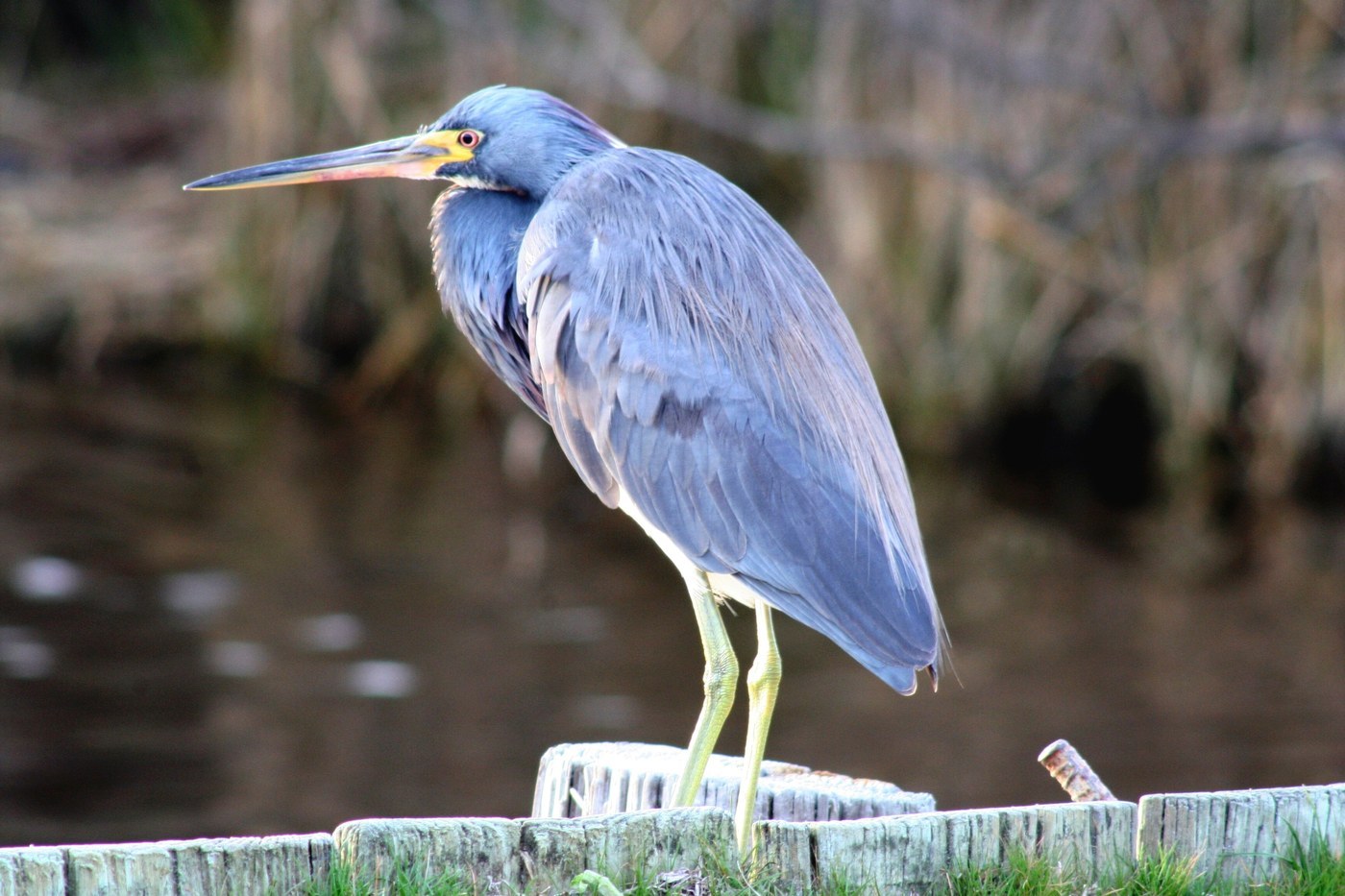
Key Field Marks
- Size & shape: A slender, medium-sized heron with a notably thin neck, long thin bill, and long legs — overall a much daintier, more attenuated build than most herons.
- Plumage: Dark slate-blue to purplish-blue overall (head, neck, back, wings) with a contrasting white belly — the single most diagnostic feature — plus a thin white/rufous stripe running down the front of the foreneck.
- Breeding adults: Develop rufous and lavender plumes on the neck and back, blue-and-pink lores, and long white head plumes.
- Bill & legs: Bill is long, thin, and yellowish with a dark tip in breeding condition (bluish overall the rest of the year); legs are yellowish-green, brightening to pink/coral during peak breeding.
- Behavior: An active, animated forager — wades with a distinctive hunched, crouching gait, often dashing, hopping, and spreading its wings to create shade (canopy feeding) while stalking small fish in shallow water, quite different from the more statuesque hunting style of larger herons.
Separating Tricolored Heron from Similar Species
- Little Blue Heron: Uniformly slate-blue to purplish all over, without the white belly — this is the single best mark. Little Blue Heron also lacks the neck stripe.
- Reddish Egret (dark morph): Larger and bulkier, with shaggy rufous head/neck plumes contrasting with slaty-blue body, a bicolored pink-and-black bill, and a much more frantic, wing-flapping, staggering feeding style; lacks Tricolored's clean white belly.
- Great Blue Heron: Much larger and bulkier overall, gray rather than deep blue, with a heavier bill — size alone usually separates the two.
- Juvenile Little Blue Heron (white morph): All-white, unlike any plumage of Tricolored Heron, so confusion is minimal; but note juvenile Tricolored Heron is browner overall with rusty edging on the neck/wings before molting into adult-like blue plumage, always retaining the white belly.
Where & When to See It
A coastal specialist of the southeastern and Gulf Coast United States, Mexico, Central America, the Caribbean, and locally into South America. Found in salt marshes, mangroves, tidal flats, and shallow coastal lagoons — rarely far from saltwater or brackish habitat, unlike the more generalist Little Blue Heron and Great Blue Heron. Largely resident in the core range, with some post-breeding dispersal and wandering north along the Atlantic and Gulf coasts in late summer.
Voice
Generally quiet away from colonies; utters a low, croaking "aaah" or nasal squawk when flushed or disturbed, and various croaks and squawks at breeding colonies during courtship and nest defense.
Frequently asked questions
What is the single best field mark for Tricolored Heron?
The contrasting white belly against otherwise dark slate-blue plumage. No similarly dark heron in its range combines a blue-purple body with a clean white belly.
How is Tricolored Heron different from Little Blue Heron?
Little Blue Heron is uniformly slaty-purple all over with no white belly and no neck stripe, while Tricolored Heron shows a bold white belly and a thin pale stripe down the front of the neck.
Does Tricolored Heron have a distinctive feeding behavior?
Yes — it forages actively and erratically, often running, hopping, and spreading its wings over the water (canopy feeding) to reduce glare and startle small fish, a much more animated style than the slow stalking of Great Blue Heron.
Is Tricolored Heron usually found away from the coast?
Rarely. It is strongly tied to saltwater and brackish habitats such as salt marshes, mangroves, and tidal flats, unlike Little Blue Heron and Great Blue Heron, which readily use freshwater ponds and inland wetlands.