
Tomtit Identification Guide
The Tomtit is a tiny, confiding New Zealand forest bird in the Australasian robin family, with black-and-white males showing a yellow or white belly wash depending on island population.
Read the full Tomtit encyclopedia entry →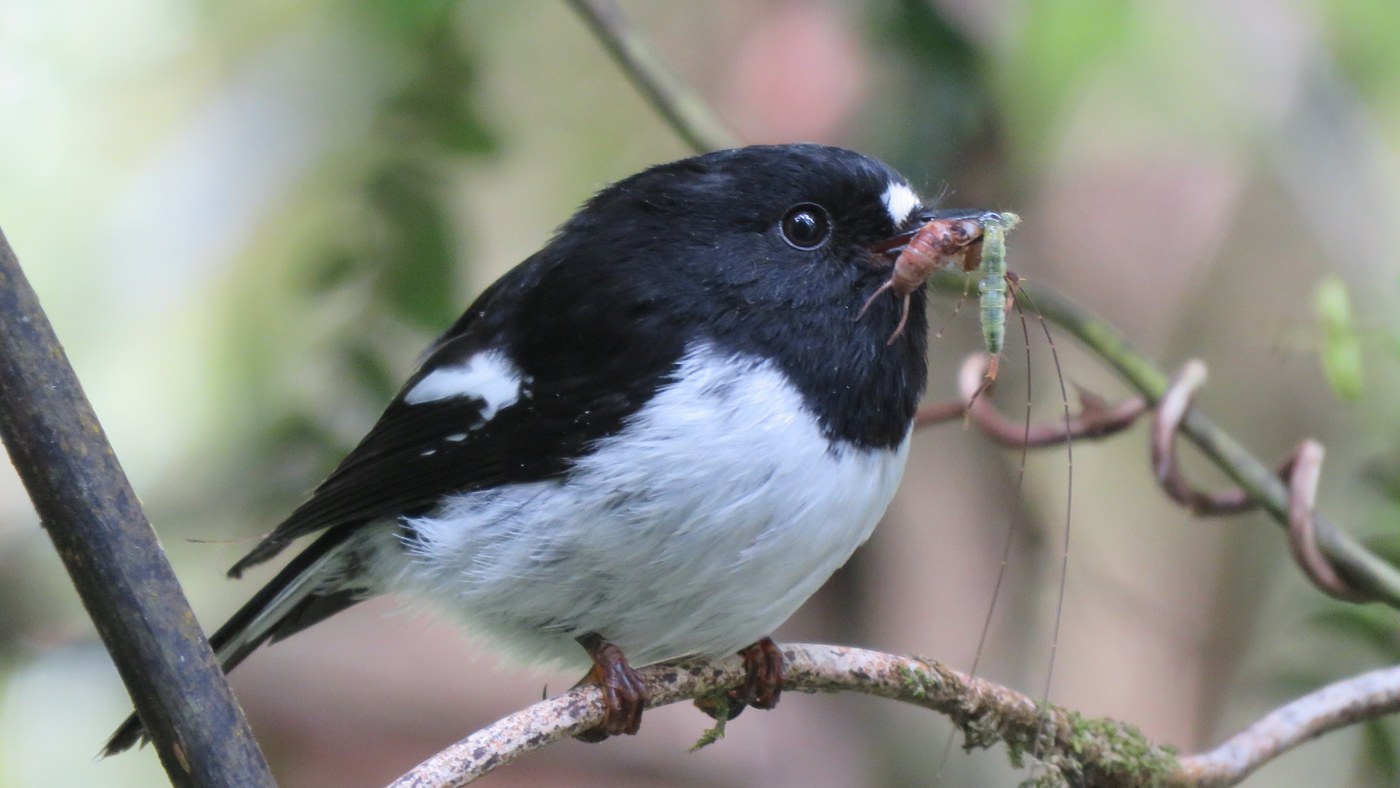
Key Field Marks
- Size & shape: Very small, around 13 cm, with a large rounded head, short tail, and upright perching posture typical of Australasian robins.
- Male plumage: Glossy black head and upperparts, a crisp white breast, a small white spot above the bill, and a white wingbar; belly color varies geographically — yellow-washed in North Island birds, whiter in South Island birds.
- Female plumage: Much duller brownish-grey above with buff-white underparts, lacking the male's sharp black-and-white contrast.
- Behavior: A classic "sit-and-wait" forager — perches quietly on a low branch or stump, then drops or pounces onto the ground or bark to seize invertebrate prey; often notably tame and curious, sometimes following walkers on forest tracks.
Separating Tomtit from Similar Species
- New Zealand Robin (Toutouwai): Larger, longer-legged, stands more upright with a more vertical posture, and is grey-black overall without the Tomtit's crisp white breast patch and wing bar — size and posture are the quickest separators.
- Regional forms: Because plumage (especially belly wash) varies between North Island, South Island, and outlying island populations (e.g., Chatham Island form with an all-black male breast), locality is an important clue alongside plumage when judging exact subspecies.
Where and When to See One
- Range: Endemic to New Zealand, found in native forest on both the North and South Islands as well as several offshore islands, including the distinctive Chatham Island population.
- Habitat: Native forest and scrub, from coastal lowlands to subalpine tree line; readily found along well-forested walking tracks in national parks and reserves.
- Season: Resident year-round and non-migratory; most easily observed and heard singing in spring and summer during the breeding season.
Voice
- A sweet, clear, high-pitched song that varies noticeably between island populations; calls include thin contact notes given while foraging, useful for locating an otherwise quiet, well-camouflaged bird in dense understory.
Frequently asked questions
How do I tell a Tomtit from a New Zealand Robin?
Tomtit is much smaller with a crisp white breast and wing bar, while the Robin is larger, longer-legged, and more uniformly grey-black with a more upright stance.
Does the Tomtit's belly color always look the same?
No, belly wash varies by population — yellowish in North Island birds and whiter in South Island birds, with further variation on outlying islands.
Where is the best place to see a Tomtit?
Native forest tracks throughout New Zealand's North and South Islands, where the birds are often tame enough to approach closely.
What does a Tomtit eat?
Mostly small invertebrates, caught by perching quietly and then dropping onto prey on the ground or on tree bark.