
Thick-billed Longspur Identification Guide
The Thick-billed Longspur is a stocky shortgrass-prairie sparrow relative (formerly McCown's Longspur) identified in flight by its mostly white tail with a dark inverted-T pattern and, in breeding males, a black crown and breast crescent.
Read the full Thick-billed Longspur encyclopedia entry →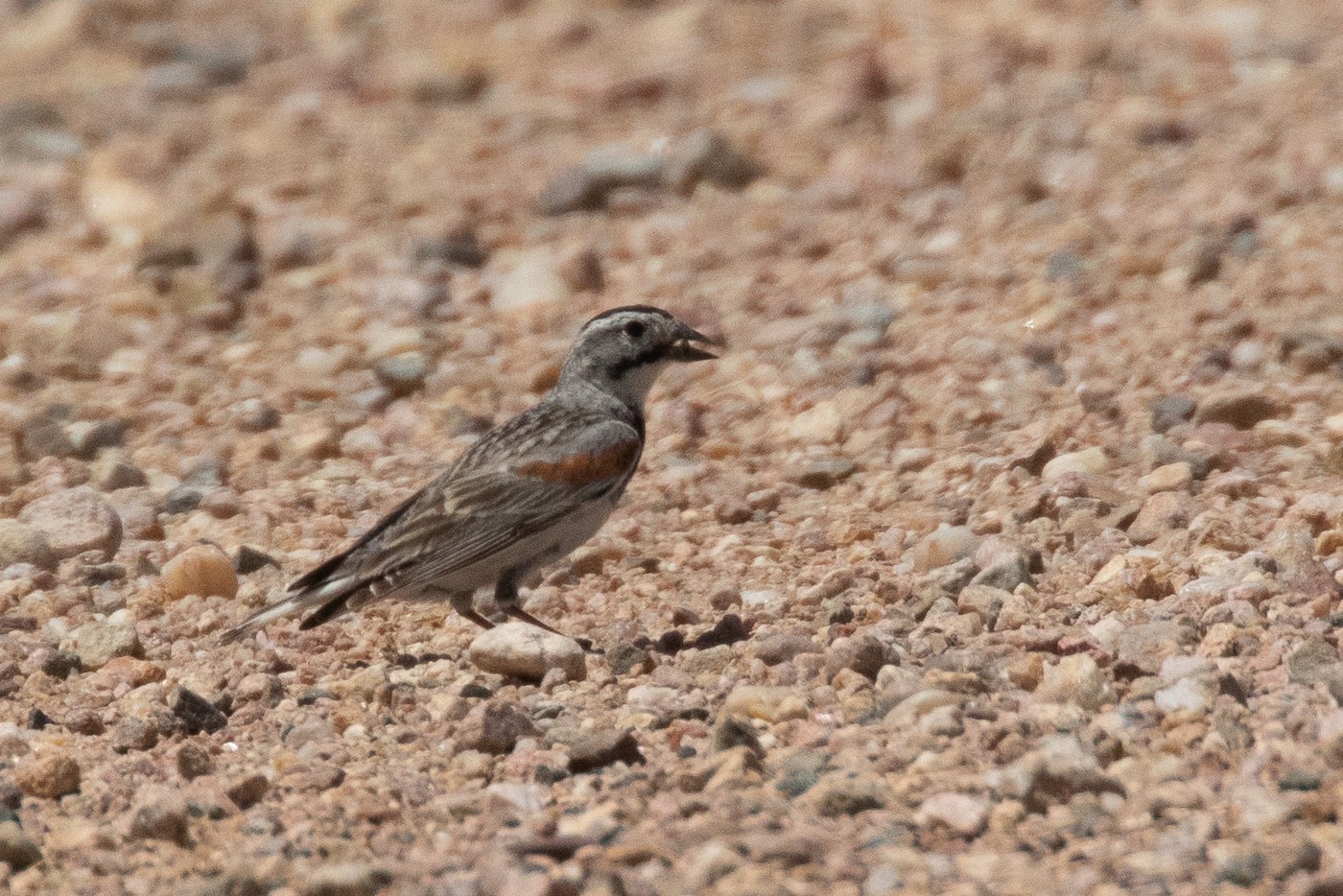
Key Field Marks
- Size & shape: A stocky, sparrow-sized bird, 14–16 cm, with a notably heavy, thick conical bill (the source of its name) and a short tail.
- Breeding male: Gray head with a black crown patch, a bold black crescent across the breast, chestnut lesser wing coverts, and pale gray underparts.
- Female / nonbreeding / winter: Much plainer and streaky buffy-brown overall, with the thick pale bill remaining a useful structural clue even when plumage is nondescript.
- Tail pattern (best flight mark): Mostly white tail with a dark central stripe and dark tip forming an inverted-T or anchor shape — visible as birds flush and fly off, and the single best field mark for separating longspur species in flight.
Separating Thick-billed Longspur from Similar Species
- Chestnut-collared Longspur: Shows a different white tail pattern (white restricted more to the sides with a dark triangle rather than a centered inverted-T), a chestnut collar on breeding males, and a slimmer bill.
- Lapland Longspur: Larger, with a rustier nape patch in breeding males and a different, less extensively white tail; found in a broader range of open habitats including agricultural fields, not just shortgrass prairie.
- Horned Lark: Similar open-country habitat but lacks the longspur's stubby thick bill and white-anchor tail pattern, and shows black facial markings and "horns" instead.
Where and When to See One
- Range: Breeds in shortgrass prairie of the northern Great Plains, from Montana and the Dakotas north into southern Alberta and Saskatchewan.
- Habitat: Requires very short, sparse grassland, often heavily grazed prairie, differing from the slightly taller grass preferred by Chestnut-collared Longspur.
- Season: Breeds spring through summer; winters in shortgrass and agricultural fields of the southwestern United States and northern Mexico, often in loose flocks with other longspur species.
Voice
- Males give a bubbly, tinkling flight song reminiscent of a lark's, delivered during a butterfly-like display flight where the bird rises and glides down on stiffly held wings; call notes include a dry rattle.
Frequently asked questions
Why was McCown's Longspur renamed Thick-billed Longspur?
The American Ornithological Society changed the English name in 2020 because the original honorific commemorated a Confederate general, replacing it with a descriptive name based on the bird's notably heavy bill.
What is the best way to identify a Thick-billed Longspur in flight?
Look for the mostly white tail with a dark central stripe and tip forming an inverted-T or anchor shape, distinct from other longspur tail patterns.
How does the bill help identification?
It is proportionately thicker and more conical than that of Chestnut-collared or Lapland Longspurs, useful even on drab female or winter birds.
What habitat should I search for this species?
Very short, heavily grazed shortgrass prairie on the northern Great Plains during the breeding season.