
Swamp Sparrow Identification Guide
A reddish-winged, gray-faced North American sparrow of wetland edges, identified by its rusty crown, gray breast, and preference for skulking low in cattails and marsh vegetation.
Read the full Swamp Sparrow encyclopedia entry →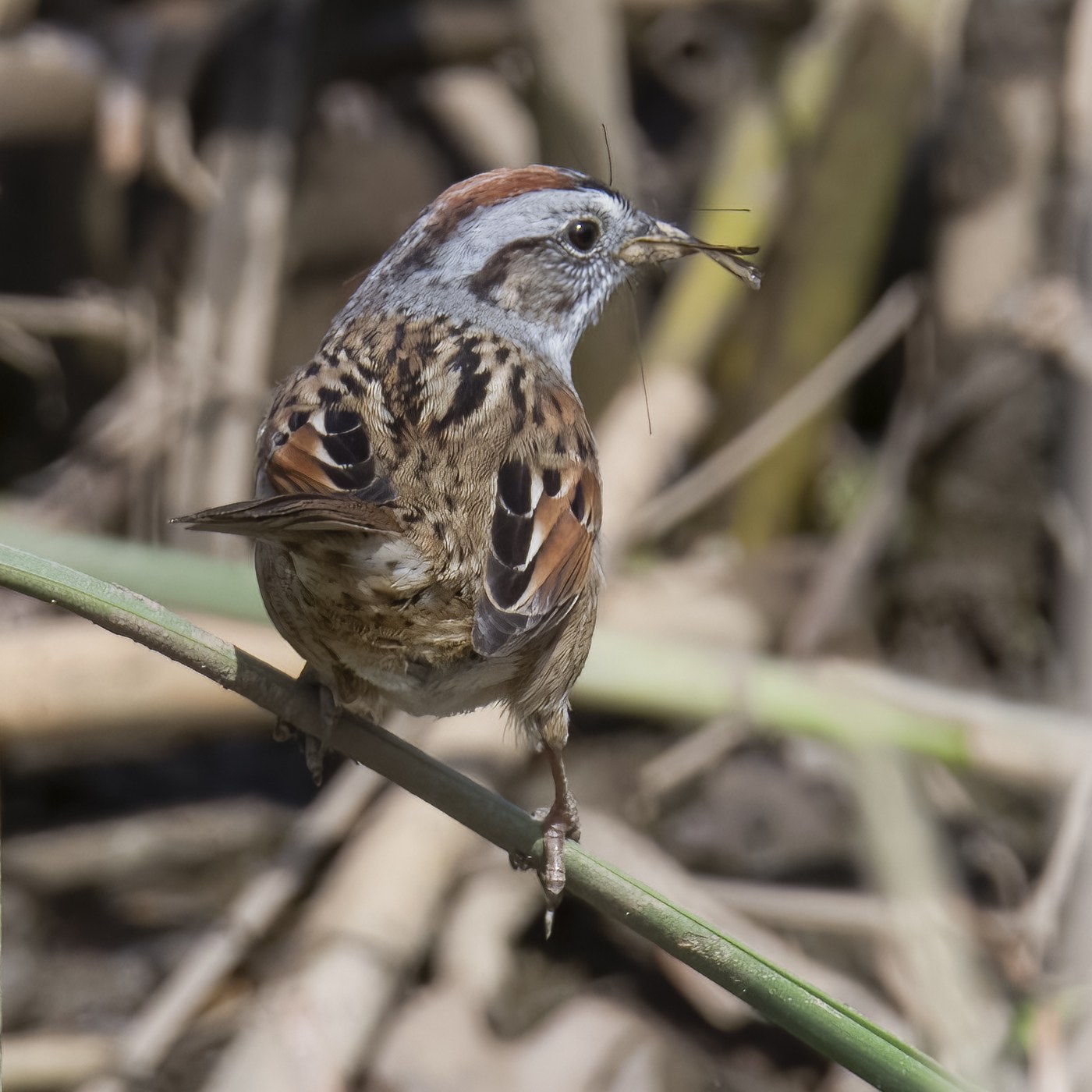
Size & Shape
The Swamp Sparrow is a medium-sized sparrow, about 12-15 cm (5-6 in) long, with a relatively plump, round-bodied shape, a moderately long tail, and a fairly stout, conical bill typical of sparrows.
Plumage & Key Field Marks
- Breeding adults show a bright rufous crown (often with a thin gray central stripe), a gray face and unstreaked gray breast/nape, and rich rufous-chestnut wings and back streaked with black — the wings often look noticeably brighter rust than the rest of the body.
- A dark eyeline and a white throat bordered by a thin dark malar stripe add subtle facial contrast.
- Nonbreeding/winter and immature birds are duller and browner overall, with a streaked crown rather than a solid rufous cap, and can show buffier tones on the breast, making them trickier to distinguish from other streaky sparrows.
- The underparts are essentially unstreaked (gray to buffy), unlike the streaked breast of Song Sparrow.
Behavior
Swamp Sparrows are marsh specialists, foraging low and often partly submerged at the water's edge or in dense cattails, sedges, and shrubby wetland vegetation, frequently wading into shallow water. They tend to be skulking but will often pop up briefly when responding to pishing or squeaking.
Similar Species
- Song Sparrow is larger with a heavily streaked breast (often with a central breast spot) and lacks the clean gray, unstreaked breast and bright rufous wings of Swamp Sparrow.
- Lincoln's Sparrow has fine streaking across a buffy breast band and a more finely marked face, lacking Swamp Sparrow's plain gray breast and solid rufous crown.
- Chipping Sparrow shares a rufous cap but is smaller, has a clean white eyebrow and black eyeline, and prefers drier, more open habitats rather than marsh edges.
Voice
The song is a slow, musical, monotone trill, all on one pitch and slower-paced than the trills of Chipping Sparrow or Dark-eyed Junco, often likened to a slower, sweeter version of those species' trills. The call note is a hard, sharp "chip."
Habitat, Range & Season
Breeds across a broad swath of the northern and northeastern United States and much of Canada, closely tied to freshwater marshes, bogs, wet meadows, and cattail wetlands. Northern breeders migrate to winter across the southeastern and south-central United States and into Mexico, where they occupy marshes, weedy fields, and brushy wetland edges; some populations, especially along the mid-Atlantic coast, are resident year-round. Most easily found by walking marsh edges and listening for its distinctive slow trill during the breeding season.
Frequently asked questions
What is the best field mark for a breeding Swamp Sparrow?
A bright rufous crown, gray unstreaked face and breast, and notably rusty-chestnut wings, usually seen low in marsh vegetation.
How do I tell Swamp Sparrow from Song Sparrow?
Song Sparrow has a heavily streaked breast, often with a central spot; Swamp Sparrow's breast is plain gray without streaking, and its wings are more rufous.
What habitat should I check for Swamp Sparrows?
Freshwater marshes, cattail stands, bogs, and wet, shrubby edges of ponds and streams, where the birds often forage near or in shallow water.
What does a Swamp Sparrow's song sound like?
A slow, sweet, monotone trill on a single pitch, slower and more musical than the trills of Chipping Sparrow.
Are Swamp Sparrows present in winter?
Northern breeders migrate south to the southeastern and south-central U.S. and Mexico for winter, while some coastal populations remain resident year-round.