
Swallow-tailed Kite Identification Guide
An unmistakable, graceful raptor of the southeastern U.S. and Neotropics, identified instantly by its stark black-and-white plumage and long, deeply forked, swallow-like tail used for effortless aerial maneuvering.
Read the full Swallow-tailed Kite encyclopedia entry →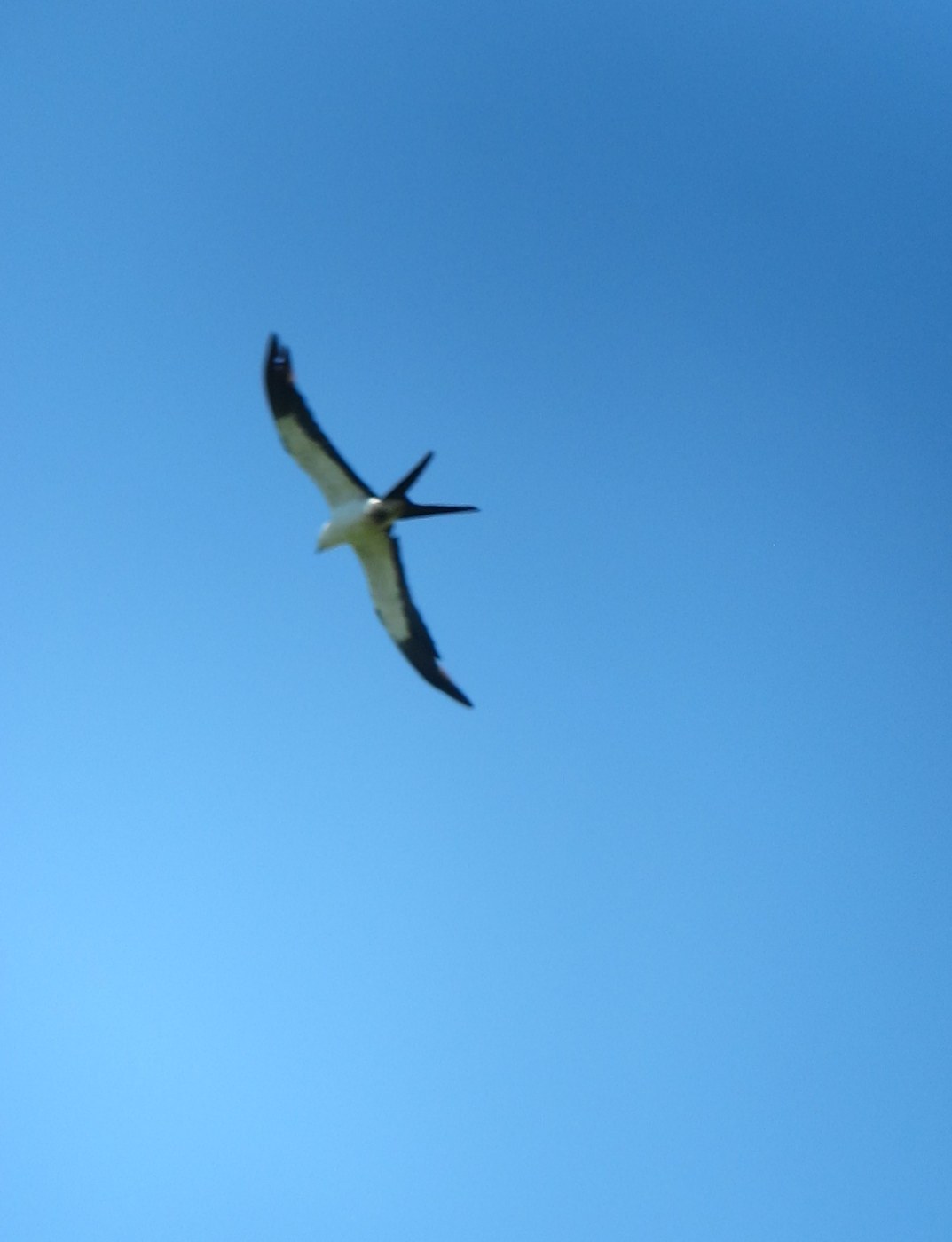
Size & Shape
The Swallow-tailed Kite is a medium-large raptor, about 51-68 cm (20-27 in) long including its long tail, with long, narrow, pointed wings and an exceptionally long, deeply forked tail — the most distinctive silhouette of any North American raptor, unmistakable even at great distance or high overhead.
Plumage & Key Field Marks
- Plumage is boldly two-toned: brilliant white head, neck, and underparts contrast sharply with glossy black flight feathers, back, and the long forked tail.
- In good light the black areas often show an iridescent greenish-purple sheen.
- No other North American raptor combines this crisp black-and-white pattern with such a deeply forked tail, making misidentification unlikely once seen well.
- Juveniles look similar to adults but slightly duller, with a somewhat shorter tail fork.
Behavior
Swallow-tailed Kites are supremely aerial, spending much of the day in graceful, buoyant flight, twisting the tail to steer with minimal wingbeats. They catch and eat flying insects on the wing, and also snatch small vertebrates such as lizards, frogs, and nestling birds directly from tree canopies in flight, often eating prey while still airborne. They frequently forage and roost communally, sometimes in large pre-migratory flocks.
Similar Species
- No regularly occurring North American bird shares this combination of stark black-and-white plumage and a deeply forked tail; distant silhouettes might briefly suggest a large swallow or tern, but the kite's size and soaring flight quickly rule those out.
- Mississippi Kite overlaps in range but is uniformly gray with a squared or only slightly notched tail, entirely lacking the white body and deep tail fork.
Voice
Relatively quiet; the most commonly heard call is a thin, high-pitched, shrill whistle or squeal, often given near the nest or when interacting with other kites, but Swallow-tailed Kites are typically identified visually rather than by voice.
Habitat, Range & Season
Breeds in the southeastern United States, particularly Florida and the Gulf Coast states, favoring tall trees near swamps, river floodplains, and open pine or bottomland forest edges. Also breeds widely through Central and South America. U.S. breeders are long-distance migrants, arriving in spring (March) and departing by late summer, wintering mainly in South America; some resident populations occur farther south in the Neotropics year-round. Spectacular pre-migratory communal roosts can form in Florida in late July and August before birds depart.
Frequently asked questions
What is the single best field mark for a Swallow-tailed Kite?
Its deeply forked, swallow-like tail combined with crisp black-and-white plumage — a combination unique among North American raptors.
How does Swallow-tailed Kite differ from Mississippi Kite?
Swallow-tailed Kite is boldly black-and-white with a deeply forked tail, while Mississippi Kite is uniformly gray with a squared or barely notched tail.
How does a Swallow-tailed Kite catch its food?
It catches flying insects and snatches small vertebrates like lizards and nestlings from tree canopies, typically doing so in flight and often eating while still airborne.
Where and when can I see Swallow-tailed Kites in the U.S.?
Mainly in the southeastern U.S. (Florida and Gulf Coast states) from spring through summer, especially near swamps and river floodplains, with large communal roosts sometimes visible in Florida in late summer before fall migration.
Do Swallow-tailed Kites flap their wings much?
Very little — they are known for buoyant, graceful soaring and gliding flight, using tail twists rather than constant flapping to maneuver.