
Swainson's Warbler Identification Guide
A plain, skulking, olive-brown warbler of southeastern U.S. canebrakes and swamp thickets, identified by its long, slightly downcurved bill, rufous-tinged cap, and loud ringing song rather than by bold plumage.
Read the full Swainson's Warbler encyclopedia entry →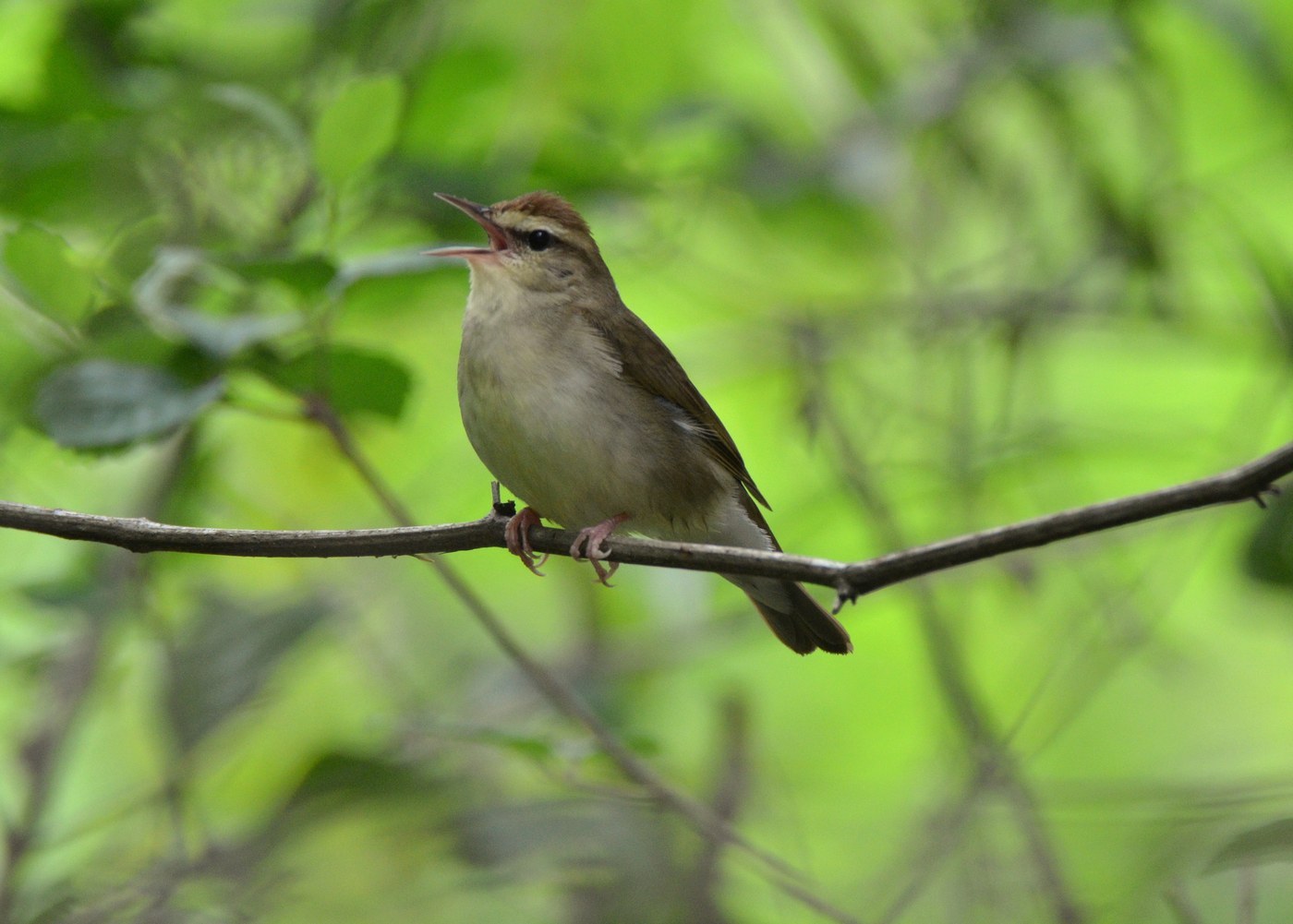
Size & Shape
Swainson's Warbler is a relatively large, robust warbler, about 13-15 cm (5-6 in) long, with a notably long, heavy, slightly downcurved bill for a warbler, a flat forehead, and a fairly long, sturdy build compared to the more delicate build of many wood-warblers.
Plumage & Key Field Marks
- Plumage is famously plain: warm olive-brown to russet-brown above and dull buffy-white below, with no wing bars, no streaking, and no bold facial pattern.
- The crown is slightly warmer rufous-brown than the back, contrasting subtly.
- A pale, indistinct eyebrow (supercilium) and a faint dark eyeline are present but subtle — this plainness itself, combined with the long bill, is the best identification clue since few other warblers are this unmarked.
- Legs are pale pinkish, and the bill is notably long and slightly curved, more reminiscent of a small thrush or waterthrush than a typical warbler.
Behavior
Swainson's Warbler is famously secretive, foraging low or on the ground in dense tangles, canebrakes, and thick understory, flipping leaf litter with its bill to find insects and spiders much like a thrush. It is far more often heard than seen, staying hidden in dense vegetation even when singing.
Similar Species
- Worm-eating Warbler is superficially similar in its plain buffy-olive coloring and preference for skulking in thick cover, but shows bold black head stripes (crown and eye stripes) that Swainson's Warbler entirely lacks.
- Louisiana Waterthrush and Northern Waterthrush share a similar long-billed, thrush-like shape and habit of walking rather than hopping, but both show a bold pale eyebrow and heavily streaked underparts, unlike the unstreaked, plain underparts of Swainson's Warbler.
- Female/immature Prothonotary Warbler can appear plain but is much more yellow overall and has a shorter, straighter bill.
Voice
The song is loud, ringing, and far-carrying for such a plain, hidden bird: a series of several clear whistled notes followed by a downslurred, warbling flourish, often likened in cadence to a Louisiana Waterthrush's song but louder and less musical. This song is frequently the only clue to the bird's presence in dense cover.
Habitat, Range & Season
Breeds in the southeastern United States, historically closely tied to dense canebrakes (Arundinaria) along river bottoms, but also uses rhododendron thickets in Appalachian coves and other dense, moist understory habitats from the coastal plain to lower mountain slopes. It winters in the Caribbean and Central America. Look and especially listen for it during the breeding season (April-August) in thick, tangled wetland or floodplain forest understory across its patchy southeastern range.
Frequently asked questions
How do I identify a Swainson's Warbler if it looks so plain?
Look for the combination of a long, slightly downcurved bill, warm olive-brown upperparts with a subtly rufous crown, and entirely unstreaked, unmarked underparts — its very plainness combined with bill shape is diagnostic.
How is Swainson's Warbler different from Worm-eating Warbler?
Worm-eating Warbler has bold black stripes on the crown and through the eye; Swainson's Warbler lacks any bold head stripes and looks much plainer overall.
Why is Swainson's Warbler so hard to see?
It forages low to the ground in dense canebrakes, thickets, and tangled understory, staying hidden even while singing, so it is usually detected by its loud, ringing song rather than by sight.
What habitat should I search for Swainson's Warbler?
Dense, moist understory such as canebrakes and floodplain thickets in the southeastern coastal plain, or rhododendron tangles in southern Appalachian coves.
What does a Swainson's Warbler's song sound like?
A loud series of clear, ringing whistled notes ending in a downslurred flourish, somewhat similar in cadence to a Louisiana Waterthrush but louder and less musical.