Sulphur-crested Cockatoo Identification Guide
A large, unmistakable all-white Australasian cockatoo with a bright yellow, forward-curling crest and loud raucous screeching calls, commonly seen in noisy flocks.
Read the full Sulphur-crested Cockatoo encyclopedia entry →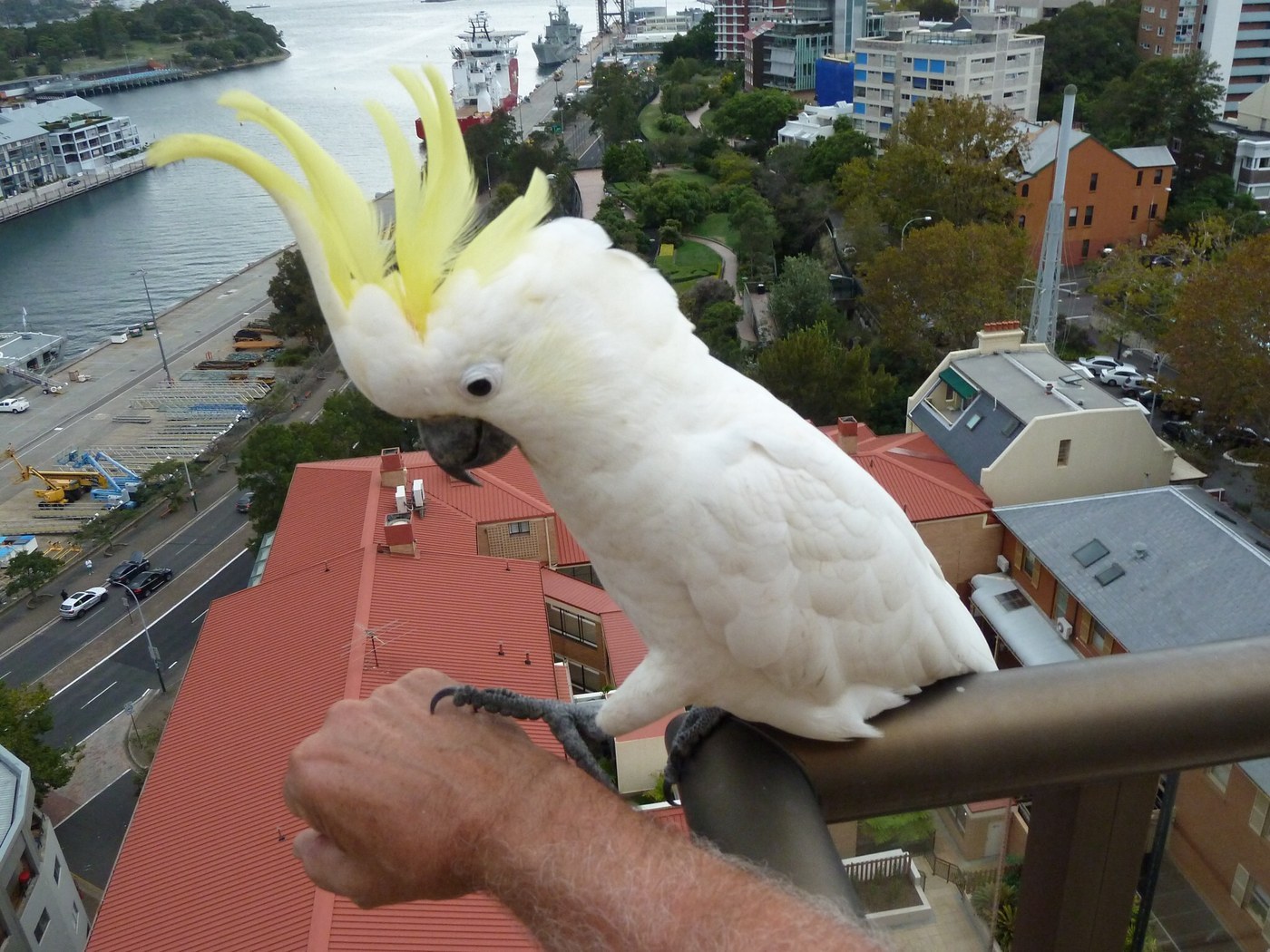
Key Field Marks
- Size & shape: Large and robust, about 44–55 cm long, with broad rounded wings, a fairly short square-ish tail, and a powerful, strongly hooked grayish-black bill.
- Plumage: Almost entirely white body plumage, with a diagnostic bright sulphur-yellow crest of long, backward-curving feathers that can be raised into a tall forward-arching fan when the bird is excited or alarmed, and lies flat against the head at rest.
- Other marks: A pale yellow wash is often visible on the underside of the wings and tail in flight. Bare skin around the eye is whitish to pale gray-blue. Legs are dark gray.
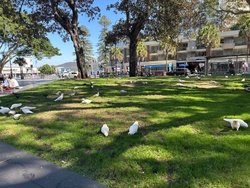
- Behavior: Highly social and conspicuous, usually in noisy flocks ranging from a handful to hundreds of birds; feeds on the ground on seeds, roots, and grain, or in trees on nuts, fruit, and blossoms. Known for destructive gnawing behavior on wood, including buildings and outdoor furniture.
- In flight: Strong, direct flight with slow, deep wingbeats; flocks are loud and highly visible, flashing white against the sky.
Separating It From Similar Species
- Little Corella / Long-billed Corella: Both are smaller, mostly white cockatoos but lack the prominent yellow crest, instead showing at most a short, inconspicuous whitish crest and a shorter, less robust bill; corellas also often show pinkish-red patches around the eye or lores.
- Yellow-crested Cockatoo (Indonesia/New Guinea region): Very similar in structure and crest color but noticeably smaller-bodied with a proportionately smaller bill; ranges barely overlap, mostly separated geographically (Sulphur-crested is Australian/New Guinean, Yellow-crested is Indonesian/Timorese).
- Galah / other cockatoos: Galah has pink and gray plumage, ruling out confusion; other white cockatoos in range lack the tall, vivid yellow crest.
Where and When to See It
- Habitat: Extremely adaptable — found in eucalypt forests, woodlands, farmland, and increasingly common in urban parks, gardens, and city centers across eastern and northern Australia.
- Range: Widespread across eastern, northeastern, and parts of northern/southwestern Australia, Tasmania, and southern New Guinea; also established as an introduced/feral species in parts of New Zealand, Singapore, and Hong Kong.
- Season: Resident year-round with local seasonal movements tied to food availability; large communal roosts are often used, with flocks departing at dawn and returning at dusk in spectacular, noisy numbers.
Voice
- Extremely loud, harsh, grating screeches and screams, among the loudest calls of any Australian bird, audible from long distances; also produces softer chattering and gurgling notes when settled in trees.
Frequently asked questions
What is the most distinctive feature of a Sulphur-crested Cockatoo?
Its bright sulphur-yellow crest, which contrasts sharply against otherwise all-white plumage and can be raised into a striking fan shape.
How is it different from a Little Corella?
Little Corella is smaller, lacks the tall yellow crest (having only a short inconspicuous one), and has a smaller bill; it may also show pinkish coloring around the eye.
Why are Sulphur-crested Cockatoos so loud?
They are highly social flocking birds that use loud screeching calls to communicate over long distances, coordinate flock movement, and maintain contact within large groups.
Where do Sulphur-crested Cockatoos typically feed?
Often on the ground in grassy areas and farmland searching for seeds, roots, and grain, as well as in trees for nuts, fruit, and blossoms.
Sulphur-crested Cockatoo identified by the community
Recent Sulphur-crested Cockatoo sightings identified with Bird Identifier.