
Squacco Heron Identification Guide
A small, stocky, buffy heron of Old World wetlands that looks remarkably plain at rest but transforms into a strikingly white bird in flight, when its contrasting white wings and tail are revealed.
Read the full Squacco Heron encyclopedia entry →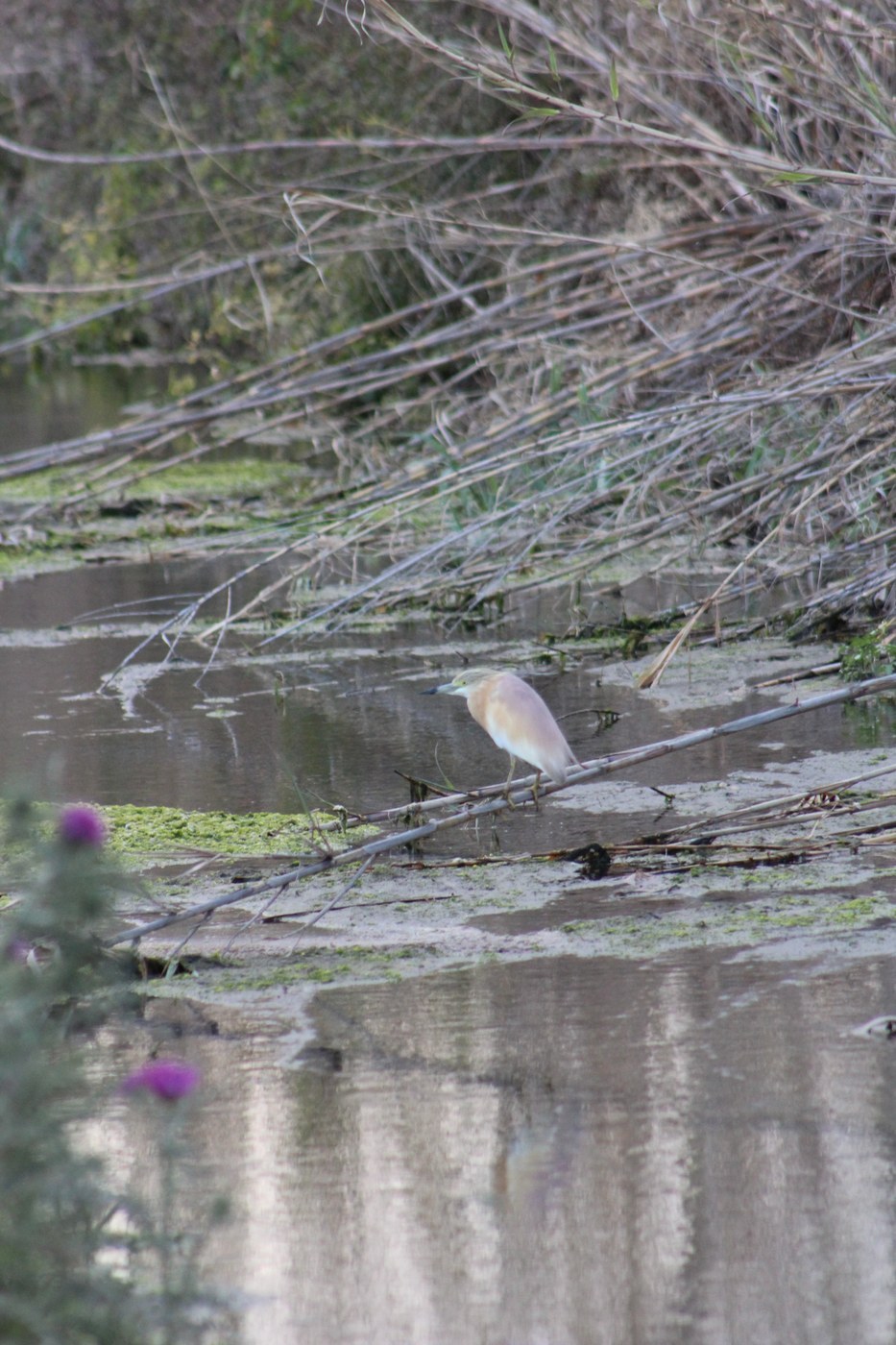
Key Field Marks
- Size & shape: A small, compact heron, about 44-47 cm, with a relatively short neck, thick bill, and a hunched, stocky posture when perched or standing still.
- Body plumage at rest: Buffy-brown to sandy-yellow overall on the back, neck, and breast, streaked in non-breeding/juvenile birds, giving a well-camouflaged, almost nondescript appearance when the wings are folded.
- Flight reveal: In flight, the wings and tail are strikingly clean white, contrasting sharply with the buffy body — a dramatic and diagnostic transformation from its dull appearance at rest.
- Breeding adult: Develops long, drooping cream-buff plumes on the back and a rich chestnut-buff crown with elongated black-and-white head plumes; bill turns blue with a black tip, and legs become pink/red.
- Bill & legs: Fairly short, stout bill (yellowish to blue depending on season); legs are greenish-yellow in non-breeding birds, brighter pink-red in breeding condition.
Separating It From Similar Species
- Indian Pond Heron: Extremely similar and closely related, essentially replacing Squacco Heron in South Asia; separated mainly by range (allopatric breeding ranges) and, with care, by slightly different wing pattern and darker upperparts in breeding Indian Pond Heron.
- Non-breeding Little Bittern or juvenile night-herons: Squacco Heron's combination of small size, buffy streaked body, and pure white wings in flight is distinctive once flight is seen; night-herons are stockier with different head/bill proportions and lack the white-wing flash.
- At rest vs. in flight: A key ID trap is that a standing Squacco Heron looks like an unremarkable brown bird, so always try to see it fly to confirm the diagnostic white wings and tail.
Where & When to See It
- Habitat: Densely vegetated freshwater wetlands, marshes, reedbeds, rice fields, and slow rivers with fringing vegetation, where it often forages quietly at the water's edge or among floating vegetation.
- Range: Breeds across southern Europe, the Middle East, and much of Africa; European and West Asian breeders migrate south to winter broadly across sub-Saharan Africa, while African populations are largely resident.
- Season: In Europe/Middle East, present on breeding grounds roughly April-September, wintering in Africa October-March; a rare but regular vagrant well outside its normal range, including to the Americas.
- Behavior: Forages singly, standing motionless or walking slowly and deliberately at the water's edge, often staying hidden in dense marginal vegetation rather than out in the open.
Voice & Song Cues
- Generally quiet away from breeding colonies; gives a harsh, croaking "karr" or "skair" call, mainly around nesting colonies or when flushed.
- Flight call is a short, low croak, often the first indication of a bird flushing from dense cover.
- Because it is usually silent, visual cues — especially the flight-revealed white wings — are the primary identification tool.
Frequently asked questions
Why does the Squacco Heron look so different at rest versus in flight?
At rest its buffy, streaked body and folded wings look plain and camouflaged, but in flight the wings and tail are revealed to be strikingly pure white, creating a dramatic contrast that is key to identification.
How do I separate Squacco Heron from Indian Pond Heron?
They are very similar and closely related; the main distinction is range, since Squacco Heron breeds in Europe, the Middle East, and Africa while Indian Pond Heron replaces it across South and Southeast Asia, with limited overlap.
Where does the Squacco Heron spend the winter?
European and West Asian breeding birds migrate south to winter across sub-Saharan Africa, while African populations tend to remain resident year-round.
What habitat is best for finding a Squacco Heron?
Densely vegetated freshwater wetlands such as marshes, reedbeds, and rice fields, where it forages quietly and often stays hidden in fringing vegetation.