
Spur-winged Goose Identification Guide
Africa's largest waterfowl species, a huge black-and-white goose with bare red facial skin and sharp bony spurs on its wings, found around wetlands across sub-Saharan Africa.
Read the full Spur-winged Goose encyclopedia entry →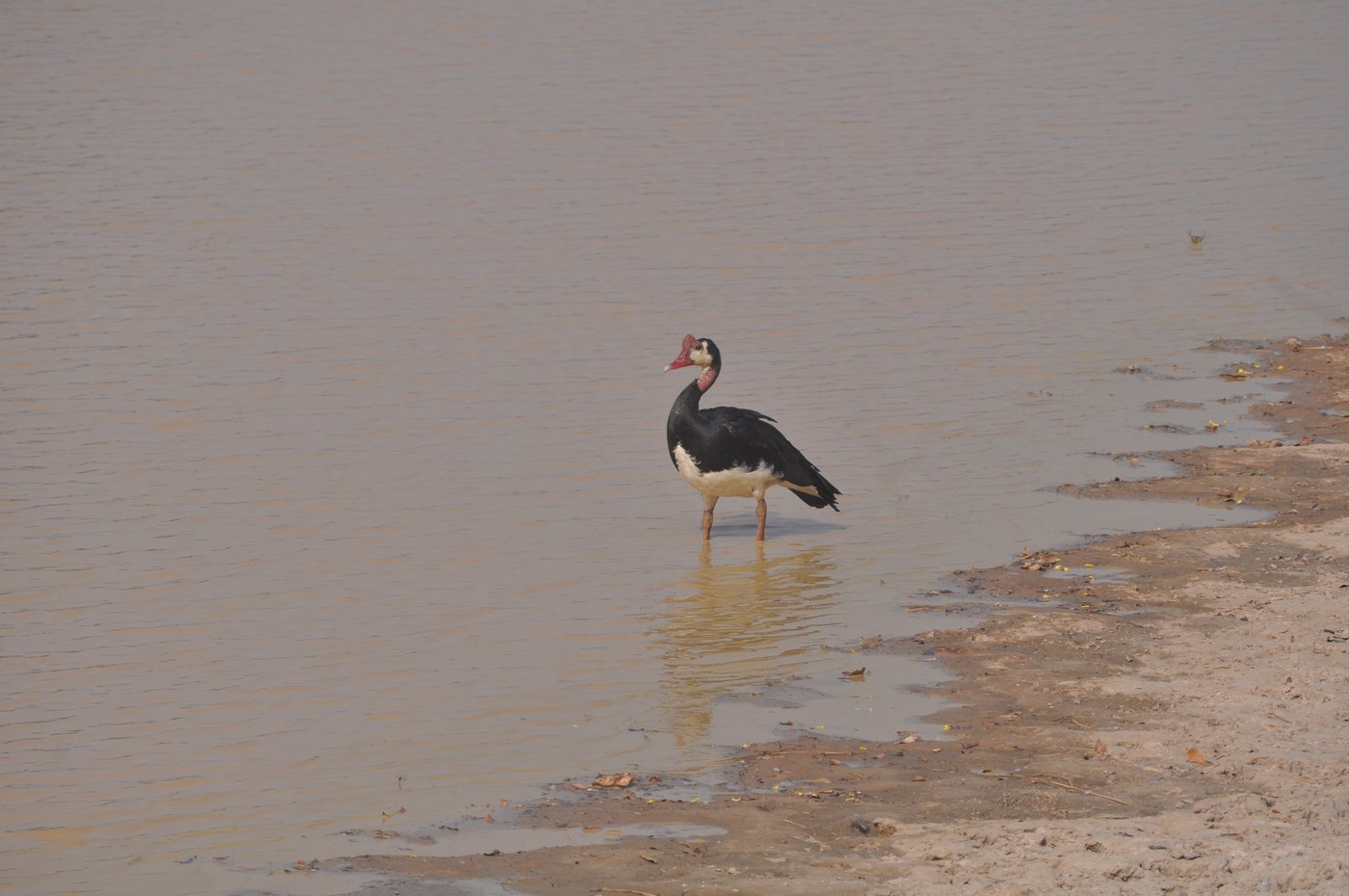
Key Field Marks
- Size & shape: An enormous goose, up to 100 cm long and among the heaviest flying birds in the world, with a long neck, bulky body, and notably long legs for a goose.
- Plumage: Glossy black upperparts with a green-purple sheen, contrasting white belly, flanks, and (in most birds) a variable amount of white on the face and foreneck.
- Bare facial skin: Extensive bare red or pink skin around the face and base of the bill, more developed in males, giving a distinctive "warty" appearance.
- Wing spurs: Sharp, bony spurs at the bend of each wing (the source of the name), used as weapons in fights — not usually visible except at very close range or in aggressive displays.
- Bill & legs: Stout pale bill and long dark legs; overall silhouette is taller and more upright than typical geese.
Separating It From Similar Species
- Egyptian Goose: Much smaller, sandy-brown overall with a distinctive dark eye patch, and lacks the Spur-winged Goose's glossy black-and-white pattern and bare red facial skin.
- Knob-billed (Comb) Duck: Smaller and more duck-like in shape, with males showing a fleshy knob atop the bill rather than extensive bare red facial skin, and lacking wing spurs.
- African Openbill and other large waterbirds: Differ in bill shape and overall structure; Spur-winged Goose's combination of huge size, black-and-white plumage, and red facial skin is unmistakable once seen well.
Where & When to See It
- Habitat: Wetlands, lakes, rivers, marshes, flooded grasslands, and adjacent open grazing areas across sub-Saharan Africa, often in small to large flocks.
- Range: Widespread across sub-Saharan Africa south of the Sahara, from Senegal and Sudan south to South Africa, generally absent from dense rainforest and true desert.
- Season: Largely resident, though some populations make local or seasonal movements tracking water availability and flooding patterns.
- Behavior: Grazes on land as well as feeding in shallow water; often seen loafing on riverbanks or grassy floodplains in the company of other large waterbirds.
Voice & Song Cues
- Generally rather quiet for a goose; gives low, weak wheezing or whistling calls, quite unlike the loud honking typical of Northern Hemisphere geese.
- Alarm calls are soft, hoarse, and easily overlooked compared to the bird's imposing size.
- Because vocalizations are subtle, identification relies mainly on the striking visual combination of size, black-and-white plumage, and red facial skin rather than voice.
Frequently asked questions
What is the largest waterfowl species in Africa?
The Spur-winged Goose, which can reach up to 100 cm in length and is among the heaviest flying birds in the world.
Where do the wing spurs come from and what are they used for?
Spur-winged Geese have sharp bony spurs at the bend of each wing used as weapons during fights with rivals; they are not usually visible in the field except during aggressive encounters.
How is Spur-winged Goose different from Egyptian Goose?
Spur-winged Goose is much larger, glossy black and white with extensive bare red facial skin, while Egyptian Goose is smaller, sandy-brown, and has a distinctive dark patch around the eye.
Is the Spur-winged Goose migratory?
It is largely resident across sub-Saharan Africa, though it can make local movements in response to seasonal flooding and changing water levels.