
Spotted Sandpiper Identification Guide
A small, constantly tail-bobbing shorebird of North American waterways, boldly spotted below in breeding plumage and plain but still teetering the rest of the year.
Read the full Spotted Sandpiper encyclopedia entry →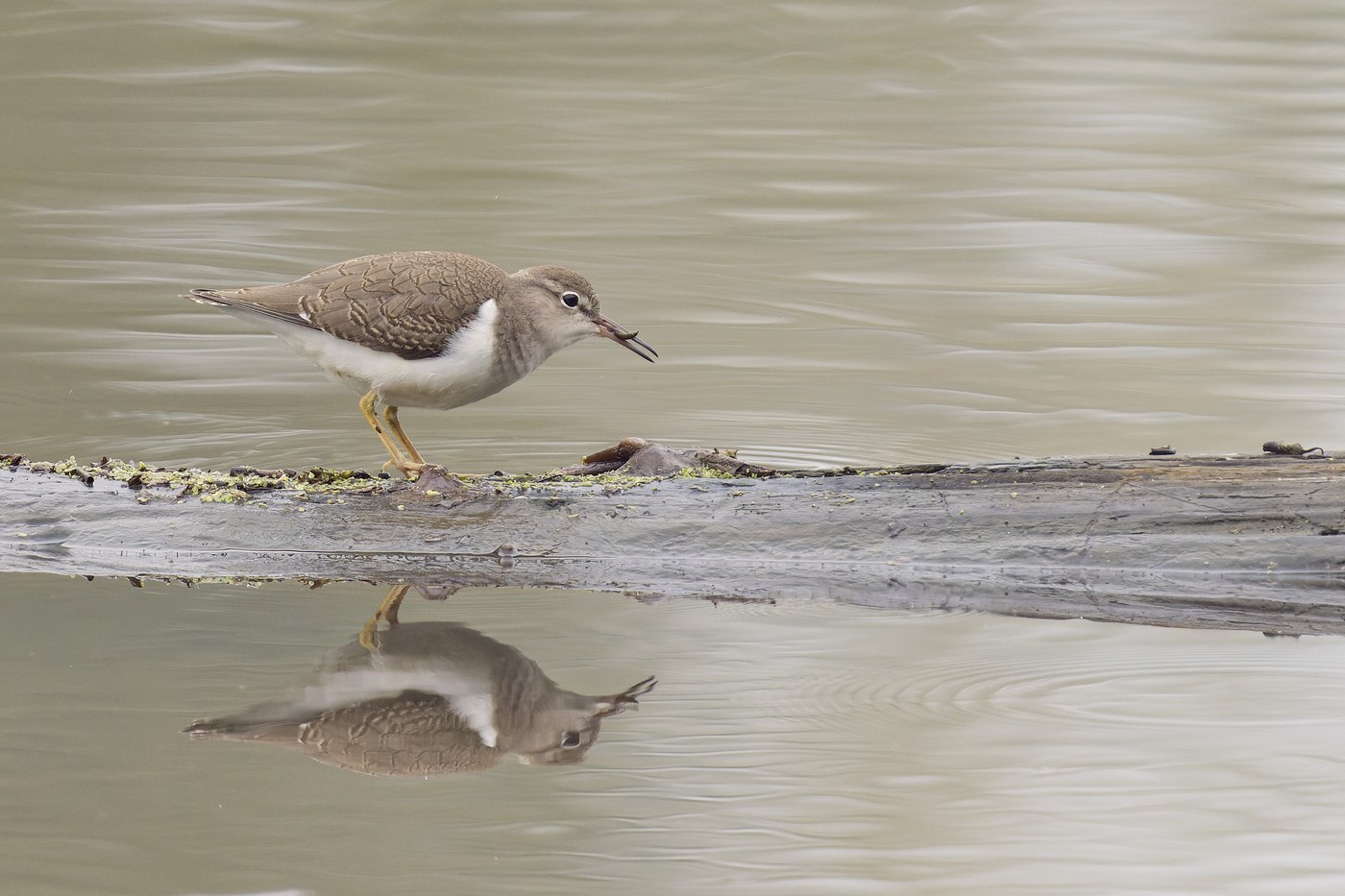
Key Field Marks
- Size & shape: A small sandpiper, about 18-20 cm, with a fairly short neck, medium bill, and a body that appears to teeter constantly.
- Signature behavior: Continuously bobs and teeters its rear end up and down while standing or walking — one of the most reliable field marks of any North American shorebird.
- Breeding plumage: Bold, round black spots covering the white underparts; brownish upperparts; orange-based bill with a dark tip.
- Non-breeding/juvenile plumage: Plain white underparts with no spotting, brown-grey upperparts, and a duller, mostly dark bill — but the teetering habit remains diagnostic.
- Flight style: Distinctive stiff, shallow, fluttery wingbeats low over the water, wings held bowed, interspersed with short glides.
Separating It From Similar Species
- Solitary Sandpiper: Longer-legged, has a bold white eye-ring, dark greenish legs, and bobs far less; lacks the shallow stiff-winged flight style.
- Common Sandpiper (Old World counterpart): Very similar and closely related; told apart mainly by range (Common Sandpiper is Eurasian/African, Spotted is the Americas) and subtle differences in wing pattern and tail projection, which overlap extensively — vagrant records require careful documentation.
- Least Sandpiper: Much smaller "peep" with yellowish legs, streaked breast band, and no teetering; forages in tight flocks rather than singly along shorelines.
- Non-breeding Spotted Sandpipers can be told from other plain-breasted shorebirds by combining small size, short neck, horizontal stance, and the constant bobbing.
Where & When to See It
- Habitat: Edges of virtually any freshwater habitat — streams, rivers, lakes, ponds, and also coastal shorelines during migration — usually alone or in loose, widely spaced groups rather than tight flocks.
- Range: Breeds across most of Canada and the northern/western United States; winters from the southern United States through Mexico, Central America, and much of South America.
- Season: Present on breeding grounds roughly May-August; a widespread migrant in spring (April-May) and fall (July-September) throughout its range.
- Behavior: Typically solitary, walking along shorelines with a crouched, horizontal posture and short, quick steps between bouts of teetering.
Voice & Song Cues
- Common call is a clear, sharp "peet-weet" or "weet-weet," often given in flight or when flushed.
- A more excited, rapid series of similar notes is given during territorial disputes or alarm.
- The call combined with the low, fluttery flight over water is often the first clue to its presence before the bird is seen well.
Frequently asked questions
Why does the Spotted Sandpiper bob its tail?
The constant teetering (bobbing the rear end up and down) is thought to relate to camouflage or vigilance, and it happens in birds of all ages and plumages, making it one of the most reliable ID clues.
Does the Spotted Sandpiper always have spots?
No — only in breeding plumage. Non-breeding adults and juveniles have plain white underparts, but the teetering behavior and small size still identify the species.
How can I tell Spotted Sandpiper from Solitary Sandpiper?
Spotted Sandpiper is smaller, teeters constantly, has a horizontal stance, and flies with shallow stiff wingbeats low over water, while Solitary Sandpiper is taller, has a bold eye-ring, and flies higher with deeper wingbeats.
Is the Spotted Sandpiper usually seen in flocks?
Rarely — it is typically solitary or loosely spaced along shorelines, unlike many other sandpipers that gather in tight foraging flocks.