
Speckled Mousebird Identification Guide
A grayish-brown African bird with a shaggy crest and long tail, easily told by its habit of clambering through bushes in noisy little flocks.
Read the full Speckled Mousebird encyclopedia entry →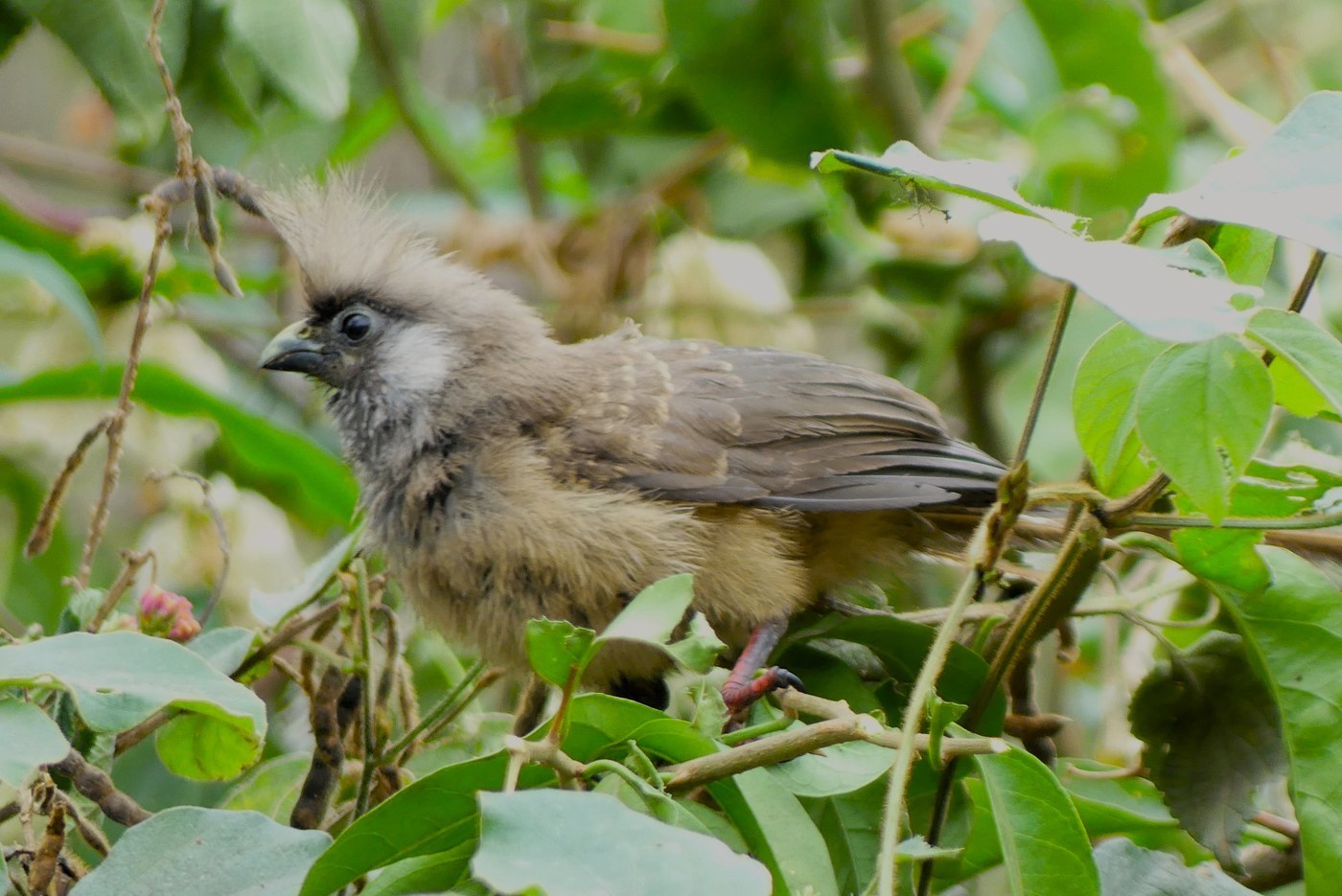
Key Field Marks
- Size & shape: About 14 inches (35 cm) long, but more than half of that is a long, stiff, graduated tail. Small body, short legs, and a prominent shaggy crest.
- Plumage: Grayish-brown overall with fine dark speckling/streaking on the head and neck (source of the name); underparts paler gray-brown.
- Bare parts: Short, stubby, pale bill (upper mandible dark, lower pale); the face around the eye is bare and dark grayish; legs and feet are short with an unusual reversible outer toe.
- Behavior: Highly social, moving in noisy flocks of 6–20; scrambles and clings through dense foliage like a rodent (hence "mousebird"); sunbathes with wings spread; roosts huddled together.
Separating It From Similar Species
- White-backed Mousebird and Red-faced Mousebird — overlap in parts of East Africa; Speckled Mousebird lacks the red face of the Red-faced Mousebird and the white lower back of the White-backed Mousebird.
- Blue-naped Mousebird — has a distinctive blue nape patch and red bill, absent in Speckled Mousebird.
- General mousebird shape (crest, long tail, clinging habit) is unmistakable as a group; species-level ID relies on face color and bare-part color.
Habitat, Range & Season
Widespread and common resident across much of sub-Saharan Africa, from Senegal and Ethiopia south to South Africa, absent mainly from dense rainforest interior and true desert. Found in gardens, forest edges, thickets, hedgerows, and cultivated land — a familiar bird of suburban gardens across its range. Non-migratory; present year-round.
Voice
A sharp, chattering "zik-zik-zik" or twittering contact calls kept up constantly by flock members as they move through cover; not a strong singer.
Frequently asked questions
Why is it called a mousebird?
Because of its habit of creeping and clambering through dense branches close to the trunk, mouse-like, aided by short legs and flexible outer toes.
How do Speckled Mousebirds differ from other mousebird species?
They lack the red face of the Red-faced Mousebird and the pale/white lower back of the White-backed Mousebird, and their bill and face are plain dark gray rather than brightly colored.
Do Speckled Mousebirds migrate?
No, they are resident throughout their range and often stay in the same local area year-round in family flocks.
What habitat is best for finding them?
Gardens, scrub, forest edge, and hedgerows across sub-Saharan Africa; they are common and often tame around human habitation.