
Southern Fiscal Identification Guide
A bold black-and-white African shrike, easily spotted perched on wires and fences, known for its hooked bill, upright posture, and habit of impaling prey.
Read the full Southern Fiscal encyclopedia entry →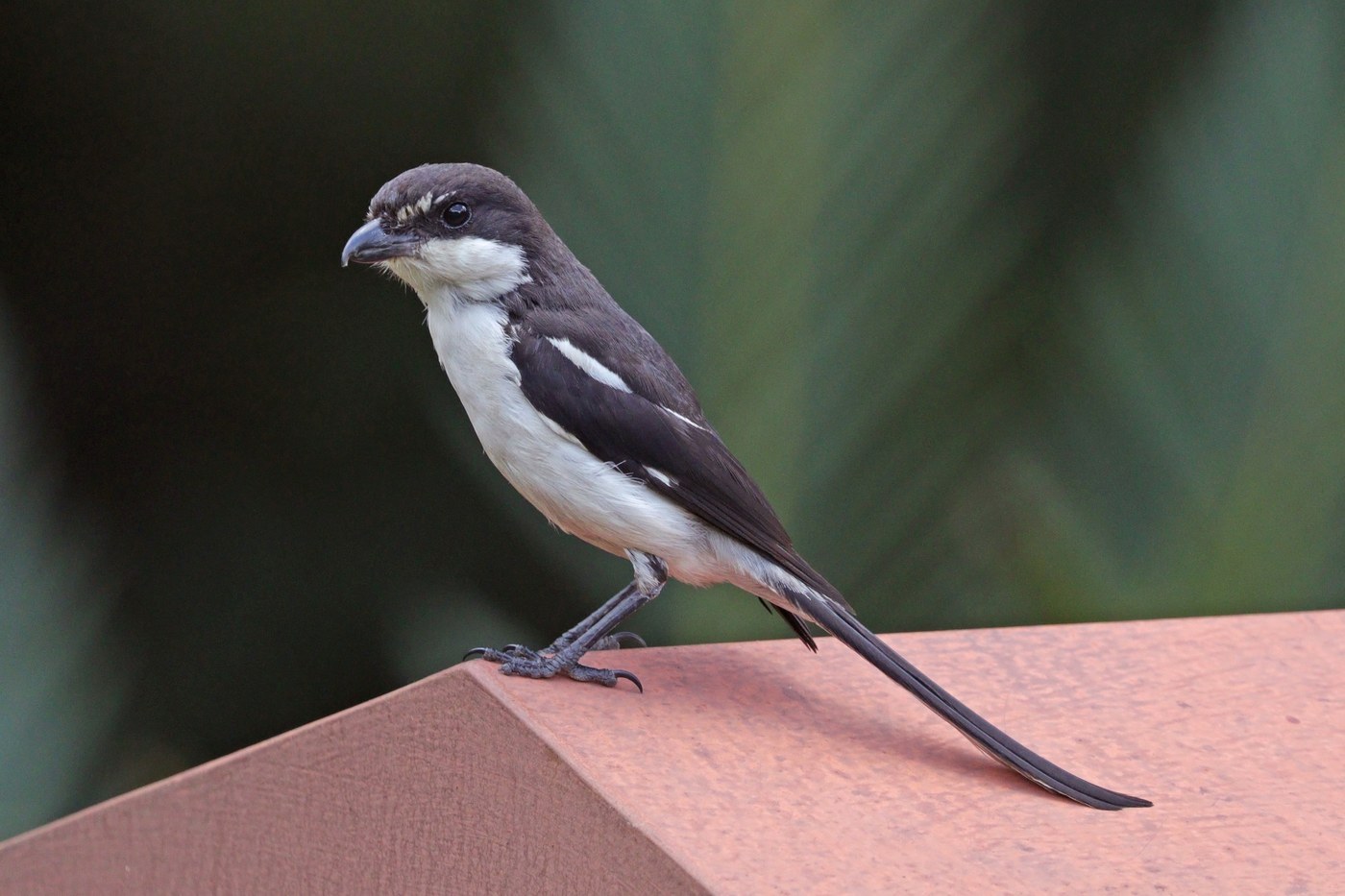
Key Field Marks
- Size & shape: A medium-sized shrike about 21–25 cm long, with an upright, alert posture, long tail, and a stout, hook-tipped bill typical of "butcherbird" shrikes.
- Plumage: Bold black-and-white pattern — black crown, back, wings, and tail contrasting with clean white underparts, white shoulder patches (scapulars), and white outer tail feathers visible in flight.
- Head: Black extends through the eye as a mask; some races show a small white eyebrow.
- Bill & legs: Black, strongly hooked bill for tearing prey; black legs.
- Behavior in the field: Perches conspicuously and often solitarily on fence wires, dead branches, and bush tops, frequently flicking its long tail up and down.
Separating It From Similar Species
- Fiscal Flycatcher is superficially similar (black above, white below) but is smaller, lacks the hooked shrike bill, has a more slender build, and behaves like a flycatcher rather than perching bolt upright with a heavy bill.
- Common Fiscal (in regions where taxonomy separates northern populations) is very similar in pattern; range and subtle bill/tail proportions are the main separators where treated as distinct.
- Long-tailed Fiscal (more eastern/northeastern African range) has a proportionally much longer tail.
- Other black-and-white passerines such as certain wheatears lack the heavy hooked bill and shrike-like hunting behavior.
Where and When to See It
Southern Fiscals are widespread, non-migratory residents across much of southern and eastern Africa, favoring open country: savanna, farmland, grassland with scattered bushes, roadside verges, and gardens — they adapt well to human-modified landscapes and are one of the most familiar garden birds across their range. They can be seen year-round and do not require any particular season, though breeding activity (with more vocal, territorial behavior) often peaks in the local spring.
Voice
A harsh, grating series of scratchy and squeaky notes, often strung together into a scolding song; Southern Fiscals also incorporate mimicry of other birds' calls into their song, so listen for an odd mix of harsh notes interspersed with mimicked phrases.
Behavior Tip for Identification
Look for their signature "larder" habit — impaling insects, small lizards, or even small birds on thorns or barbed wire — a strong confirming clue alongside the plumage pattern.
Frequently asked questions
What is the difference between a Southern Fiscal and a Fiscal Flycatcher?
The Southern Fiscal is a shrike with a heavy, hooked bill and upright hunting posture, while the Fiscal Flycatcher is smaller, slimmer-billed, and behaves like a typical flycatcher, sallying for insects from a perch.
Why is it called a 'fiscal'?
The name comes from the black-and-white pattern resembling the formal black coats worn by colonial-era legal officials (fiscals), a nickname applied to several African shrikes.
Where do Southern Fiscals like to perch?
Conspicuous open perches such as fence wires, telephone lines, dead branches, and bush tops, from which they scan the ground for prey.
Do Southern Fiscals really impale their prey?
Yes, they commonly impale insects, small reptiles, and occasionally small birds on thorns, barbed wire, or sharp twigs to store food or aid in tearing it apart — a classic 'butcherbird' behavior.