
Sora Identification Guide
A small, chunky marsh rail with a short yellow chicken-like bill and a black face patch, more often heard as a descending whinny than seen in dense wetland vegetation.
Read the full Sora encyclopedia entry →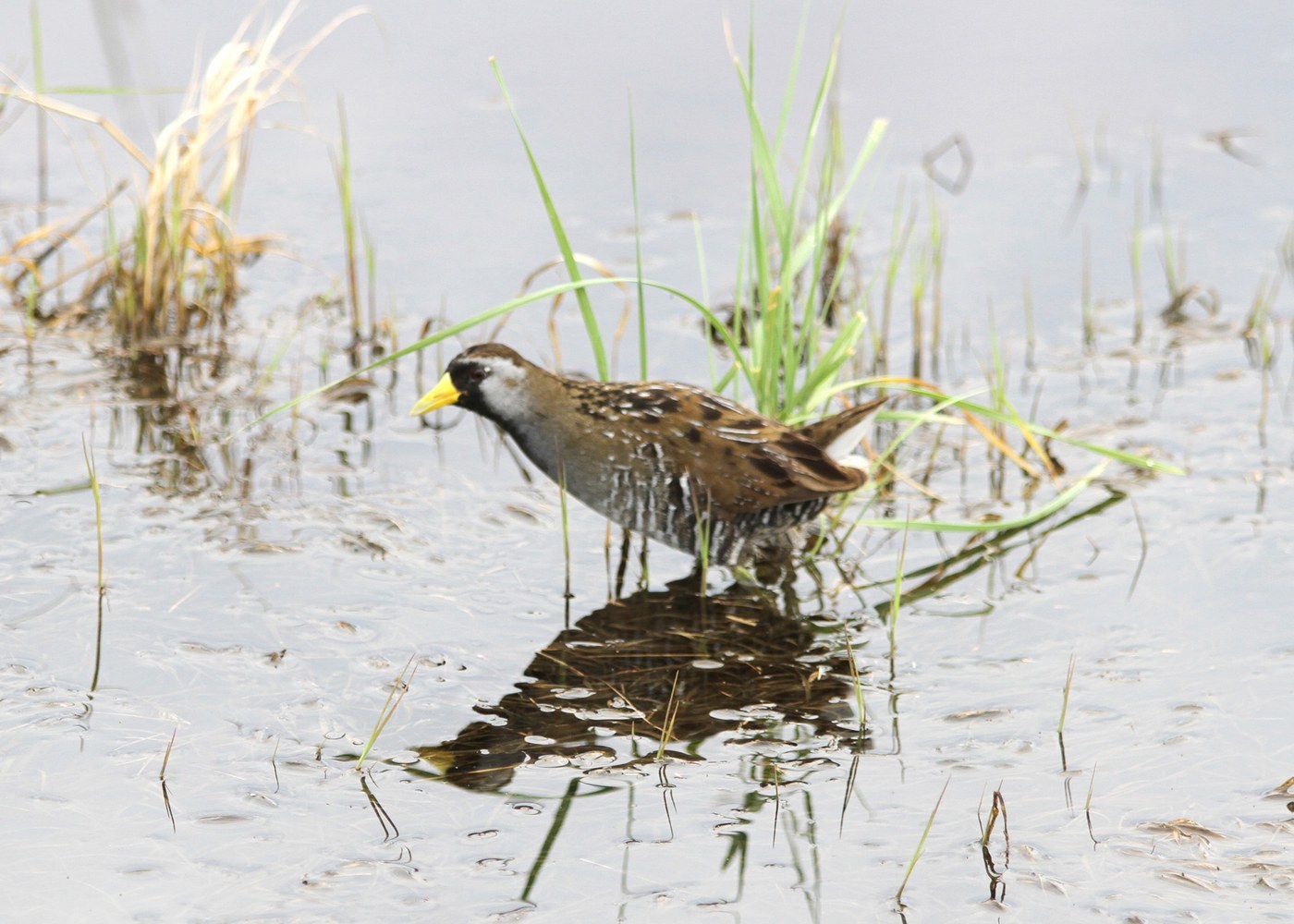
Key Field Marks
- Size & shape: Small, plump rail, about 8.5–9.5 inches, with a short neck, short tail often cocked upward, and long toes suited to walking on marsh vegetation.
- Plumage: Gray-brown overall with black-and-white streaking on the flanks and back; breeding adults show a black patch on the face and throat contrasting with a gray breast.
- Bill: Short, stout, and bright yellow — unusual among rails and a quick, reliable field mark.
- Legs: Greenish-yellow.
- Behavior: Highly secretive, usually staying hidden in dense marsh vegetation, but sometimes walks out into more open mud or shallow water at marsh edges, flicking its short tail to reveal white undertail coverts.
Separating It From Similar Species
- Virginia Rail: Has a long, slender, downcurved reddish bill and warmer rusty-orange plumage, quite different from Sora's short yellow bill and grayer tones.
- Yellow Rail: Smaller, even more secretive, with buffy plumage and a bold white patch visible on the wing in flight; rarely seen in the open.
- Overall: The short stubby yellow bill combined with a black face patch and gray-brown body is distinctive for Sora among North American rails.
Where & When to See One
- Habitat: Freshwater and brackish marshes with dense stands of emergent vegetation such as cattails and sedges, along with adjacent wet meadows and shallow impoundments.
- Breeding range: Across much of temperate North America, from southern Canada through the northern and central United States.
- Winter range: Southern United States, Mexico, the Caribbean, and northern South America.
- Season: Best detected during spring and summer breeding season by voice at dawn and dusk; migrants pass through in spring and fall.
Voice
- Its most distinctive sound is a descending, horse-like whinny — a series of notes falling in pitch and speeding up. It also gives a sharp, whistled "ker-WEE" call, both far more often heard than the bird itself is seen.
Frequently asked questions
What is the best way to identify a Sora?
Listen first — its descending, horse-like whinny call is highly distinctive — and if seen, look for a short stubby yellow bill, a black face patch, and gray-brown streaked plumage.
How do you tell Sora from Virginia Rail?
Sora has a short, stout yellow bill and grayer plumage, while Virginia Rail has a long, slender, downcurved reddish bill and warmer rusty-orange coloring.
Why are Soras so hard to see?
They are highly secretive marsh birds that spend most of their time hidden within dense stands of cattails and sedges, making voice the most reliable way to detect their presence.
What habitat should I check for Soras?
Freshwater and brackish marshes with thick emergent vegetation like cattails and sedges, along with adjacent wet meadows, especially at dawn and dusk during the breeding season.