
Song Thrush Identification Guide
A warm brown European thrush with bold, arrowhead-shaped breast spots and a rich, repetitive song, best known for smashing snail shells on favorite anvil stones.
Read the full Song Thrush encyclopedia entry →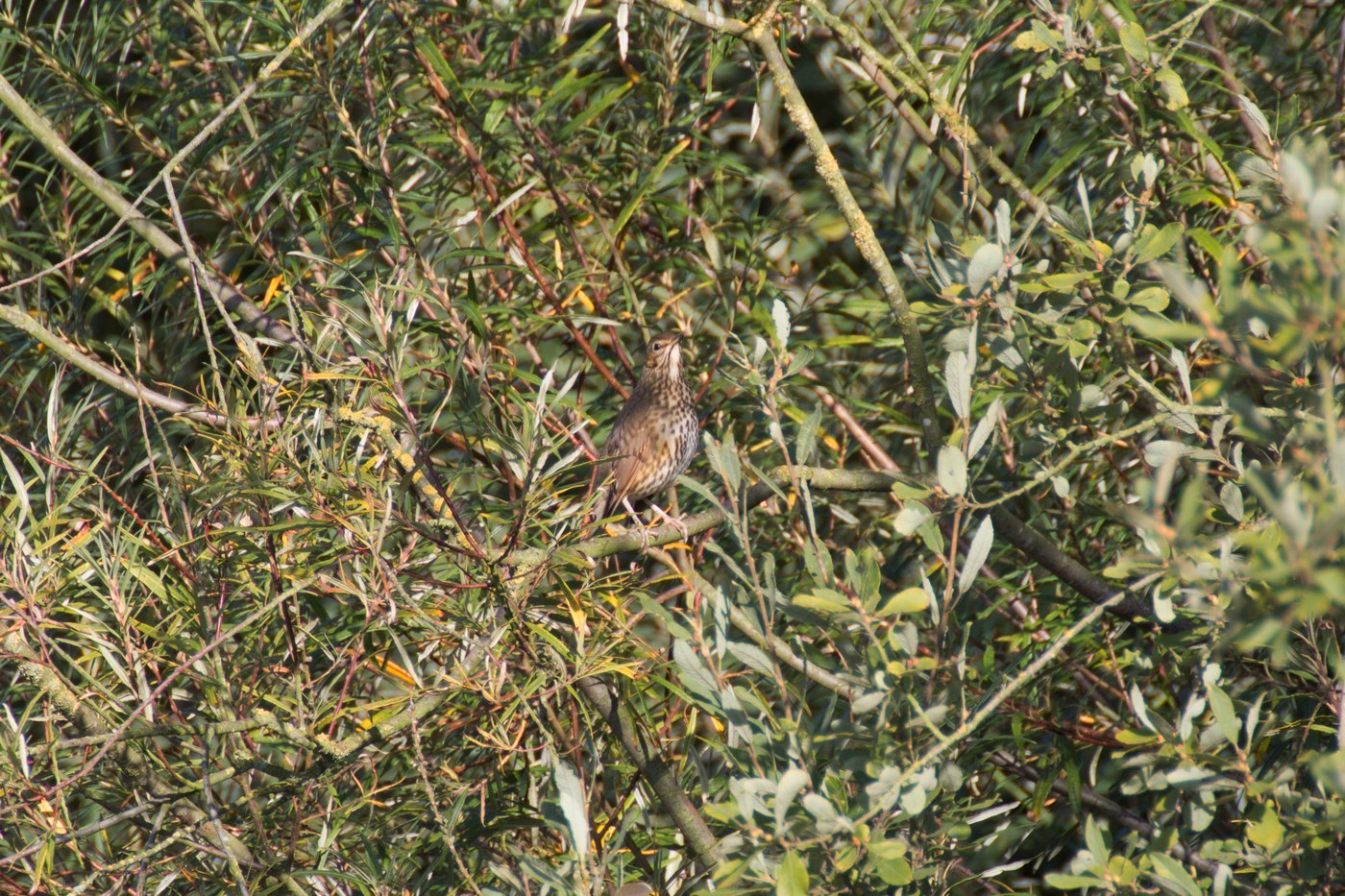
Key Field Marks
- Size & shape: Medium-sized thrush, around 23 cm, with a fairly slim build and an upright stance.
- Plumage: Warm brown upperparts; pale buffy-white underparts marked with bold, dark, arrowhead- or triangle-shaped spots running down the breast and flanks. In flight, shows a warm orange-buff underwing.
- Bill: Slim, dark, slightly downcurved at the tip.
- Behavior: Forages on lawns and leaf litter with a distinctive upright hop-pause-hop action; famous for using a favored stone "anvil" to smash open snail shells, leaving piles of broken shells nearby.
Separating It From Similar Species
- Mistle Thrush: Noticeably larger and grayer overall, with bolder, rounder (rather than arrow-shaped) spots, a white rather than orange-buff underwing, and a more bounding, undulating flight.
- Redwing: Smaller, with a bold pale supercilium (eyebrow stripe) and distinctive rusty-red flanks and underwing that Song Thrush lacks.
- Overall impression: The combination of warm brown upperparts, crisp arrowhead-shaped spotting, and orange-buff underwing separates Song Thrush from its larger relatives.
Where & When to See One
- Habitat: Woodland, hedgerows, parks, and gardens with cover and access to open ground for foraging, across much of Europe and temperate Asia.
- Range: Breeds across Europe and western/central Asia. Northern and eastern populations are migratory, moving south and west to winter around the Mediterranean and in milder parts of western Europe; birds in Britain and Ireland are largely resident or short-distance migrants.
- Season: Present year-round in much of its western range; migratory movements peak in autumn and spring further north and east.
Voice
- A rich, melodic, and highly repetitive song, with each short phrase typically repeated two to four times before moving to a new phrase — a useful diagnostic pattern that distinguishes it from the more continuous, less repetitive song of the Blackbird.
Frequently asked questions
How can you recognize a Song Thrush's song?
Listen for short musical phrases that are each repeated two to four times in a row before the bird switches to a new phrase — this repetition is the clearest way to separate it from the similar but less repetitive song of the Blackbird.
What is distinctive about how Song Thrushes feed?
They are well known for smashing snail shells against a favored stone, called an anvil, to extract the snail — broken shell fragments scattered around a stone are a good sign a Song Thrush is nearby.
How do you tell Song Thrush from Mistle Thrush?
Song Thrush is smaller and warmer brown with arrowhead-shaped spots and orange-buff underwings, while Mistle Thrush is larger, grayer, has rounder spots, white underwings, and a bounding flight.
Is the Song Thrush migratory?
Northern and eastern breeding populations migrate south and west for winter, while birds in Britain, Ireland, and much of western Europe are largely resident or move only short distances.